

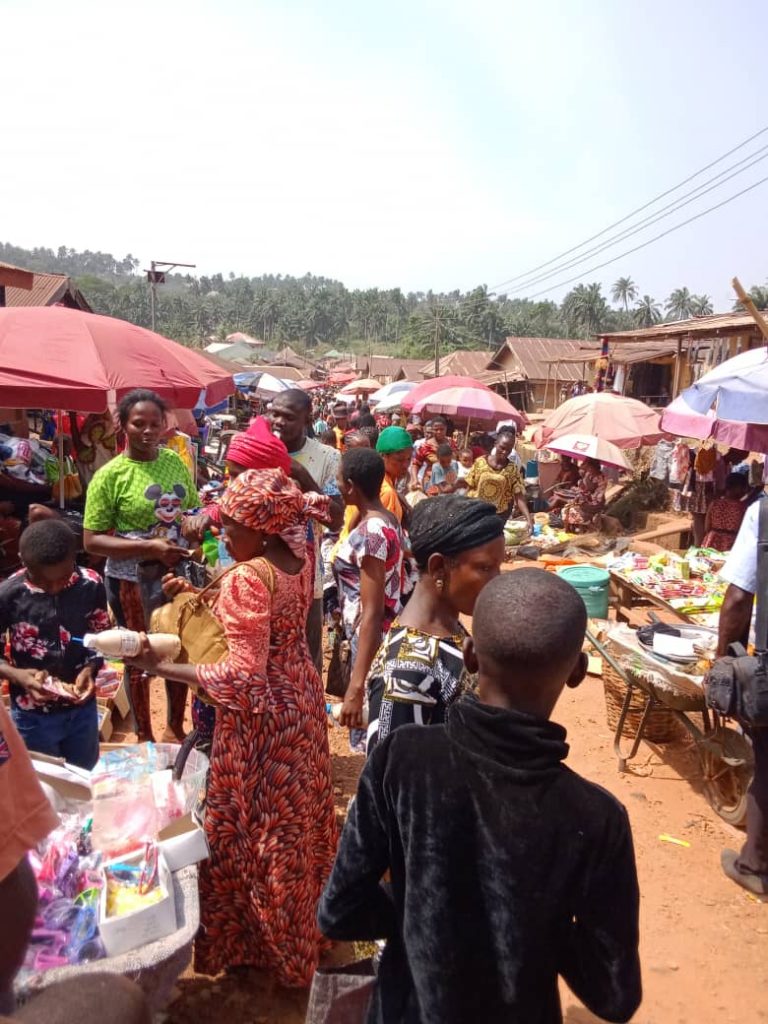
Across Nigeria, one of the most significant yet often overlooked contributors to GDP and employment is the informal sector. Frequently described as the “shadow economy,” it has long been associated with negative perceptions of informality and lack of regulation.
However, when examined through the right lens, the informal economy represents a vast reservoir of untapped potential capable of driving sustainable growth and development across the continent.
According to Moniepoint’s 2025 Informal Economy Report, Nigeria’s informal sector continues to play a central role in economic activity and job creation. The informal economy contributes over 50% of Nigeria’s GDP and employs about 80% of the workforce. With unemployment remaining a major issue in Nigeria, the informal sector absorbs millions who can’t find formal jobs.
Register for Tekedia Mini-MBA edition 20 (June 8 – Sept 5, 2026).
Register for Tekedia AI in Business Masterclass.
Join Tekedia Capital Syndicate and co-invest in great global startups.
Register for Tekedia AI Lab.
However, despite their vital role, Moniepoint reveals that nearly half of these businesses are struggling to make significant daily income. The report stated that 44% of informal businesses in Nigeria earn less than N20,000 ($12) per day, highlighting the persistent financial challenges facing millions of small-scale entrepreneurs who form the backbone of the nation’s commerce. While the median daily revenue falls between N20,000 and N50,000, profits remain modest, with a median profit range of N10,000 to N20,000.
The report further reveals that 70% of these businesses earn less than N50,000 per day a continuation of last year’s trend where higher revenues did not necessarily translate into higher profits.
Gender disparities also persist. Forty-one percent of women-owned businesses earn less than N10,000 in daily profit, compared to 34% of male-owned enterprises. Conversely, 16% of businesses owned by men earn above N50,000 daily, while only 10% of women-owned businesses reach that threshold.

Despite these challenges, the report notes a measure of resilience among informal businesses. About 65% of them have seen an increase in revenue over the past year. However, this growth has not been evenly reflected in profitability, with only 47% reporting a corresponding increase in profits. A significant 79% of businesses also reported rising operational costs, primarily driven by higher supplier prices, transportation expenses, and the depreciation of the Naira.
The median lifespan of informal businesses remains between two and five years. Only 27% have been in operation for longer than five years. Thirteen percent of entrepreneurs have run their businesses for less than a year, while just one in four have lasted beyond five years. Interestingly, only 24% of long-standing businesses (five years or more) are owned by women, compared to 29% owned by men.
Unemployment remains the primary motivation for starting businesses in Nigeria’s informal economy, though this has declined from 52% to 38% compared to last year. The report observed a rise in entrepreneurs driven by passion or a desire to seize emerging business opportunities, a positive indicator of shifting motivations among Nigeria’s informal business owners.

Record-keeping practices are improving, though still largely unstructured. Seventy-five percent of informal businesses claim to track income and expenses, yet 38% admit to doing so mentally without any written records. In terms of financing, most businesses that take loans do so to expand operations, purchasing equipment, renovating spaces, or opening new locations. Others use loans to replenish inventory or cover operational expenses.
Notably, there is a growing trend toward borrowing from formal sources such as digital lenders and microfinance banks. The report also highlights gender differences, showing that women are more likely to borrow from informal sources than men. Savings culture remains strong but has slightly declined. While 92.4% of businesses reported saving money in the previous year, this figure dropped to 74% in 2025.
Cooperatives and digital banks remain the preferred saving channels, though 8% still save informally by keeping cash at home or with trusted individuals. Most businesses (41%) save primarily for expansion, while 24% save to purchase goods. Weekly saving is the most common frequency, practiced by 29% of respondents, aligning with the cooperative model that typically collects funds weekly. Fourteen percent, however, save irregularly, depending on income flow.
The majority (69%) of informal businesses save less than N50,000 per month, and 42% say their savings would sustain them for less than a month if their business income stopped.
Moniepoint’s 2025 report underscores both the challenges and resilience of Nigeria’s informal economy. While rising costs, low profits, and gender disparities persist, there are also signs of gradual formalization, increased financial awareness, and growing engagement with digital financial services.