

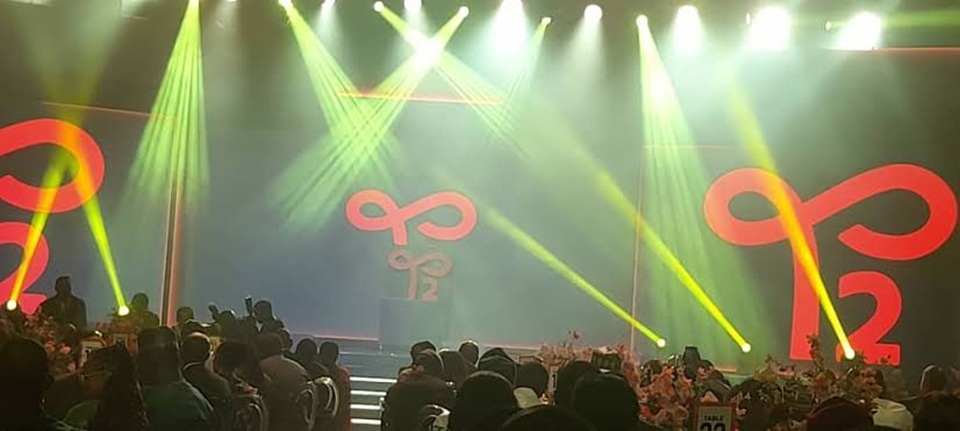
Nigeria’s fourth-largest telecommunications operator, 9mobile, has officially rebranded to T2, marking what company executives describe as the dawn of a “bold new chapter” in its history.
The unveiling took place on Friday at the Eko Convention Centre in Lagos, a year after LH Telecommunication Limited acquired a 95.5 percent controlling stake in the operator.
This change of identity is the second in the company’s 17-year history. Originally launched in 2008 as Etisalat Nigeria, the brand became 9mobile in 2017 after its UAE-based parent company pulled out following a debt crisis that saw the firm default on a $1.2 billion syndicated loan. The move to T2 is now being positioned as a complete transformation—one that management says is rooted in resilience, reinvention, and a renewed commitment to customers.
Register for Tekedia Mini-MBA edition 20 (June 8 – Sept 5, 2026).
Register for Tekedia AI in Business Masterclass.
Join Tekedia Capital Syndicate and co-invest in great global startups.
Register for Tekedia AI Lab.
9mobile’s path to this moment has been anything but smooth. Its 2017 rebrand was born out of financial distress and regulatory intervention after a consortium of banks threatened to take over the struggling operator. Since then, the company has faced an uphill battle to retain market share in an industry dominated by MTN and Airtel, while Globacom maintains a solid third position.
LH Telecommunication’s takeover last year signaled the possibility of a turnaround. The acquisition brought new capital and leadership, paving the way for Friday’s rebrand. For many industry analysts, the switch to T2 is more than cosmetic—it is an attempt to shake off years of market stagnation and regain relevance in Nigeria’s fast-evolving telecom sector.
Speaking at the launch, Femi Banigbe, Chief Executive Officer of Emerging Markets Telecommunication Services Limited (EMTS), the parent company of T2, emphasized that the rebrand was more than a logo change.

“This is not just a brand unveiling, it is the beginning of a bold new chapter in our history,” Banigbe said. “It is a declaration that we are no longer who we were, but we are becoming something greater… something more ambitious.”
He described the new identity as a statement of intent, reflecting the company’s mission to meet the growing demands of Nigerian consumers for speed, access, and relevance. Banigbe also pointed to the dynamism of Nigeria’s youth, the energy of its entrepreneurs, and the resilience of its SMEs as drivers of the country’s digital future.
“In the face of overwhelming odds, our people, the Nigerian people, have shown a spirit of resilience and tenacity that continues to inspire the world,” he added, likening the company’s journey to Nigeria’s own ability to bounce back from challenges.

Industry Support and Government Backing
Minister of Communications, Innovation and Digital Economy, Bosun Tijani, praised the role of mobile network operators (MNOs) in Nigeria’s digital transformation.
From fewer than one million mobile lines in 2001, Nigeria now boasts over 220 million active lines, with broadband penetration approaching 50 percent. Tijani highlighted that MNOs have invested more than N75 billion in infrastructure—towers, fibre networks, and 5G technology—without any government subsidy.
“They have powered our economy, contributing around 16 percent to our GDP, and creating millions of direct and indirect jobs,” Tijani said. He described the T2 rebrand as a sign that the company is ready to compete, innovate, and help Nigeria achieve its goal of becoming a global digital powerhouse.
The minister urged T2 to go beyond visuals and embrace a renewed commitment to service excellence.
“Let this rebrand be more than a change of colors or a new logo. Let it be a renewed commitment to innovation… to the millions of Nigerians whose lives and businesses depend on your network every single day.”
A New Identity in a Competitive Market
While T2’s rebrand brings optimism, it enters a market that has little room for complacency. MTN Nigeria and Airtel Africa control the lion’s share of mobile subscriptions, data services, and mobile money offerings. Globacom maintains a strong customer base through aggressive pricing.
Analysts believe T2’s survival will depend on translating its renewed vision into tangible improvements in service delivery, network quality, and customer experience. They also warn that without aggressive investment in infrastructure, strategic partnerships, and digital services, the company risks being overshadowed by its bigger rivals despite its new name.
Still, for a brand that has weathered a debt crisis, ownership changes, and market decline, Friday’s unveiling may be the strongest sign yet that T2 is ready to fight for its place in Nigeria’s telecom future.