When Nigeria’s finance minister appeared before lawmakers this week, the numbers he presented cut sharply through months of official optimism about an economy supposedly turning the corner.
Wale Edun told members of the House of Representatives Committees on Finance and National Planning that the federal government is on course to close 2025 with total revenue of about N10.7 trillion — barely a quarter of the N40.8 trillion projected to fund the N54.9 trillion “budget of restoration.” The admission landed like a fiscal shockwave, exposing a gap so wide that it has reignited accusations that the Tinubu administration is running a government of headlines and talking points rather than hard numbers.
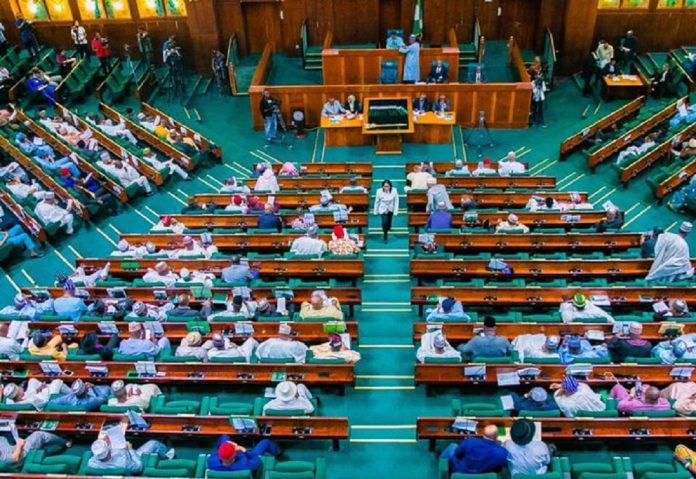
The interactive session was convened to examine the 2026–2028 Medium Term Expenditure Framework and Fiscal Strategy Paper, documents already transmitted to the National Assembly by President Bola Tinubu. What lawmakers instead encountered was a stark account of how far reality has drifted from projections in just one fiscal year.
Edun attributed the revenue collapse largely to weak oil and gas inflows, with Petroleum Profit Tax and Company Income Tax from energy firms falling well below expectations. Non-oil revenues, often touted as the backbone of the administration’s reform story, also underperformed across multiple subheads, compounding the pressure on public finances.
To keep the budget afloat, the government borrowed about N14.1 trillion in 2025. Even that, the minister acknowledged, has not been enough to bridge the gap. Combined revenues and borrowings still fall short of what is required to fully fund the budget, forcing what officials describe as “creative” treasury management.
Edun told lawmakers that salaries, statutory transfers to states and local governments, and domestic and external debt service obligations have been met. According to him, this has been achieved through tight cash management and prioritization of essential payments. What this careful phrasing leaves unsaid is that many capital projects and social commitments remain stuck in slow motion.
The Tinubu administration has yet to publish any report on federal incomes and expenses for 2025
The situation has sharpened public frustration with the government’s broader economic narrative. Over the past year, senior officials, including the president himself, have repeatedly said reforms are delivering results, pointing to fuel subsidy removal, exchange rate liberalization, and rising non-oil revenues. Tinubu recently claimed that the 2025 revenue target had already been achieved by August, driven mainly by the non-oil sector, and said the economy had become predictable again.
Yet Edun’s figures suggest something very different. If the government is ending the year at N10.7 trillion, questions arise about how revenue targets were measured, communicated, and celebrated. This contradiction has fueled claims that the administration is more focused on selling a reform success story than confronting its fiscal reality.
The credibility gap has also put the National Assembly under scrutiny. Lawmakers routinely approve ambitious budgets and medium-term frameworks built on optimistic oil production and price assumptions, only to watch implementation unravel. Many analysts and civic groups now describe the legislature as a rubber stamp, unwilling or unable to hold the executive to account for repeated revenue failures and ballooning deficits.
That perception is reinforced by the latest disclosure that parts of the 2024 budget are being carried over into 2026. For a country struggling with infrastructure decay, unemployment, and rising poverty, the idea that a budget is still being implemented two years later has become a symbol of dysfunction. It signals not only weak execution but also a disconnect between planning cycles and economic reality.
On capital spending, Edun said releases to ministries, departments, and agencies in 2024 reached N5.2 trillion out of a N7.1 trillion allocation, a performance rate of about 73 percent. When multilateral and bilateral-funded projects were included, total capital expenditure rose to N11.1 trillion out of N13.7 trillion. While the figures suggest some progress, they also underline how dependent capital delivery has become on external funding rather than domestic revenue strength.
The minister warned lawmakers against tying spending rigidly to oil income, arguing that optimistic projections have repeatedly undermined budgets. He urged a shift toward spending based on actual inflows rather than expectations, an admission that the administration’s budgeting culture remains aspirational rather than empirical.
Budget and National Planning Minister Atiku Bagudu echoed that concern, describing internal debates within the Economic Management Team over revenue assumptions. He said officials were torn between conservative projections grounded in history and ambitious targets designed to force revenue agencies to perform better. For the N54 trillion 2026 budget, oil production is still pegged at 2.06 million barrels per day, but revenue calculations will be based on a lower assumption of 1.84 million barrels per day in an effort to reduce forecast errors.
Lawmakers, for their part, acknowledged the fragility of the economy. House Finance Committee chairman James Faleke said inflated budgets detached from economic realities only deepen Nigeria’s fiscal troubles and promised closer scrutiny of the MTEF and FSP.
All of this sits uneasily alongside the administration’s reform narrative. Edun has said the removal of fuel subsidies and the move to a market-based exchange rate saved the government about $20 billion, roughly five per cent of GDP, money that could now be redirected to infrastructure, health, and education. He described the last 18 months as a painful gestation period with gains beginning to show.
The problem is that those gains are difficult to reconcile with a revenue shortfall of nearly N30 trillion in a single year. For many Nigerians, the lived reality remains one of higher prices, weaker purchasing power, and delayed public projects. In that context, claims of stabilization and restored confidence ring hollow.
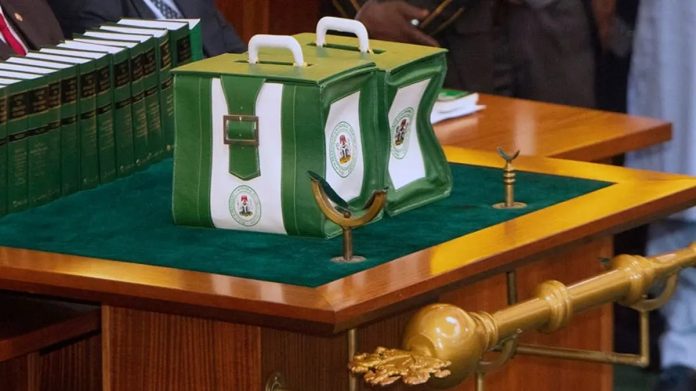
As Tinubu prepares to present the 2026 budget to the National Assembly on Friday, concerns remain whether it is going to be different from the 2024 and 2025 budgets, or an addition to the over-bloated annual budgets that will require years to be fully implemented.