In crypto, attention can arrive for the wrong reasons: a sudden price spike, a celebrity mention, or a wave of short-term speculation. BlockDAG’s August visibility is developing around a broader question. Can a Layer-1 project turn mobile mining, staking, payments, trading, and consumer applications into one connected user experience before the market fully prices in that transition?
That question is behind the growing discussion around BlockDAG as a top crypto to watch. The project is preparing a Super App in partnership with RedotPay, while continuing to highlight its 4 million-plus X1 mobile miners, 374,000-plus holders, nearly 10 billion BDAG staked, and $200 million-plus in casino and sportsbook wagering volume.
BlockDAG’s case is built on the idea that usage should arrive before broader trading access, not after it. Its planned Super App is central to whether that idea holds up.
The Super App Could Change the BlockDAG Story
The upcoming Super App is meant to bring together functions that crypto users normally access through separate platforms. According to BlockDAG’s published plans, users will be able to mine BDAG, claim and stake tokens, store crypto and stablecoins, trade through the BlockDAG Exchange, access the casino, send funds internationally, and spend through virtual and physical payment cards.
It is an ambitious product list. The important point is not that every feature exists on paper; many platforms make wide-ranging promises. The difference is that BlockDAG is attempting to connect these services to a single network and token structure. If users can mine, hold, stake, trade, transfer, and spend from one application, the token may have more practical touchpoints than a typical early-stage asset.
RedotPay’s involvement also gives the payments angle greater importance. Crypto cards and international transfers are already familiar products, but they usually operate separately from mining apps, staking dashboards, and exchange accounts. A unified interface could reduce that friction.
This is where analyst conviction appears to be increasing. Rather than assessing BlockDAG only through price expectations, observers can follow the delivery of a tangible product stack. The project’s reported 4 million-plus X1 miners may provide an initial audience for the Super App. Its 374,000-plus holders and nearly 10 billion staked BDAG could create another layer of participants with a reason to explore the new features.
Why Existing Activity Is Part of the Thesis
The Super App is still upcoming, but BlockDAG is not presenting itself as a project with no active products. Claiming and staking are live, the X1 mining app is live, and the Casino and Sportsbook are already operating. The project says its gaming platform has generated more than $200 million in total wagering volume, $4.7 million in gross gaming revenue, 13,000 new registered players over 30 days, 23,000 deposits, and access to more than 100 games.
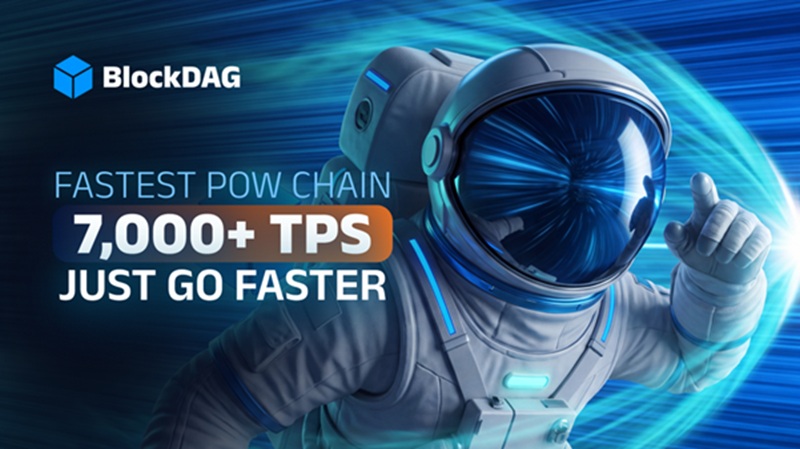
BlockDAG is also supporting its utility argument with performance claims. It reports more than 7,000 transactions per second, two-second consensus, over 100,000 transactions processed in a 24-hour period, GhostDAG consensus, AWS-based RPC infrastructure, and EVM plus WASM compatibility. Those technical details are intended to show that the network can support a heavier mix of trading, payments, gaming, and user activity.
The physical mining narrative adds another layer. BlockDAG reports 22,800 mining rigs shipping worldwide, alongside its X1 mobile-mining base. The two approaches target different participants: users who want a lower-friction app experience and users willing to commit hardware. That combination may help explain why BlockDAG has maintained visibility across 130 countries.
For buyers comparing networks, this is why BlockDAG is often placed in the top crypto conversation. The project is trying to show several active channels of participation at once, mining, staking, gaming, and infrastructure, while still holding back its largest consumer product launch.
Why BDAG is The Top Crypto To Watch Now?
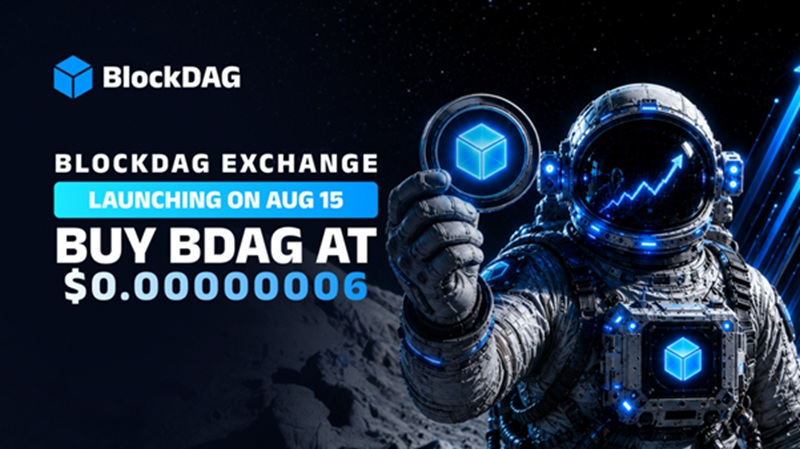
BlockDAG’s current entry figures are a major source of market interest. Its materials list a buy price of $0.00000006, a $0.025 buyback sell price, a 22% live-swap discount against its CoinMarketCap reference price, and an official stated ROI of 132x. Buyers in the limited-time window are also offered $1,000 in exchange credit ahead of the BlockDAG Exchange launch.
A $1,000 purchase, for example, could become substantial only if those assumptions prove accurate. At a theoretical 500X, it would equal $500,000 before fees and taxes. At 5,000X, it would equal $5 million.
That is the distinction worth keeping in view. BlockDAG’s August appeal is not that it has solved crypto’s risk equation. It has not. Its appeal is that the project is entering a new phase with a large reported mining base, live utility, measurable activity claims, and a Super App designed to bring its services together.
Presale: https://purchase.blockdag.network
Website: https://blockdag.network
Telegram: https://t.me/blockDAGnetworkOfficial
Discord: https://discord.gg/Q7BxghMVyu