
DD
MM
YYYY

PAGES

DD
MM
YYYY

spot_img

PAGES

Home Blog

Anthropic Unveils Hardware Standard To Help AI Agents Control Machines As It Pushes Into Physical World

0

Anthropic on Thursday unveiled a new interface designed to make it easier for artificial intelligence agents to communicate with and operate programmable machines, marking a deeper push by the Claude developer into robotics, scientific equipment and industrial automation.

The Model Hardware Standard, or MHS, is intended to provide a common way for AI agents to interact with devices that have programmable interfaces. Anthropic likened the concept to USB-C, which provides a standardized connection for transferring information between different devices.

“We built this for science to sort of show the promise of AI, but there’s also huge benefits here for enterprise and for industry,” Elizabeth Kelly, Anthropic’s head of beneficial deployments, told CNBC.

The initiative represents an important expansion of Anthropic’s strategy beyond software and into the physical infrastructure that AI agents need to interact with.

Today’s industrial and scientific equipment often relies on proprietary interfaces and specialized integration work. That can make deploying AI systems across different machines expensive and time-consuming because developers have to build separate connections for each piece of hardware. MHS is intended to reduce that friction by creating a common interface through which AI agents can communicate with programmable equipment.

Anthropic said the standard could initially be used in scientific research, robotics and advanced manufacturing. Its longer-term ambition is broader, with the company planning to open-source MHS so device manufacturers across industries can adopt the standard.

The approach is touted as the best bet because it could shift part of the AI infrastructure battle from models and data centers toward the interfaces connecting AI systems to the physical world.

AI agents are being developed to perform multi-step tasks autonomously. Their usefulness, however, depends on their ability to access information and take actions in external systems. Anthropic’s Model Context Protocol, launched as an open-source standard in 2024, addressed the data and software side of that problem by making it easier for AI agents to connect with data sources.

MHS extends that philosophy to hardware.

If widely adopted, a standardized hardware interface could allow an AI agent to move more easily between different machines without requiring developers to rebuild the integration layer from scratch. That could be valuable in laboratories and factories where equipment from different manufacturers operates within the same workflow.

Anthropic said MHS is model agnostic, meaning organizations will not have to use Anthropic’s Claude models to take advantage of the standard.

That detail could be critical to adoption. A standard controlled exclusively by one AI company would have limited appeal to manufacturers and enterprises that want flexibility over which models they deploy. By making MHS model-agnostic and eventually open source, Anthropic is attempting to position it as infrastructure rather than simply another Claude feature.

The approach also places Anthropic in an increasingly competitive race to establish itself across the AI technology stack.

OpenAI and Amazon have invested heavily in AI-native hardware and manufacturing technologies, while Anthropic is expanding its own hardware capabilities. The company is building a silicon team focused on custom chips for its AI models and recently hired Caitlin Kalinowski, a hardware executive who previously held roles at OpenAI, Meta, and Apple.

That hiring points to a broader effort to gain greater control over the hardware supporting Anthropic’s models.

MHS could complement that strategy by addressing a different layer of the physical AI ecosystem. Custom chips can make AI inference more efficient, while a standardized interface can make it easier for those AI systems to interact with machines and equipment.

The potential market extends well beyond humanoid robots.

Scientific laboratories contain automated instruments capable of conducting experiments, collecting measurements, and controlling physical processes. Manufacturing facilities use programmable machinery, sensors and robotic systems. In both environments, AI agents could eventually coordinate multiple machines as part of longer-running workflows.

The integration challenge is substantial because physical systems have different operating requirements, safety constraints, and communication protocols. A common interface cannot by itself eliminate those challenges, but it could reduce the software work required to establish basic communication between agents and machines.

Anthropic is initially limiting MHS to a select group of organizations through a research preview, suggesting the company is still testing how the standard performs in real-world environments. The decision to eventually open-source it could give Anthropic an opportunity to build an ecosystem around the technology before competitors establish competing standards.

That strategy mirrors the company’s earlier move with Model Context Protocol. By turning a proprietary capability into an open standard, Anthropic is understood to be aiming to encourage developers and businesses to build around an interface that remains compatible with its broader agent strategy.

The bigger opportunity is the emergence of what is increasingly being described as physical or embodied AI.

Large language models have largely operated inside computers, where their actions are limited to software environments. The next stage of agent development requires systems that can manipulate equipment, conduct experiments, operate industrial machinery, and interact with the physical environment.

For that to happen at scale, AI systems need standardized ways to communicate with the machines around them.

Anthropic’s MHS is an early attempt to address that infrastructure problem.

However, the company’s challenge will be persuading hardware manufacturers and industrial users that an open, model-agnostic standard is worth adopting. If enough manufacturers implement it, MHS could become a common integration layer between AI agents and physical equipment. If adoption remains limited, its value will be constrained by the fragmented hardware ecosystem it is designed to simplify.

The announcement nevertheless signals a broader ambition for Anthropic. The company is no longer positioning Claude solely as a digital assistant or enterprise software tool. It is building toward an ecosystem in which AI agents can access data, reason through complex tasks, and eventually control physical systems.

Z.ai Claims New AI Model Runs Entirely on Chinese Chips, Shares Rise 8%

0

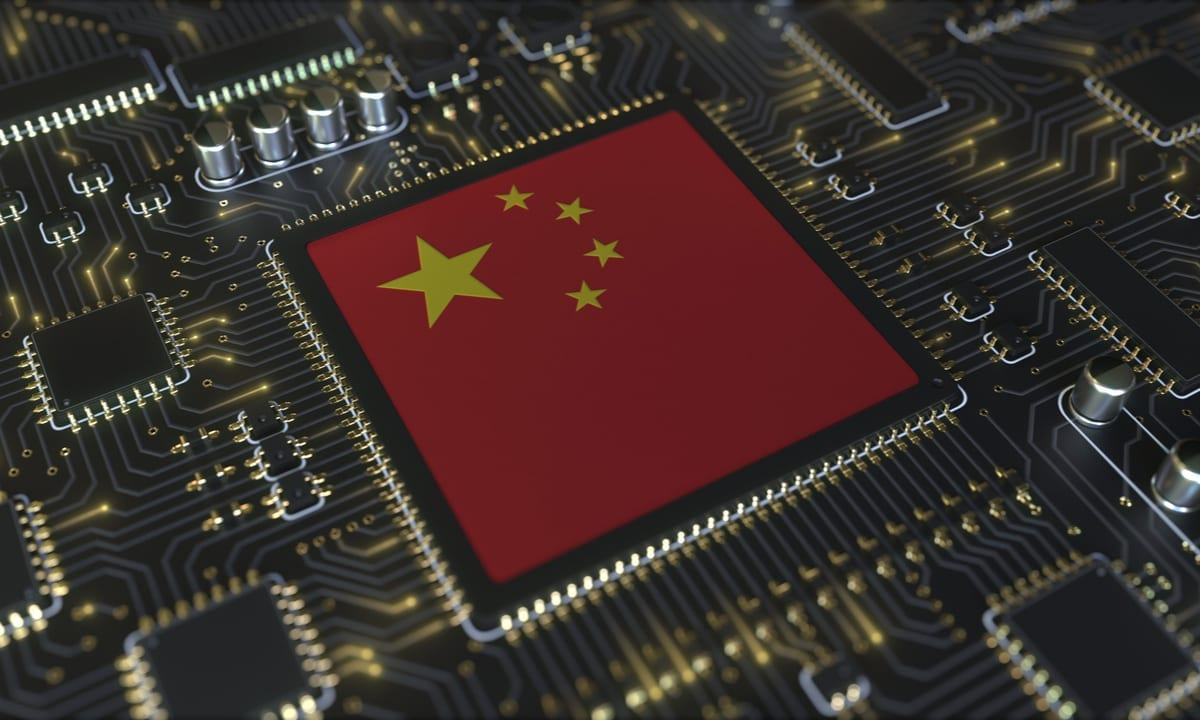
Chinese artificial intelligence company Z.ai said on Wednesday that its latest model can handle online requests entirely on domestically produced semiconductors, underpinning the rapid push by China’s AI industry to reduce its reliance on foreign chips amid tightening U.S. technology restrictions.

Z.ai said its new GLM-5.3-Flash model was powered by 100,000 China-made chips to process all online inference requests after its release on Aug. 20 under the code name “Ox Alpha.” The company did not disclose the chip manufacturers or the specific processors used.

The claim could not be independently verified.

Z.ai’s Hong Kong-listed shares rose more than 8% on Thursday, extending a rally that has lifted the stock more than 800% since its January initial public offering.

The release has caught the industry’s interest because inference, the process of running a trained AI model to generate responses for users, is becoming a major source of computing demand as AI applications move from experimentation toward mass deployment. While inference generally requires less computing power than training, operating models at large scale still requires substantial quantities of chips, servers, and data-center capacity.

GLM-5.3-Flash ranks 10th on the Artificial Analysis Intelligence Index, according to Z.ai, placing it ahead of DeepSeek V4 Pro Max. The company also said the model ranked first by usage on the global OpenRouter platform over the past week.

Z.ai’s ability to deploy the model using Chinese chips, if independently confirmed, would provide another indication that domestic AI developers are adapting to restrictions on access to advanced U.S. semiconductors.

Nvidia has faced restrictions on selling its most advanced AI processors to Chinese customers, while Beijing has simultaneously encouraged domestic companies to develop alternatives. Huawei has emerged as one of the leading suppliers of AI accelerators in China, alongside a growing group of domestic chip designers and manufacturers.

Counterpoint Senior Research Analyst Ivan Lam said Z.ai was likely using Huawei Ascend processors alongside chips from other suppliers, although he stressed that the company had not disclosed the details.

“Chinese AI model developers have continued to allocate more resources and investment toward AI servers and computing infrastructure built on domestic chips,” Lam said.

The development reveals that in China, rather than relying solely on domestic substitutes for Nvidia GPUs, technology companies are seeking to optimize the entire AI stack, from semiconductors and servers to models and software, around locally available hardware.

That approach has become necessary as U.S. restrictions limit Chinese access to cutting-edge processors. It also creates a feedback loop in which domestic AI developers provide demand for Chinese chipmakers, while better software optimization helps make those chips more useful for increasingly capable AI models.

Still, some analysts warn that Z.ai’s claim should be treated cautiously. The company has not identified the processors used, and there is no independent confirmation that all of the model’s online inference workloads were handled exclusively by Chinese-made chips. A large-scale deployment also does not necessarily demonstrate that domestic processors match the performance, efficiency, or cost characteristics of Nvidia’s highest-end systems.

The distinction between training and inference is important. China’s domestic chip ecosystem may find it easier to support inference workloads, where model-specific optimization can reduce hardware requirements, than to immediately match Nvidia’s performance in the most demanding frontier-model training workloads.

The broader commercial picture for China’s AI companies also remains mixed.

Z.ai rival MiniMax rose about 3% in Hong Kong after reporting a 283% increase in first-half revenue from a year earlier. The company’s adjusted net loss, however, more than doubled to $293 million, showing the substantial costs still associated with scaling AI products even as demand expands.

MiniMax’s M3 model ranks 18th on the Artificial Analysis Intelligence Index, according to the report.

Both Z.ai and MiniMax went public in Hong Kong in January, becoming part of a new generation of Chinese AI companies seeking public-market funding as Beijing promotes technological self-sufficiency.

Their share-price performances have diverged sharply. Z.ai has gained more than 800% since its IPO, while MiniMax has risen more than 80%, underscoring the premium investors have placed on companies seen as potential beneficiaries of China’s push to build an independent AI ecosystem.

Z.ai is due to report its first-half results on Monday. The results could provide a clearer indication of whether the extraordinary market enthusiasm surrounding the company is beginning to translate into commercial growth.

However, the capacity of domestic chips to support increasingly capable models at commercially viable costs has been put to the test by Z.ai’s claim. If that is demonstrated at scale, the impact of U.S. chip restrictions could shift from simply limiting China’s access to advanced computing to accelerating the development of a separate domestic AI technology stack.

Salesforce Raises Outlook As Partnership With Anthropic Strengthens Its Case Against The “Saaspocalypse”

0

Salesforce raised its full-year revenue and profit forecasts on Wednesday and deepened its partnership with Anthropic, giving investors fresh evidence that the rise of generative AI may be creating a new growth engine for the enterprise software giant rather than simply threatening its traditional business.

Shares of Salesforce jumped 14% in extended trading after the company unveiled “Claudeforce,” a new initiative that brings Anthropic’s Claude AI models together with Salesforce’s customer data, applications and workflows. The agreement expands a partnership announced in June and comes as investors have been questioning whether capable AI models could erode the value of conventional software.

The results provide a more complicated picture. Salesforce’s quarter ended July 31 produced revenue of $11.35 billion, up 11% from a year earlier, while the company raised its fiscal 2027 revenue forecast to between $46.1 billion and $46.4 billion from a previous range of $45.9 billion to $46.2 billion. It also lifted its adjusted earnings forecast to $16.67-$16.71 per share from $14.06-$14.12.

The stronger outlook has drawn interest because Salesforce is trying to prove that AI agents can become a meaningful source of incremental revenue while protecting the value of its core customer relationship management business.

Salesforce said momentum in Agentforce, Data 360 and Slack is helping offset volatility in traditional license revenue. The company is also expecting contributions from its planned acquisitions of Contentful and Fin, announced in June.

Agentforce is at the center of the strategy. Salesforce has been moving beyond AI assistants that simply answer questions toward autonomous agents capable of carrying out tasks in sales, customer service and other business functions. That potentially changes the economics of enterprise software because customers could pay not only for software seats, but for AI-driven work performed on their behalf.

Recent results suggest that business is gaining scale. Agentforce and Data 360 together generated nearly $3.9 billion in annual recurring revenue, according to MarketWatch, while Salesforce said it processed more than 7 billion agentic work units, including 3.2 billion during the latest quarter.

Besides concern over AI disruption, the threat to Salesforce has been that customers could use frontier models from companies such as Anthropic and OpenAI to build their own applications, reducing their dependence on large enterprise software vendors. Salesforce is instead attempting to make those models part of its own platform.

“Claudeforce” is therefore not just a conventional technology partnership but a representation of a strategy in which Salesforce provides the enterprise data, business processes and software environment while Anthropic supplies a powerful general-purpose AI model. The arrangement could allow Salesforce to benefit from improvements in frontier AI without having to develop every underlying model itself.

It also shows that model developers increasingly need access to proprietary business data and established distribution channels, while software companies need access to sophisticated AI models. Partnerships such as Salesforce-Anthropic can allow both sides to capture value from that relationship.

The financial results, however, require some qualification. Salesforce’s adjusted earnings of $5.90 per share were more than double the year-earlier level, but $2.53 per share came from gains on strategic investments, including its investment in Anthropic. Share repurchases also reduced the number of outstanding shares and boosted per-share earnings. Excluding the investment gain, adjusted EPS was $3.37, according to MarketWatch.

That makes the revenue outlook and the underlying operating performance more important indicators of whether Salesforce has genuinely turned the corner.

The company is also facing a broader challenge in its traditional software business. AI can make some software functions easier to reproduce now, potentially putting pressure on license growth and pricing. Salesforce’s answer is to move its value proposition higher up the stack, from providing software used by employees to providing an operating layer where employees and AI agents work together.

That approach helps explain why the company has been so aggressive in promoting Agentforce. If AI agents become the primary interface through which employees interact with corporate systems, Salesforce wants those agents running on its platform and using its data rather than bypassing it.

The results offer some support for that argument, but the durability of the trend remains the key question. Analysts have noted that Salesforce must demonstrate that AI-related growth is not simply shifting existing spending from conventional software products into new AI offerings. It needs to show that customers are expanding their overall spending because AI agents are producing measurable productivity gains.

The partnership with Anthropic also highlights a potential tension. Salesforce is relying on an outside model provider even as it seeks to make its own platform indispensable. The company now needs to maintain control over customer data, workflows, and distribution while avoiding excessive dependence on any single AI model provider.

Still, the immediate market reaction suggests investors were encouraged by the combination of stronger guidance and accelerating AI adoption. Salesforce had been caught in the selloff in software stocks as investors questioned whether AI would make established applications obsolete. However, the latest results provide a counterargument: rather than replacing enterprise software outright, AI may increase the value of platforms that already control business data and workflows.

Why Stablecoins Are Becoming a Strategic Priority for Banks

0

The banking industry is entering a new phase in the stablecoin race, with more than a dozen major financial institutions moving forward with plans to develop or support stablecoin projects.

The shift marks a significant change in attitude from traditional banks, many of which previously viewed privately issued digital currencies as a competitive threat to the existing financial system.

Now, growing demand for blockchain-based payments and increasing competition from fintech and crypto companies are pushing banks toward the same technology.

In the United States, several major banks are evaluating stablecoin strategies. JPMorgan Chase, Bank of America and Wells Fargo are among institutions exploring ways to participate in the market.

While other banks are pursuing collaborative approaches rather than issuing individual tokens. JPMorgan already operates JPM Coin, a blockchain-based tokenized deposit system, but the bank is now considering whether a conventional stablecoin could provide additional capabilities.

The distinction between stablecoins and tokenized deposits is important. Tokenized deposits represent money held within the banking system and can operate within controlled financial networks.

Stablecoins, meanwhile, can function on public blockchains, potentially allowing them to move between different platforms and applications. Banks have traditionally preferred tokenized deposits because they more closely resemble existing banking products.

But the rapid expansion of stablecoin adoption is forcing institutions to reconsider that approach. The competitive pressure is becoming difficult to ignore. Stablecoins are increasingly being used for payments, trading, remittances and treasury management.

Global stablecoin activity has grown substantially, while payment companies and technology firms are incorporating digital currencies into their financial infrastructure.

Some forecasts suggest stablecoin-based card spending alone could reach $50 billion annually by 2028, demonstrating the potential size of the emerging payments market.

The movement is not limited to the United States. In Europe, a consortium of banks known as Qivalis is preparing a regulated euro-denominated stablecoin. The initiative has expanded to include dozens of European banks, with the first issuance planned for the second half of 2026.

The objective is to create faster and more efficient euro payments using blockchain technology while operating within Europe’s regulatory framework. Japan is pursuing another model. MUFG, Mizuho and Sumitomo Mitsui Banking Corporation plan to conduct commercial transactions using a jointly issued stablecoin during fiscal 2026.

The three institutions are developing governance and operational frameworks for the project, highlighting how major banks can cooperate to build shared digital payment infrastructure. Switzerland is also experimenting with bank-led digital money.

UBS, PostFinance, Sygnum, Raiffeisen, Zürcher Kantonalbank and Banque Cantonale Vaudoise have joined a sandbox testing potential use cases for a Swiss franc stablecoin.

The project aims to determine how blockchain-based money can improve payment processes while strengthening Switzerland’s digital financial ecosystem.

For banks, the appeal goes beyond cryptocurrency speculation. Stablecoins can potentially enable near-instant settlement, reduce payment intermediaries, improve cross-border transactions and allow financial assets to become programmable.

They could provide banks with a new way to maintain relationships with customers as more financial activity moves onto blockchain networks. Banks must address reserve management, cybersecurity, regulatory compliance, consumer protection and interoperability.

They must also determine whether customers actually want bank-issued stablecoins when established alternatives already dominate the market. The direction is becoming increasingly clear. Stablecoins are moving from the margins of finance toward the center of institutional strategy.

The participation of major banks suggests that blockchain-based money is no longer being treated simply as a crypto experiment. Instead, it is increasingly being viewed as a potential component of the next generation of global payments.

If banks successfully combine their regulatory infrastructure, balance sheets and customer networks with blockchain technology, stablecoins could become one of the most important bridges between traditional finance and the digital economy.

Overcoming the Challenges of Purpose-Driven Entrepreneurship

0

Purpose-driven entrepreneurship comes with a unique set of pressures. Founders in this space aren’t just trying to build a profitable business, they’re also trying to prove that profit and purpose can coexist. That balancing act creates challenges most traditional startups never have to deal with, and plenty of well-meaning founders struggle to get it right.

The Funding Dilemma

Money is usually the first wall purpose-driven founders hit. Traditional investors often want to see fast growth and clear exit strategies, neither of which always aligns with a mission-first business model. Impact investors exist, but there are fewer of them, and their checks tend to be smaller.

This forces a lot of founders into an uncomfortable choice. Do you chase the capital that lets you scale quickly, even if it means diluting your mission a bit? Or do you stay small and mission-pure, accepting slower growth as the cost of staying true to your values? There’s no universally right answer. It really depends on what the founder can live with.

Balancing Profit and Principle

Something a lot of new founders don’t expect is that the hardest decisions rarely feel dramatic in the moment. They show up as small, everyday trade-offs. Do you use the cheaper supplier or the ethical one? Do you hire the person who’s the perfect culture fit or the one with more experience but a worse interview?

These micro-decisions add up. And they’re where a lot of purpose-driven businesses either build real credibility or quietly lose it. Customers and employees notice patterns over time, not just mission statements on a website.

Scaling Without Losing the Why

Growth changes everything, even for businesses built on strong values. What worked when you had five employees who all understood the mission intuitively doesn’t necessarily work at fifty. Culture gets diluted. Processes get standardized in ways that can feel like they’re stripping out the soul of the original idea.

Some founders handle this by building mission literally into their operating structure, through things like B Corp certification, employee ownership models, or governance documents that legally bind future leadership to the founding purpose. It’s not a perfect solution, but it helps.

Learning From Those Who’ve Done It

One thing that comes up again and again when you talk to founders who’ve actually navigated this successfully is that technology doesn’t have to threaten the human side of a mission-driven business. It can support it. This idea came through clearly in a recent conversation about healthcare innovation, where the discussion centered on how technology should function as an extension, not a replacement for human judgment and care. That framing applies well beyond healthcare. Whatever sector you’re in, the tools you build or adopt should amplify your mission, not quietly hollow it out.

Staying Grounded When Things Get Hard

There will be moments, probably more than you’d like, when it feels easier to just chase revenue and worry about the mission later. That temptation is normal. Almost every purpose-driven founder faces it eventually, usually during a cash crunch or a tough hiring season.

What separates the founders who stay true to their original vision isn’t that they never feel this pull. It’s that they’ve built in checkpoints, whether that’s a board member who holds them accountable, a set of written values they revisit regularly, or simply a habit of asking “does this still serve the mission?” before big decisions.

Purpose-driven entrepreneurship isn’t a straight line from idea to impact. It’s messy, full of compromises, and occasionally frustrating. But founders who stay honest about the tradeoffs, and who treat their tools and technology as support systems rather than shortcuts, tend to build something that actually lasts. That’s worth it for most.