DD
MM
YYYY

PAGES

DD
MM
YYYY

spot_img

PAGES

Home Blog

Why Glass Packaging Decisions Now Start With Logistics and Carbon Math

0

Glass is back in beauty, fragrance, and home scent because it solves a modern tension: consumers want premium products that also feel responsible. Glass is highly recyclable, it protects sensitive formulas, and it signals quality on shelf. The trade-off is operational: glass is heavy, fragile, and often tied to longer lead times when decoration, custom molds, or complex closures are involved.

Brands are reducing that risk by choosing partners that combine design innovation with operational readiness. The Calaso and Estal collaboration shows how sustainable luxury can move from marketing language to packaging engineering.

 The market forces pushing glass forward

Three forces are converging:

  • Premiumization in skincare, fragrance, and home scent
  • Pressure for proof on recycled content and footprint
  • Differentiation through shape, base design, and decoration

Eco-innovation that keeps the premium cues

The current wave of glass innovation aims to keep luxury cues while reducing material and emissions. In practice, that often means:

  • Lightweighting through optimized geometry
  • Higher recycled content to lower energy demand in production
  • Structural illusion such as raised bases that look substantial without adding unnecessary mass

Estal is known for this intersection of design and sustainability. The curated portfolio around Estal on Calaso is a practical reference point for teams comparing designs that balance aesthetics with efficiency.

A quick choice guide for product teams

Cosmetic jars

Ideal for creams, balms, masks, and premium skincare lines.

  • Strong barrier properties and broad closure compatibility
  • Clean lines and high-end decoration options
  • Lightweight formats and recycled glass variants can reduce footprint

Glass bottles for skincare and haircare

Ideal for serums, oils, and high-value formulations. 

  • Good chemical resistance and premium hand-feel
  • Distinctive shoulders, bases, and finishes create a recognizable brand code
  • Standardized neck finishes and lighter designs can reduce breakage risk

Perfume bottles

Ideal for fine fragrance and niche launches.

  • High clarity supports a luxury perception
  • Sculpted forms and raised bases create presence
  • Recycled glass can add character without sacrificing quality

Home fragrance bottles

Ideal for diffusers and room sprays.

  • Stability matters, especially for diffuser formats
  • Wide bases and elegant silhouettes support both safety and aesthetics
  • Optimized shapes can reduce material while keeping a premium look

The operational reality brands must plan for

Execution can fail if operations are not planned. Common friction points include lead times for decorated glass, tighter quality tolerances, and logistics costs driven by weight and fragility.

Many teams start with proven, in-stock formats and scale into customization later. Browsing premium glass bottles can help benchmark shapes, capacities, and finishes before committing to bespoke tooling.

Practical next steps for founders and packaging leads

  1. Request samples early and run drop, leakage, and compatibility tests.
  2. Ask for recycled content and footprint data and clarify what is measured.
  3. Plan decoration with end-of-life in mind since some coatings can complicate recycling.
  4. Standardize where possible to reduce risk and speed up sourcing.

Glass can be both premium and responsible when design, sustainability, and supply chain decisions are made together.

Why On-Device AI Makes the New Mac Studio a Powerful Pro Machine

0

Apple’s latest Mac mini and Mac Studio demonstrate how dramatically desktop computing has evolved, particularly as artificial intelligence becomes an increasingly important part of everyday technology.

Designed for users who want powerful performance without compromising efficiency or flexibility, the two machines represent different approaches to high-performance computing.

The Mac mini offers compact versatility, while the Mac Studio is positioned as Apple’s most powerful Mac yet, built specifically for demanding professional workloads.

The Mac mini has become increasingly capable with every generation, and its latest performance improvements make it a formidable desktop computer despite its small footprint.

Its compact design allows it to fit easily into a wide range of workspaces, while its performance makes it suitable for productivity, software development, creative applications and increasingly sophisticated AI workloads.

Rather than treating size as a limitation, Apple has turned the Mac mini into an example of how efficient hardware architecture can deliver substantial computing power in a remarkably small package.

Mac Studio takes that philosophy much further. Built for professionals who regularly push their hardware to its limits, the machine combines exceptional processing performance with massive memory capacity, advanced graphics capabilities and powerful on-device AI processing.

This combination makes it particularly attractive to developers, filmmakers, designers, engineers, researchers and other professionals working with computationally intensive applications.

One of the most significant developments is the emphasis on artificial intelligence. As AI moves from cloud-based services toward local processing, computers capable of running sophisticated models directly on the device are becoming increasingly valuable.

Mac Studio’s advanced AI performance can support demanding workloads while potentially reducing dependence on remote computing infrastructure. For developers and creative professionals, this opens the door to experimenting with AI tools, large models and intelligent applications directly from the desktop.

Graphics performance is another important strength. Modern creative workflows increasingly rely on GPU acceleration for video editing, 3D rendering, visual effects and other demanding applications.

By combining next-generation graphics capabilities with substantial memory and processing power, Mac Studio is designed to handle workloads that would challenge conventional desktop systems.

Connectivity also remains central to the professional desktop experience. Support for Wi-Fi 7 and Bluetooth 6 gives the Mac Studio access to newer wireless standards, helping it remain relevant as networking and peripheral technologies evolve.

For professionals working with high-bandwidth workflows and multiple connected devices, modern connectivity can be just as important as raw processing power.

The Mac mini and Mac Studio serve different audiences while sharing the same underlying philosophy: powerful computing does not necessarily require a large physical footprint. The Mac mini delivers an unusually strong balance between size, performance and versatility.

While Mac Studio targets users who demand maximum desktop performance. They illustrate Apple’s broader direction for the Mac: smaller, more efficient machines capable of handling increasingly sophisticated workloads.

As AI, advanced graphics and professional applications continue to reshape computing, the Mac mini and Mac Studio position themselves as powerful platforms for the next generation of desktop creativity and innovation.

Germany’s Economy Shows Modest Signs of Resilience as Growth Beats Expectations

0

Germany’s economy expanded by 0.3% in the second quarter compared with the previous three months, according to the Federal Statistical Office.

The revised figure came in slightly above the initial estimate of 0.2%, offering a modestly more positive reading for Europe’s largest economy after a prolonged period of weak growth and industrial uncertainty.

The upward revision is significant because Germany has struggled to generate sustained economic momentum.

Higher energy costs, weak external demand, elevated interest rates and persistent pressure on its manufacturing sector have weighed on activity. Against that backdrop, even a small improvement in quarterly growth can provide evidence that the economy may be stabilizing after years of stagnation.

The second-quarter performance matters for the broader eurozone. Germany represents one of the region’s largest economies and has traditionally served as a major industrial engine for Europe.

Its economic health therefore has implications beyond domestic businesses and households, influencing trade, investment, employment and overall confidence across the European Union.

Manufacturing remains one of the biggest questions surrounding Germany’s recovery. The country has historically relied heavily on exports, particularly automobiles, machinery, chemicals and other industrial products.

However, manufacturers have faced intensifying competition from China, changing global supply chains and the transition toward electric vehicles. These pressures have made it harder for Germany to depend on its traditional industrial model for growth.

The revised second-quarter figure does not necessarily mean that those structural problems have disappeared. Growth of 0.3% remains modest, and Germany still faces considerable challenges in creating a stronger and more durable expansion.

Businesses continue to operate in an environment characterized by uncertainty over energy prices, global trade and the future direction of monetary and fiscal policy.

Consumer activity will also be important. German households have faced significant cost-of-living pressures in recent years, although easing inflation can gradually improve purchasing power.

If consumers become more confident and increase spending, domestic demand could provide an important counterweight to weakness in exports and manufacturing. Investment is another crucial component of the outlook.

German companies need to commit capital to digital infrastructure, automation, artificial intelligence, renewable energy and modern industrial capacity if the economy is to remain competitive. Investment decisions can be delayed when businesses face regulatory uncertainty, high financing costs or weak demand.

The European Central Bank’s monetary policy will also remain relevant. Lower borrowing costs can support business investment, housing activity and consumer spending, while tighter financial conditions can restrain economic expansion. The balance between controlling inflation and supporting growth will therefore remain central to the economic outlook.

For financial markets, the 0.3% growth figure may offer some relief, but it is unlikely to completely change the broader narrative around Germany. Investors will be watching subsequent data for evidence that the improvement can be sustained rather than representing a temporary rebound.

Germany’s latest economic revision provides a cautiously encouraging signal. Growth was stronger than initially estimated, suggesting that activity in the second quarter was somewhat healthier than first believed. Yet the broader challenge remains unchanged: Germany must transform a modest rebound into sustainable growth.

Achieving that will require stronger domestic demand, renewed industrial competitiveness, greater investment and policies capable of addressing the structural weaknesses that have constrained the economy for years.

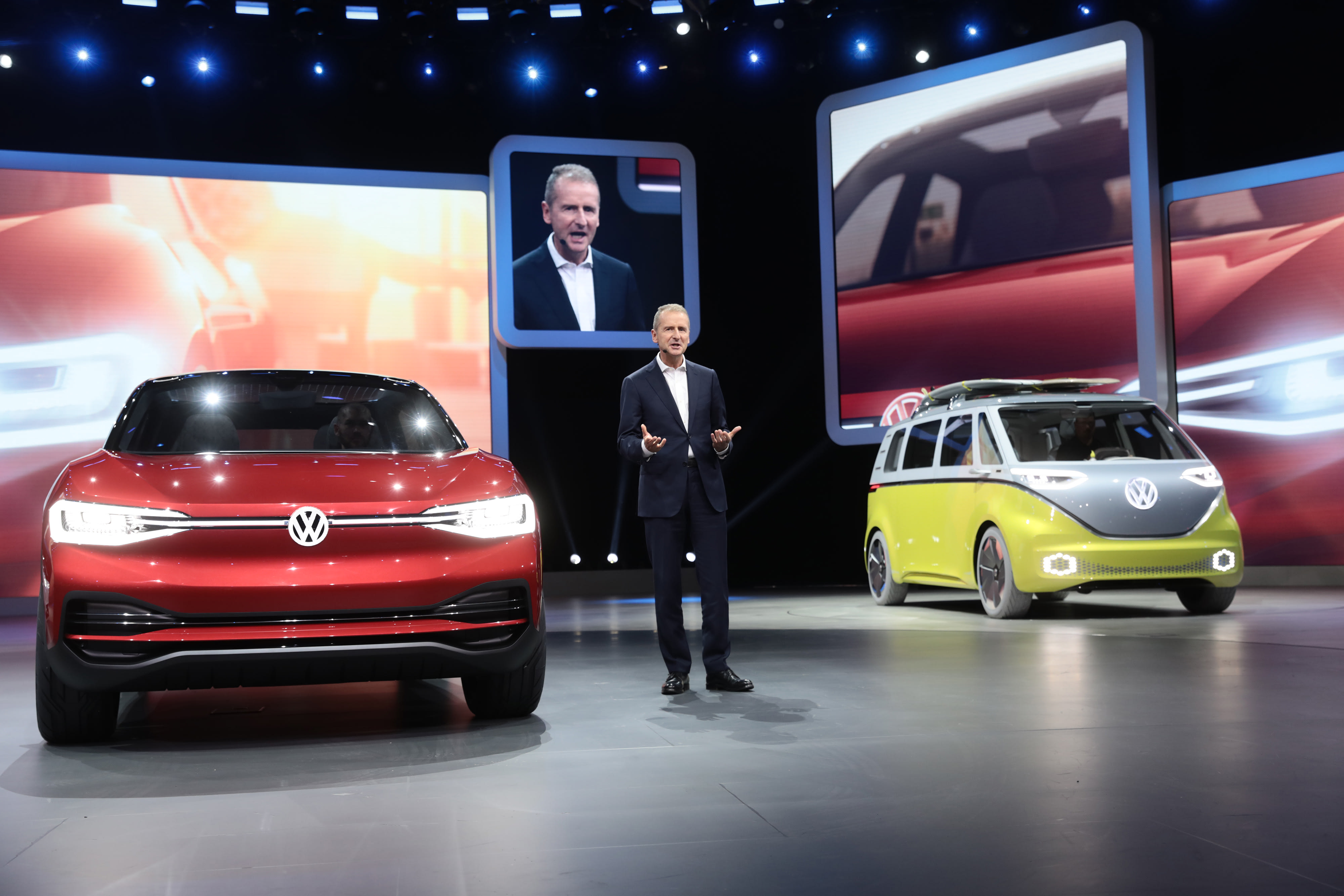
Volkswagen Workers and Managers Clash Over Cost-Cutting Drive

0

Volkswagen employees and managers are preparing for a series of extraordinary meetings at the German carmaker’s major sites, highlighting the growing tension surrounding an aggressive cost-cutting campaign.

The meetings come as workers confront increasing uncertainty over jobs, wages and the future direction of one of Germany’s most important industrial companies.

Volkswagen has been under mounting pressure to reduce expenses as the automotive industry undergoes a profound transformation.

The shift toward electric vehicles, intensifying competition from Chinese manufacturers, weaker demand in some markets and rising production costs have created a difficult operating environment. For management, reducing costs has become increasingly important to protect competitiveness.

For employees, the measures threaten to deepen concerns about employment security and working conditions. The confrontation is particularly significant because Volkswagen has historically maintained a close relationship between management and labor representatives.

Its German operations are deeply connected to powerful works councils and employee representatives, while the company’s workforce has traditionally enjoyed relatively strong employment protections. Any major restructuring therefore requires negotiations that can become politically and economically sensitive.

The extraordinary meetings are expected to provide a platform for employees and managers to confront the challenges facing Volkswagen directly. Workers are likely to demand greater clarity over proposed savings, production plans and the potential consequences for employment.

Management, meanwhile, is expected to argue that substantial changes are necessary if the company is to remain competitive in a rapidly changing global automobile market.

At the heart of the dispute is the question of how Volkswagen can lower costs without damaging the expertise and industrial capacity that have helped make it a global automotive leader.

Cutting jobs and reducing production may deliver immediate savings, but excessive reductions could weaken the company’s ability to develop and manufacture new vehicles.

The transition to electric mobility requires significant investment in batteries, software, digital platforms and new manufacturing technologies, making the balance between investment and cost reduction especially difficult.

Volkswagen also faces pressure from competitors that can often manufacture electric vehicles at lower costs. Chinese automakers have expanded rapidly, while other global manufacturers are restructuring their operations to adapt to changing consumer demand.

Volkswagen therefore needs to improve efficiency while simultaneously investing in technologies that will determine its position in the next generation of mobility. For employees, the concern is that the burden of this transformation could fall disproportionately on workers.

Plant closures, reduced shifts or restructuring could affect entire communities that depend heavily on Volkswagen facilities. The economic consequences could therefore extend beyond the company itself, particularly in German regions where automotive manufacturing remains a major source of employment and industrial activity.

The upcoming meetings could become an important test of Volkswagen’s ability to manage the transition without allowing labor relations to deteriorate further. A prolonged confrontation could disrupt production and undermine confidence at a time when the company needs stability.

Conversely, constructive negotiations could produce a compromise that allows Volkswagen to reduce costs while preserving essential skills and employment. Volkswagen’s challenge extends beyond a single cost-cutting program.

The company is confronting a structural transformation of the global automobile industry. How management and employees respond will help determine whether Volkswagen can emerge from the transition as a leaner and more competitive manufacturer while maintaining the industrial foundation that has defined it for generations.

Investors Turn to Financials as AI Trade Splits Hedge Funds and Mutual Funds

0

Investors may be divided over how far the artificial intelligence boom can continue to drive stock markets, but hedge funds and mutual funds are increasingly finding common ground in one part of the market: financials.

Both groups increased their exposure to financial stocks in the second quarter, with Goldman Sachs data showing that their bullish positioning in the sector has reached the highest levels in the bank’s historical records.

Hedge funds increased their net tilt toward financials by more than 300 basis points during the quarter, taking their exposure to the highest level since before the global financial crisis, according to Goldman chief strategist Ben Snider.

Mutual funds also increased their overweight position in financials, reaching their highest level since at least 2012.

The shift is notable because institutional investors have taken increasingly different positions on the AI trade. Hedge funds have generally maintained significant exposure to companies benefiting from AI infrastructure spending, while mutual funds have not increased their exposure at the same pace as the broader market.

Financials, by contrast, have emerged as a rare area of agreement.

The rotation comes after a strong second-quarter earnings season for many financial companies, which benefited from resilient economic activity, healthy consumer spending and continued demand for financial services.

Goldman’s data points to four stocks that have become popular with both hedge funds and mutual funds: Capital One Financial, Corpay, Fiserv and Interactive Brokers Group.

The overlap is spectacular because it suggests the shift into financials is not being driven by a single type of investor or strategy. Capital One is particularly notable. The company appears on both Goldman’s list of stocks favored by hedge funds and its list of the largest mutual-fund overweight positions.

Goldman also identified six “shared favorites” among the two investor groups. The broader list includes Capital One, Mastercard and Visa, as well as non-financial companies such as SpaceX, Boeing and Thermo Fisher Scientific.

The pattern reveals a broader investment strategy emerging beneath the surface of the AI debate. Rather than abandoning technology altogether, investors appear to be looking for companies with strong earnings, durable cash flows and exposure to structural growth that is less dependent on the enormous capital spending currently flowing into AI infrastructure.

Financial companies fit that profile in several ways.

Banks and payment companies can benefit from economic growth through higher transaction volumes, lending activity, and investment demand. Payment networks such as Visa and Mastercard also have relatively asset-light business models that can generate substantial cash flow as digital payments expand.

Brokerages such as Interactive Brokers can benefit from increased participation in financial markets, while financial technology and payment-processing companies such as Fiserv and Corpay provide infrastructure for businesses and consumers. That makes financials an attractive alternative at a time when investors are debating more about whether valuations in parts of the AI complex have moved ahead of the underlying earnings.

Goldman’s Snider said the performance of hedge funds and their most popular holdings has been closely linked to movements in the AI trade in recent months.

“The returns of hedge funds and their most popular holdings have been closely correlated with swings in the AI trade during the last few months,” Snider wrote.

At the same time, mutual funds have increased their holdings of AI infrastructure stocks this year, but their exposure has not kept pace with the weighting of those stocks in major benchmarks.

That difference came with a wide gap.

It means some professional investors are still increasing their exposure to AI companies, but others appear to be reducing the degree to which their portfolios depend on the sector’s continued outperformance.

Financials offer a way to diversify that risk without moving entirely away from companies benefiting from long-term economic growth.

The preference for financials is also arriving after the sector’s strong earnings performance has provided investors with tangible evidence of profitability. That contrasts with parts of the AI market where investors are paying close attention to enormous capital expenditure programmes and questioning how quickly those investments will translate into revenue and free cash flow.

Among other reasons, the issue is relevant as technology companies spend hundreds of billions of dollars on data centers, chips and other AI infrastructure. If AI-related capital expenditure continues to accelerate, analysts see the companies supplying that infrastructure remaining among the market’s strongest performers. But if spending growth slows, investors may favor sectors whose earnings are less dependent on a single investment cycle.

That helps explain why financials have become such a strong destination for institutional capital.

Some prominent investors are already positioning accordingly.

Bill Ackman’s Pershing Square increased its positions in Mastercard and Visa during the second quarter, while also adding to holdings in Intercontinental Exchange, the operator of the New York Stock Exchange, and financial information provider S&P Global. The interest extends across different parts of the financial industry, from payments and exchanges to market data.

Still, Goldman cautions that the stocks attracting both hedge funds and mutual funds have historically offered higher returns alongside greater volatility. Since 2013, the bank’s basket of shared favorites has generated an annual return of 17%, according to Snider. That performance helps explain the appeal, but it also highlights the risk of crowding. When hedge funds and mutual funds converge on the same companies, the resulting demand can push valuations higher and leave stocks more vulnerable if expectations deteriorate.

For now, however, the financial sector appears to be benefiting from a combination of strong earnings, institutional demand and investor efforts to diversify away from the most crowded areas of the AI trade.

Analysts therefore see the emerging market split not simply as a choice between AI stocks and financial stocks, but a question of how much exposure investors want to have to the AI investment cycle and where they can find earnings growth that is supported by broader economic activity.

Financials are becoming one of the clearest beneficiaries of that search.

But the irony is that while AI has become the defining investment theme of the current market cycle, the strongest area of agreement among institutional investors is a sector that can benefit from the broader economy without having to bet entirely on the next generation of AI spending.