DD
MM
YYYY

PAGES

DD
MM
YYYY

spot_img

PAGES

Home Blog

ZKP Hits $2.23M in Presale While Shiba Inu Price Fades & Bittensor TAO Price Struggles

0

The cryptocurrency market is undergoing a clear divergence, separating speculative assets from fundamental value drivers. Market activity this week highlights a sharp rotation away from fading momentum toward early-stage, utility-driven infrastructure. Recent pullbacks in both the Shiba Inu price and the Bittensor TAO price demonstrate that hype-driven rallies and unsupported overhead resistance struggle to sustain long-term value without strong underlying structural demand.

As capital shifts away from exhausted trends, market participants are directing capital into Zero Knowledge Proof (ZKP) during its initial phase. Priced at $0.0004 in Stage 1, the project has accumulated $2.23 million in funding. With a projected listing benchmark of $0.04, early projections suggest a 100x setup, establishing ZKP as a prime contender for the next crypto to explode.

Technical Barriers & Falling Demand Pressure the Bittensor TAO Price

The Bittensor TAO price hovers around $188 as buying pressure continues to diminish. An attempt to clear the key $214 resistance level met firm selling activity, leaving the asset positioned beneath its 20-day, 50-day, 100-day, and 200-day Exponential Moving Averages (EMAs). This alignment across multiple timeframes signals persistent downside risk.

Market observers point to $167 as the immediate support zone. Failing to reclaim $214 could trigger a further 25% decline, potentially driving the Bittensor TAO price down to $147 over the next 30 days, according to CoinCodex projections. While daily trading volume rose by 51%, open interest simultaneously declined by nearly 10%. This divergence indicates that market participants are actively closing positions rather than initiating new long exposure, offering minimal clarity for investors seeking the next crypto to explode.

Speculative Momentum Fades for the Shiba Inu Price After Volume Spike

The Shiba Inu price experienced a 10% daily retracement, settling around $0.0000046 after an aggressive upward move lost momentum. The initial surge stemmed from high volume on South Korea’s Upbit exchange, where the SHIB/KRW trading pair briefly represented over 10% of global trading volume. However, because no fundamental developments or product announcements supported the advance, the gain proved short-lived.

Currently, SHIB trades above its 20-day and 50-day moving averages but remains capped beneath its 200-day line, presenting a conflicted outlook of short-term strength against long-term resistance. A Relative Strength Index (RSI) reading of 77 signals heavily overbought conditions. If local support near $0.000005 fails to hold, the Shiba Inu price risks further downside. Consequently, the asset remains largely driven by short-term market sentiment rather than sustainable adoption for those targeting the next crypto to explode.

Zero Knowledge Proof Combines Infrastructure & Hardware Infrastructure

In contrast to speculative assets and technically restricted charts, Zero Knowledge Proof (ZKP) is expanding its infrastructure layer. The Layer 1 protocol has raised $2.23 million during its live presale, offering initial access at $0.0004 per token. With a planned listing value of $0.04, the initial structure models a 100x base return, while extended projections outline long-term growth potential reaching 5,000x to 10,000x post-mainnet launch.

ZKP focuses on decentralizing artificial intelligence resources while mitigating security vulnerabilities. Addressing issues such as data leaks, unverified models, and altered outputs, the network incorporates zk-SNARKs and AES-256 encryption. This architecture verifies computational outputs without revealing underlying sensitive data, providing verifiable privacy for enterprise AI applications.

The network integrates hardware participation through the ZKP Miner. Available for a one-time setup cost of $249, the plug-and-play hardware processes AI computations and distributes$ZKP rewards directly to user wallets. Mining emissions represent 55% of the total token distribution, forming the core allocation of the tokenomics model.

Operating on a hybrid Proof of Intelligence and Proof of Space consensus mechanism, the network optimizes energy usage compared to traditional Proof-of-Work protocols. With hardware delivery underway and mainnet deployment approaching, early demand reflects positioning in ZKP as the next crypto to explode ahead of public market listings.

Key Takeaways

Recent movements in the Shiba Inu price and the Bittensor TAO price demonstrate the structural vulnerabilities of speculative momentum and overhead technical resistance. While SHIB remains reliant on short-term sentiment spikes and TAO requires a decisive recovery above $214 to reset its trend, ZKP presents an alternative built on presale demand and hardware integration.

With $2.23 million secured at an entry point of $0.0004, a fixed $0.04 listing target, and long-term targets scaling higher, early capital continues to position in ZKP as the next crypto to explode prior to broad market access.

Explore ZKP:

Website: https://zkp.com/

Buy: https://purchase1.zkp.com/

Telegram: https://t.me/ZKPofficial

X: https://x.com/ZKPofficial

MemeCore and TAO Hold Key Levels, BlockDAG Teams Up With RedotPay for Super App! What Crypto Should You Buy Now?

0

Investors checking market charts often monitor the MemeCore price for quick daily momentum trades and the Bittensor TAO price for steady buying opportunities near long-term support floors. While those two projects show normal trading shifts and chart patterns, finding true value in top crypto coins requires looking past basic market guessing. BlockDAG is drawing massive focus toward daily use by teaming up with RedotPay.

Through the new BlockDAG Super App, this project combines mining, token claims, staking, trading, storage, global payments, and crypto cards into one simple hub. Looking at these different paths gives clear insights to people tracking top crypto coins.

MemeCore Price Builds Momentum as Buyers Target Breakout

The MemeCore price recently jumped over 10% to hit $1.0978 as active buying power grew stronger. Even though this asset trades right between short-term and medium-term trend lines, current indicators reveal strong upward strength. Simple buy signals on the MACD and ADX point to continued quick growth, making $1.1579 the main price ceiling to cross.

A balanced RSI near 52 shows plenty of room for more growth without getting overbought too fast. Market researcher Viktoras Karapetjanc notes that solid buyer interest supports this positive view, keeping drop risks low for now.

Over the coming days, the MemeCore price will likely move between $0.9889 and $1.2148. Breaking clearly above the main price ceiling could start a bigger push upward, turning recent sideways trading into a strong rally.

Bittensor TAO Price Holds Firm at a Multi-Year Crossroads

The Bittensor TAO price is sitting near $196, right in the center of a strong $166 to $216 buying area. After a quiet July with very little price action, this coin has entered a huge long-term demand zone. The chart shows a major turning point coming soon: new buying power could push a big rise toward the $240 price ceiling, while low demand might pull the value down to its $166 support floor.

Beyond simple technical charts, fundamental project news is building up fast. The network is getting ready for the OpenTensor Foundation’s annual Exploit Summit in Montréal this September, gathering main builders, team leaders, and investors to plan future steps.

As August tests investor patience in this tight trading box, the coming network event might give the big push needed to move the Bittensor TAO price out of its sideways path.

BlockDAG Partners with RedotPay for Its Unified Super App Ecosystem

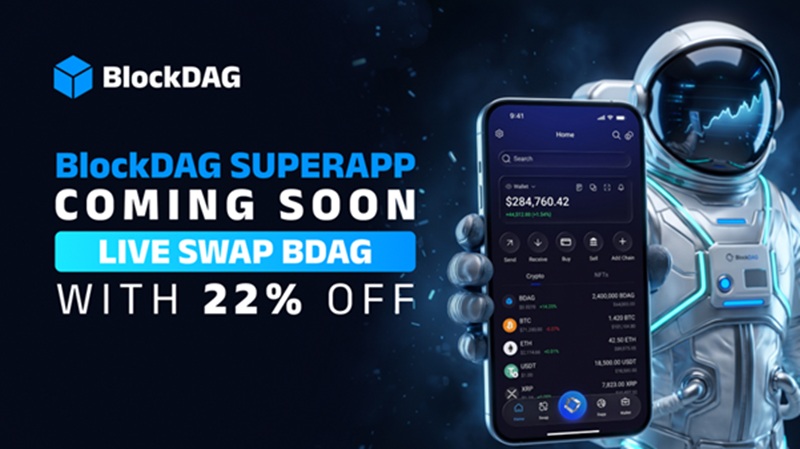
BlockDAG has revealed a major deal with RedotPay to release the BlockDAG Super App, bringing a complete money system into one simple screen. This partnership connects digital coins directly to daily spending tools, merging mining, BDAG claims, staking, trading, coin holding, games, wire transfers, payment cards, and store purchases into one total platform.

By placing RedotPay’s payment system right inside the tool, users can easily move from earning tokens to spending money anywhere in the world. Instead of forcing people to use different software for wallets, debit cards, and features, the Super App joins every tool under one roof. This focus on real daily use sets working platforms apart from basic speculation among top crypto coins.

Along with this system growth, BlockDAG is giving special rewards to project users. People can buy BDAG at $0.000000017, get a 22% deal through Live Swap, and use $0.025 buyback choices. As daily spending becomes key for keeping users long-term, putting all these tools into a single software creates a direct path for wider everyday use. One simple app, one full system, driven completely by BDAG.

Final Thoughts

Checking these different crypto projects shows two distinct path drivers: speculative chart patterns versus real everyday use. The MemeCore price shows quick daily excitement powered by short-term indicators, while the Bittensor TAO price tests major buying floors right before a huge builder event. On the other hand, BlockDAG works on linking blockchain tech directly to store purchases through its RedotPay Super App deal.

By putting staking, storage, international money moves, and payment cards inside a single software, BlockDAG fixes user troubles directly. As investors look for long-term growth in top crypto coins, projects providing direct real-world value alongside set money rewards stay set up for huge lasting success.

Aftersale: https://purchase.blockdag.network

Website: https://blockdag.network

Telegram: https://t.me/blockDAGnetworkOfficial

Discord: https://discord.gg/Q7BxghMVyu

Sinopec Opens World’s Largest High-End PVA Production Base As China Pushes to Reduce Reliance on Advanced Material Imports

0

Chinese oil and chemicals giant Sinopec has commenced operations at a new high-end polyvinyl alcohol (PVA) resin plant in Chongqing, expanding domestic production of a strategically important industrial material as China intensifies efforts to reduce dependence on imported specialty chemicals.

The new facility, with an annual production capacity of 50,000 metric tons, is operated by Sinopec Chongqing SVW Chemical Co. Its commissioning increases the site’s total PVA production capacity to 210,000 metric tons per year, according to a company statement released on Monday.

The expansion transforms the Chongqing complex into the world’s largest single-site production base for high-end PVA, elevating its overall production capacity to the fourth-largest globally and strengthening China’s position in the international specialty chemicals market.

The investment aligns with Beijing’s broader industrial strategy of achieving greater self-sufficiency in advanced materials that support high-value manufacturing sectors including semiconductors, renewable energy, pharmaceuticals and electronics.

Polyvinyl alcohol is a biodegradable, water-soluble synthetic polymer widely used across industrial and consumer applications. While it is commonly found in everyday products such as facial masks, adhesives, paper coatings and textile sizing agents, high-end grades of PVA are increasingly critical for advanced manufacturing.

The material is used in photovoltaic films for solar panels, optical films for electronic displays, pharmaceutical formulations, specialty packaging and other high-performance industrial applications where purity and precise chemical characteristics are essential. Demand for premium-grade PVA has risen steadily alongside global growth in renewable energy, consumer electronics and healthcare manufacturing, making it an increasingly strategic industrial material.

Sinopec said the expansion addresses one of China’s longstanding industrial challenges. Despite being one of the world’s largest chemical producers, China has historically relied on imported high-end PVA for applications requiring stringent quality standards, particularly optical films used in display technologies and pharmaceutical-grade products.

According to the company, the new production line can manufacture premium PVA grades comparable to leading international products, helping narrow the domestic supply gap while improving the resilience of China’s industrial supply chain.

The development comes as Chinese manufacturers seek to localize production of advanced materials amid heightened geopolitical tensions, technology restrictions and efforts to strengthen domestic supply chains. Expanding domestic production also reduces exposure to international supply disruptions while improving cost competitiveness for downstream manufacturers.

The Chongqing facility already serves as one of China’s leading export hubs for specialty PVA products.

According to Sinopec, Chongqing SVW Chemical currently manufactures more than 70 product varieties that are exported to over 40 countries. The company said the plant produces more than 80% of China’s exports of high-end PVA destined for the European market, underscoring its importance within the country’s specialty chemicals export sector.

Sinopec also noted that it remains the only domestic Chinese PVA producer to have successfully entered the U.S. market, highlighting its ability to meet demanding international quality and regulatory standards despite intensifying competition in global chemical markets.

China is prioritizing its strategy of moving up the manufacturing value chain. Thus, Chinese producers are increasingly investing in higher-value specialty materials that command stronger margins and support advanced manufacturing industries, rather than focusing solely on expanding production volumes of commodity chemicals.

Specialty polymers such as PVA are seen as strategically important because they serve as key inputs for industries targeted under China’s long-term industrial modernization initiatives, including clean energy, biotechnology, advanced electronics and precision manufacturing.

As demand for solar panels, electric vehicles, medical products and high-performance electronics continues to grow globally, domestic production of advanced chemical materials is expected to become an increasingly important source of competitive advantage for Chinese manufacturers.

Overall, the new Chongqing facility is seen as another example of China’s continued drive to strengthen self-sufficiency in critical industrial materials while expanding its presence in global specialty chemicals markets.

But the project represents another step in Sinopec’s push to diversify beyond its traditional oil refining and petrochemicals businesses into higher-value advanced materials that are less exposed to commodity price cycles and offer stronger long-term growth prospects.

American Bitcoin’s Q2 Loss Highlights Challenges Facing Bitcoin Miners

0

The second quarter earnings season continues to highlight the financial pressures facing companies tied to the cryptocurrency industry, and American Bitcoin has become the latest example.

The company reported a net loss of $57 million in the second quarter, reflecting the difficult balance between expanding mining operations, managing operational costs, and navigating a volatile digital asset market.

While Bitcoin prices have recovered significantly from previous lows, mining firms remain under pressure from rising infrastructure expenses, financing costs, and increasing competition across the sector.

American Bitcoin’s quarterly results illustrate that higher Bitcoin prices alone do not guarantee profitability. Mining companies must continuously invest in specialized hardware, data centers, and electricity to remain competitive.

As mining difficulty increases across the Bitcoin network, firms need greater computing power simply to maintain the same production levels. These capital-intensive requirements often weigh heavily on earnings, particularly during periods of rapid expansion.

The reported $57 million loss was influenced by several factors, including operating expenses, depreciation of mining equipment, and costs associated with scaling the company’s infrastructure.

Like many Bitcoin miners, American Bitcoin has prioritized long-term capacity growth rather than short-term profitability. Management believes that expanding mining capabilities today could position the company to benefit from stronger Bitcoin prices and increased network activity in the future.

The broader mining industry has undergone significant changes since the most recent Bitcoin halving, which reduced block rewards for miners by half. The event effectively cut mining revenue overnight, forcing companies to improve efficiency or risk falling behind.

Larger firms with access to cheaper electricity and stronger balance sheets have generally adapted better, while smaller operators continue to face margin pressures.

Energy remains one of the industry’s biggest challenges. Electricity accounts for a substantial portion of mining costs, making access to low-cost and reliable power essential.

Many mining companies have responded by relocating operations, signing long-term energy agreements, or investing in renewable energy sources to reduce expenses. American Bitcoin is also expected to continue exploring strategies that improve operational efficiency while maintaining competitive production levels.

Investor sentiment toward Bitcoin mining companies often depends more on future growth potential than near-term earnings. Shareholders closely monitor metrics such as Bitcoin production, mining capacity, hash rate expansion, and treasury holdings rather than focusing exclusively on quarterly profit or loss.

If Bitcoin continues to appreciate over the coming months, miners holding significant reserves could see substantial improvements in their balance sheets.

The company’s performance also reflects broader market dynamics affecting the cryptocurrency sector.

Rising institutional adoption, expanding Bitcoin exchange-traded funds, and growing corporate interest have strengthened the long-term outlook for Bitcoin. These positive developments do not eliminate operational risks for miners, who must continuously adapt to technological advances and changing market conditions.

American Bitcoin’s management will likely focus on improving operational efficiency, optimizing energy consumption, and strengthening liquidity. Investors will watch future earnings reports for signs that cost controls are beginning to offset the financial impact of higher mining difficulty and infrastructure investments.

Much will also depend on Bitcoin’s price trajectory, as sustained strength in the cryptocurrency could significantly improve mining economics. American Bitcoin’s $57 million second-quarter loss highlights the realities of operating in one of the most competitive segments of the digital asset ecosystem.

While the company remains committed to expanding its mining footprint and positioning itself for long-term growth, the latest results demonstrate that success in Bitcoin mining requires far more than a rising cryptocurrency price.

Efficient operations, disciplined capital allocation, and strategic investment will remain essential as the industry continues to mature in an increasingly competitive environment.

Solana Faces Historic Bearish Streak as Investors Watch for Recovery Signals

0

Solana has reached a milestone that few investors would have expected during the height of the last crypto bull market.

The blockchain, once celebrated for its explosive growth, vibrant decentralized finance ecosystem, and thriving NFT community, has reportedly recorded its tenth consecutive monthly red candle.

The prolonged decline reflects one of the longest sustained periods of bearish price action in the asset’s history and has reignited debate over whether Solana is simply enduring a market cycle or facing deeper structural challenges.

A monthly red candle indicates that an asset closes the month at a lower price than where it began. While short-term volatility is common in cryptocurrencies, a streak lasting ten consecutive months signals persistent selling pressure and weakening investor sentiment.

Such an extended downturn often discourages retail participation, reduces speculative activity, and forces traders to reassess their long-term expectations for the asset. Despite the negative price performance, Solana’s underlying network continues to demonstrate resilience.

The blockchain remains one of the fastest and most actively used smart contract platforms in the industry. Developers continue to launch decentralized applications spanning decentralized finance, gaming, payments, artificial intelligence, and tokenized real-world assets.

Daily transaction volumes remain among the highest in the crypto sector, suggesting that network activity has not declined at the same pace as market valuation. Several factors have contributed to Solana’s prolonged weakness.

Broader macroeconomic uncertainty has pressured risk assets across financial markets, while tighter monetary conditions have reduced liquidity available for speculative investments.

The cryptocurrency market has also experienced heightened volatility due to shifting regulatory policies, profit-taking after previous rallies, and cautious investor positioning ahead of key economic events.

Competition within the smart contract ecosystem has further intensified. Ethereum continues to dominate decentralized finance and institutional adoption, while emerging blockchains compete aggressively for developers, liquidity, and users.

As capital becomes more selective, investors increasingly favor projects with stronger revenue generation, established ecosystems, and sustainable token economics. Solana must therefore continue proving that its technological advantages translate into long-term economic value.

History suggests that extended bearish periods can also create opportunities. Previous crypto market cycles have demonstrated that prolonged corrections often precede renewed accumulation by long-term investors. Market participants who maintain conviction during downturns frequently focus on network fundamentals rather than short-term price movements.

If Solana continues expanding its ecosystem, improving infrastructure, and attracting institutional interest, the current streak could eventually be viewed as a period of consolidation rather than permanent decline.

Institutional adoption may play a decisive role in Solana’s future performance. Growing interest in blockchain-based financial products, stablecoin settlements, tokenized assets, and decentralized infrastructure could provide new demand for high-performance networks capable of processing transactions efficiently.

Solana’s technical architecture positions it well to benefit from these emerging trends if adoption accelerates. Ten consecutive monthly red candles paint a challenging picture for Solana’s market performance, but they do not necessarily define the blockchain’s long-term prospects.

Price cycles are an inherent characteristic of digital assets, and sustained innovation often matters more than temporary market sentiment.

Investors will likely continue monitoring developer activity, ecosystem growth, institutional participation, and macroeconomic conditions to determine whether Solana can reverse its bearish trend.

The coming months may prove pivotal in establishing whether this historic losing streak marks the end of a prolonged correction or the foundation for the network’s next phase of growth.