DD
MM
YYYY

PAGES

DD
MM
YYYY

spot_img

PAGES

Home Blog

Trump Warns Britain Off China as Global Leaders Re-Engage Beijing, Amid Shifting Trade and Geopolitical Order

0

U.S. President Donald Trump has openly warned Britain against deepening business ties with China, sharpening a transatlantic divide at a moment when a growing number of U.S. allies are reassessing their economic and diplomatic strategies in response to Washington’s increasingly unpredictable trade posture.

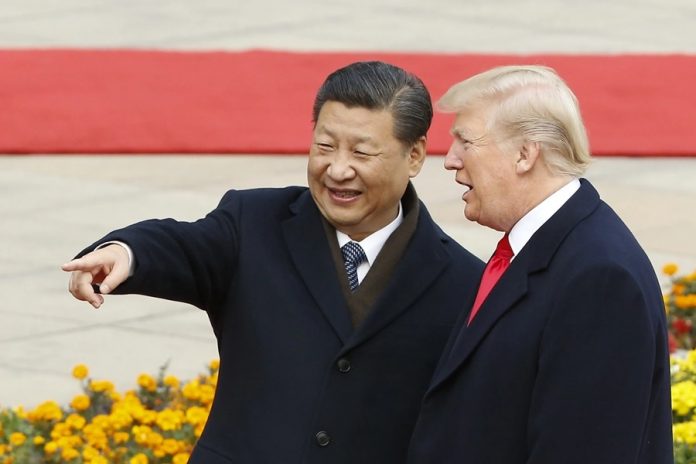
Speaking to reporters in Washington ahead of the premiere of the film Melania at the Kennedy Center, Trump said it was “very dangerous” for Britain to be getting into business with Beijing. He offered no further explanation, but the remark landed as Prime Minister Keir Starmer was in China, publicly championing a reset in relations with the world’s second-largest economy.

Starmer’s visit, which included more than three hours of talks with Chinese President Xi Jinping, reflects a broader recalibration underway among Western and middle-power economies. Faced with Trump’s aggressive use of tariffs, threats against allies, and willingness to upend long-standing trade norms, governments that once kept Beijing at arm’s length are now reopening channels to China in search of economic stability, market access, and strategic optionality.

During his meeting with Xi, Starmer called for a “more sophisticated relationship” between London and Beijing, pressing for improved market access, lower tariffs, and new investment flows, according to Reuters. The discussions ranged from trade and visas to culture, touching on soccer and Shakespeare, underscoring Starmer’s effort to frame engagement as pragmatic rather than ideological.

Addressing the UK-China Business Forum in Beijing, Starmer described his meetings with Xi as “very warm” and said they had delivered “real progress.” He pointed to agreements on visa-free travel and reduced tariffs on British whisky as tangible outcomes, describing them as “really important access, symbolic of what we’re doing with the relationship.”

“That is the way that we build the mutual trust and respect that is so important,” Starmer said.

The British leader’s message was aimed as much at domestic audiences as at Beijing. Since taking office in July 2024, Starmer’s centre-left Labour government has struggled to deliver faster economic growth, and improving relations with China has become a central pillar of its strategy to attract investment and boost exports. Ahead of his departure for Shanghai, Starmer met senior Chinese executives, including Chery chief executive Yin Tongyue. During the visit, a Liverpool city official said Chery plans to open a research and development center for its commercial vehicle arm in the northern English city.

In London, Trump’s warning drew a sharp rebuttal. British trade department minister Chris Bryant said the U.S. president was “wrong” to describe the UK’s engagement with China as dangerous.

“Of course, we enter into our relationship with China with our eyes wide open,” Bryant told the BBC, emphasizing that Britain was capable of balancing economic interests with national security considerations.

Starmer himself has repeatedly argued that closer economic ties with China do not come at the expense of the UK’s alliance with the United States. Speaking to reporters on the plane to Beijing, he stressed Britain’s long-standing partnership with Washington across defense, security, intelligence, and trade, and insisted London did not have to choose between the two powers. He cited Trump’s own state visit to Britain last September, which unveiled £150 billion in U.S. investment commitments.

A British government official said Washington was given advance notice of Starmer’s objectives for the China trip, an attempt to avoid surprising the White House at a sensitive moment in global trade relations.

Even so, the episode highlights how Trump’s trade policies are increasingly reshaping alliances and geopolitics in ways that may ultimately benefit China. Since returning to the office, Trump has deployed tariffs not only against Beijing but also against close partners, including Canada and the European Union, while floating threats against Denmark over Greenland and pressing allies on defense and trade concessions.

That approach has injected uncertainty into the rules-based global trading system Washington once championed. Canadian Prime Minister Mark Carney captured that shift last week when he urged countries to accept that the old order was ending, explicitly citing U.S. trade policy. Shortly after Carney struck economic deals with Beijing, Trump threatened to impose tariffs on Canada, reinforcing the perception that engagement with China now carries political risk in Washington.

Trump’s Commerce Secretary, Howard Lutnick, echoed the skepticism toward Britain’s China outreach, telling reporters it was unlikely Starmer’s efforts would pay off.

“The Chinese are the greatest exporters and they are very, very difficult when you’re trying to export to them,” Lutnick said. “So good luck if the British are trying to export to China … it’s just unlikely.”

Asked whether Britain could face Canada-style tariff threats, Lutnick suggested that would depend on London’s tone toward Washington.

Despite Washington’s warnings, others are joining the fray. Countries that once distanced themselves from China during its trade war with the United States are now sending their leaders to Beijing in quick succession. In January alone, at least five national leaders, including Starmer and Carney, met Xi. Ireland’s prime minister visited China earlier this month for the first time in 14 years, while Uruguay’s President Yamandú Orsi is due in Beijing next week, marking the first South American presidential visit since Trump captured Venezuelan leader Nicolás Maduro and his wife in early January.

German Chancellor Friedrich Merz is expected to visit China soon, following French President Emmanuel Macron’s December trip, during which Xi accompanied him on a rare excursion outside Beijing.

Large business delegations have become a common feature of these visits, reflecting the enduring pull of China’s vast consumer market and its role in global manufacturing and supply chains.

Beijing, for its part, has seized the moment to present itself as a stabilizing force amid U.S. volatility, urging visiting leaders to provide fair treatment for Chinese companies and highlighting China’s push for technological self-sufficiency and global influence. Senior Chinese officials have framed the country’s modernization drive as an alternative to a “Western-centric” development model, a message that resonates with both developing economies and advanced nations seeking leverage in dealings with Washington.

Still, the balancing act is delicate. Against the backdrop of Washington’s warning that “China sells nothing but cheap products and cheap friendships,” European leaders, including Macron, have continued to signal willingness to impose tariffs or take defensive measures when Chinese trade practices clash with domestic industrial interests.

Starmer, who has traditionally avoided public confrontation with Trump, has nonetheless shown a greater willingness to push back in recent weeks. He called Trump’s remarks about NATO troops avoiding frontline combat “frankly appalling” and said he would not yield to U.S. pressure over Greenland, signaling a subtle but notable shift in tone.

With all these in view, it is now clear that a transactional approach to trade is accelerating a realignment in global diplomacy. While the United States remains the dominant economic and security power, its unpredictability is prompting allies to hedge, diversify, and reopen doors to China.


Analyst Projections Suggest Ozak AI Could Become One of the Cycle’s Top Long-Term Winners With ROI Above 10,000%

0

As the crypto market experiences turbulence and many blue-chip tokens struggle to maintain momentum, Ozak AI ($OZ) is emerging as a potential top performer. Analysts tracking the integration of AI and blockchain suggest that, with its unique technology and expanding ecosystem, Ozak AI could deliver extraordinary long-term returns, with ROI scenarios exceeding 10,000% for early participants.

Strong Presale Momentum Signals Growing Demand

Ozak AI’s presale has demonstrated remarkable growth, signaling strong investor confidence. The token launched at $0.001 in Phase 1 and has progressed to $0.014 in Phase 7, marking a 1,300% increase from its initial price. With over 1.12 billion $OZ tokens sold and over $6.09 million raised, the platform is on track toward its target listing price of $1.00. Analysts note that this steady adoption, combined with a clear roadmap, positions Ozak AI as a promising project capable of delivering multi-phase growth.

DePIN and the Integrated Ecosystem Drive Utility

At the heart of Ozak AI is DePIN (Decentralized Physical Infrastructure Network), which decentralizes computing and data resources across a network of contributors. By distributing processing power and storage, DePIN provides secure, tamper-proof access to real-world data, enabling AI models to perform predictive analysis with higher accuracy and reliability than centralized systems.

Beyond DePIN, the platform’s ecosystem integrates multiple features that amplify its utility. The Ozak Streaming Network (OSN) delivers high-frequency market and financial data in real-time, feeding predictive algorithms that continuously analyze trends. Prediction Agents allow users to configure personalized AI models that monitor specific markets or strategies around the clock.

The Neuron AI layer serves as the analytical core, processing complex datasets to generate actionable insights, while Ozak Data Vaults secure user data and agent configurations. Users interact with the ecosystem through the Eon Dashboard, a streamlined interface for monitoring predictions, and the Smart Contract Execution Layer ensures transparent and verifiable operations. Additionally, advanced predictive models, including neural networks and ARIMA time-series analytics, underpin the platform’s forecasting capabilities, while users can also monetize custom signals to generate $OZ revenue when others subscribe.

Together, these components create a cohesive, decentralized AI ecosystem that provides real-world value, setting the foundation for sustained long-term growth.

Partnerships Expand Market Reach

Strategic collaborations further enhance Ozak AI’s prospects. The integration with Pyth Network ensures access to reliable, real-time market data, which improves predictive accuracy. Meanwhile, partnership with SINT facilitates automated execution of AI-driven strategies and voice-activated interactions, bridging insights with actionable outcomes. Analysts believe these partnerships strengthen the platform’s adoption potential, extending its utility beyond analytics into practical execution.

ROI Potential for Early Investors

To illustrate potential returns, consider an investor who purchased $100 worth of $OZ during Phase 1 at $0.001 per token, acquiring 100,000 $OZ. At the target listing price of $1.00, this position would be valued at $100,000, representing a 1,000× gain. Even investors who entered later at Phase 7, paying $0.014 per token, would see their $100 investment grow to over $7,000 if the token reaches the listing target. Analysts highlight that as adoption and utility scale across DePIN, OSN, and Prediction Agents, multi-phase growth could magnify these returns, potentially pushing ROI well above 10,000% for long-term holders.

Outlook: Positioned for Multi-Phase Growth

While many established cryptocurrencies face sluggish growth, Ozak AI’s decentralized architecture, integrated analytics, and strategic partnerships position it as a high-potential long-term winner. Its combination of real-time AI insights, actionable execution, and a monetizable ecosystem offers more than speculative appeal. The presale momentum, robust technology stack, and partnership integrations suggest that Ozak AI is well-placed to deliver multi-phase gains, making it a standout candidate for investors seeking asymmetric long-term returns.


For more information about Ozak AI, visit the links below:

Website: https://ozak.ai/

Twitter/X: https://x.com/OzakAGI

Telegram: https://t.me/OzakAGI

ZKP Takes the Lead With a $1.7B Forecast, Leaving DOGE and LINK Behind

0

The crypto market has slowed, with trading volumes hovering near $6 billion. The Dogecoin current price is holding close to $0.12, while Chainlink crypto is moving sideways around $12. These well known assets appear to be losing momentum, raising doubts about whether such mature tokens can still deliver the kind of explosive gains many investors seek.

This shift in sentiment has brought ZKP into focus. The project is moving quickly through its presale auction phase, and analysts now estimate the total raise could exceed $1.7 billion. Supporters describe this as ownership of the core resource of the AI era. As public data sources become exhausted, experts believe ZKP’s private data marketplace could see sharp demand growth, opening the door to a possible 8,000x return.

Unlike legacy tokens, ZKP is directly linked to the expanding AI data economy. Researchers highlight this clear use case as the reason it is increasingly ranked above older networks, reinforcing its position among the top crypto coins for long term growth.

How ZKP Is Positioning Itself at the Center of AI Data Demand

ZKP is drawing strong attention as its fast paced presale auction continues. Now in Stage 2, the project releases 190 million coins each day through a structured presale auction aimed at fair distribution before mainnet. With more than $100 million already invested into infrastructure, the network is live and functional. This level of self funding signals a serious build out rather than a concept stage idea.

Technology analysts point to this readiness as the reason ZKP is being discussed as one of the top crypto coins to follow closely. They expect the presale auction to move past $1.7 billion, especially since it offers early access to what many view as the essential resource powering future AI systems.

Experts note that AI models are rapidly consuming available public data. As this supply tightens, demand for private and verifiable data sources is expected to rise sharply. ZKP addresses this gap by enabling secure verification without revealing raw information, placing it in a strong strategic position.

Projections of an 8,000x outcome are based on ZKP capturing only a small share of the massive AI data market. Early participants are, in effect, securing access to this emerging economy before a potential $1.7 billion valuation raises the barrier to entry for most buyers.

Researchers stress that timing matters. As availability narrows, they argue that ZKP stands out as a rare opportunity, strengthening its reputation among the top crypto coins for investors focused on generational scale growth.

Dogecoin Price Finds Its Footing After Weekend Pressure

Dogecoin is showing signs of recovery today after facing strong selling pressure over the weekend. The Dogecoin current price is now trading between $0.121 and $0.123, reflecting a rebound of about 1.5% to 2.5% from recent lows. Buyers managed to protect the key $0.117 support area, preventing a deeper slide toward the $0.10 mark.

Traders are now focused on a tight squeeze pattern forming on the charts, a setup that often points to an incoming sharp move. Sentiment feels cautious but optimistic as volume begins to settle.

Analysts are closely monitoring this setup as volatility continues to narrow. Even with Bitcoin trading below $88,000 and broader market caution in place, Dogecoin has held above recent lows. Still, experts note that a clean break above the $0.124 resistance level is needed to confirm a stronger rally. For now, investors are watching closely to see if this bounce can turn into a lasting move.

Chainlink Holds Firm as Big Money Steps In

Chainlink is holding up well today despite weakness across the wider market. The Chainlink crypto price is moving between $11.87 and $12.25, showing only a mild drop of roughly 1.5% to 2.5%. While many large assets are seeing heavier selling, institutional investors appear to be accumulating Chainlink. Data shows that as Ethereum funds recorded $630 million in outflows last week, Chainlink products attracted close to $4 million in inflows. This contrast suggests strong confidence from large investors during uncertain conditions.

Interest is also building around several developments that could support future growth. Bitwise recently described the Chainlink crypto network as undervalued due to its role in linking real-world data to blockchains. The project’s acquisition of Atlas aims to capture more revenue from DeFi activity. At the same time, traders are positioning ahead of regulated futures expected to launch in February. These moves point to solid long-term prospects, helping maintain confidence even as prices consolidate.

Closing View as AI Data Demand Comes Into Focus

The Dogecoin current price is showing a delicate recovery as traders defend important support levels. At the same time, Chainlink crypto is seeing institutional inflows but remains locked in a slow and steady consolidation phase. While these well-known assets offer stability, they may not deliver the fast and dramatic upside that more aggressive investors are seeking right now.

Because of this, analysts are increasingly pointing to the ZKP presale auction as a stronger opportunity. Experts expect the raise to exceed $1.7 billion, giving public investors early access to what many describe as the core resource of the AI era before prices rise sharply.

They also argue that as AI systems run out of public data, demand for ZKP’s private data marketplace could surge. This real-world use case is driving forecasts of an 8,000x outcome, positioning ZKP as a clear leader among top crypto coins for long-term, high-growth potential.

Explore ZKP:

Website: https://zkp.com/

Buy: https://buy.zkp.com

Telegram: https://t.me/ZKPofficial

X: https://x.com/ZKPofficial

Nigeria 2030s will be Shaped by Capital Market Dynamism

1

Good People, if you study Nigeria’s business history closely, you will notice a pattern: roughly every decade, the economy undergoes a structural redesign driven by a new operating system. These redesigns do not announce themselves loudly, but when they arrive, they reorder winners, redraw value chains, and retire old playbooks.

In the 1990s, the new generation banks emerged with technology as their weapon of choice. They deployed VSAT to link branches, collapsed distance, and made banking location-agnostic. Overnight, proximity lost its power, and legacy banks were forced to either retool or quietly fade. Then came the 2000s, when GSM arrived. Voice telephony did more than connect calls; it rewired commerce, accelerated coordination, expanded markets, and lifted national productivity. A new layer of economic energy was released.

The 2010s deepened that transformation. Telcos moved Nigeria from voice to data, from calls to mobile internet. Phones stopped being communication devices and became economic terminals, Yes, mini banks, mini schools, mini offices, and marketplaces in our pockets. The center of gravity of economic life shifted to the palm of the hand. And then, quietly, a new era began.

Today, we are in the decade of application utility, a localized Cambrian moment. Young people are stacking digital tools, recombining APIs, and fixing frictions across payments, logistics, commerce, healthcare, education, and beyond. The market is being redesigned from the bottom up. This is not yet consolidation; it is exploration. And the game has only just begun.

But here is the inflection ahead: because of the Investment and Securities Act (ISA) 2025, the 2030s will likely become Nigeria’s Capital Market Decade. ISA 2025 is one of the most consequential pieces of business legislation Nigeria has enacted in a quarter century. It does not merely tweak rules; it expands the imagination of what can exist in the market. New asset classes will emerge. New instruments will be engineered. New wealth will be constructed.

Put it in perspective. South Africa’s stock market is valued at over $1 trillion. Nigeria’s market struggles below $70 billion, not because Nigeria lacks ambition or talent, but because our asset universe is shallow and under-expressed. ISA 2025 changes that equation. It opens pathways for derivatives, commodities, fractional assets, digital instruments, and structured products to thrive. When assets deepen, capital compounds. And when capital compounds, nations redesign their futures.

Young people, expect massive economic acceleration in the 2030s in Nigeria. In that decade, Nigeria will move from a society of money into one of capital, and whenever that happens, great things happen. Simply, capital market, one of the most important inventions of humans, will shape the 2030s of Nigeria. You will see new species of assets and those will redesign the markets and the economy.

Nigeria will not play major productive roles in AI because we do not have energy systems. You need electricity to participate in the AI era at the upstream productive level. Also, the cost of AI will make it extremely hard for many companies to adopt. Unlike SaaS, AI has a cost model that does not improve marginal cost with scale. So, do not expect immediate and large-scale adoption of AI in Nigeria. But in the capital market, I expect new securities and expansion of the asset classes due to ISA. That mansion you have in the village will enter Nigeria’s general ledger and bank’s balance sheets.

Gold and Silver Crash in Historic Rout as Policy Signals, Overcrowded Trades and Liquidity Strains Collide

0

The precious metals market suffered one of its most violent reversals on record on Friday, as gold and silver prices collapsed in a dramatic unwind of trades that had defined much of this year’s global macro landscape.

What unfolded was not merely a technical correction but a sharp reassessment of monetary policy risk, investor positioning, and the fragility of liquidity in markets that had been driven into near-parabolic territory.

Gold futures fell as much as 11% intraday, sliding below $4,900 per troy ounce and erasing a substantial portion of their year-to-date gains in a single session. In the spot market, gold recorded its largest daily percentage decline since the early 1980s, a period associated with the aftermath of Paul Volcker’s aggressive interest-rate campaign. Silver’s decline was even more extreme. Futures plunged more than 25%, the largest one-day fall on record, after prices had surged to an extraordinary $120 per ounce just a day earlier.

The selloff coincided with a broader risk-off move across global markets. U.S. equities fell sharply, the dollar stabilized after weeks of weakness, and volatility spiked as investors digested President Donald Trump’s decision to nominate Kevin Warsh as the next chair of the Federal Reserve. While Warsh is expected to support interest-rate cuts later this year, his reputation as a policy hawk and a defender of central bank credibility altered a narrative that had become deeply embedded in markets.

For months, gold and silver had been beneficiaries of a powerful convergence of themes. Persistent U.S. fiscal deficits, concerns about political influence over monetary policy, aggressive central bank gold buying, and a weakening dollar all reinforced the idea that precious metals offered protection against inflation, currency debasement, and systemic risk. The Federal Reserve’s decision earlier this week to keep rates unchanged, coupled with comments from outgoing Chair Jerome Powell that did little to arrest the dollar’s slide, helped push gold above $5,500 and silver to levels unseen in modern trading history.

That surge, however, left markets increasingly one-sided. Positioning data and anecdotal evidence suggested that hedge funds, commodity trading advisors, and retail investors were heavily concentrated in long precious metals trades. In that context, even a modest shift in expectations had the potential to trigger a disorderly exit.

The nomination of Warsh acted as that catalyst. Strategists noted that while the pick does not immediately change policy, it eased fears that the Fed would permanently abandon its inflation-fighting mandate under political pressure. The perception that central bank independence would remain intact weakened one of the core psychological drivers of the metals rally: the belief that real rates would stay deeply negative for an extended period.

Mike McGlone, senior commodity strategist at Bloomberg, said the scale and speed of the rally had made a sharp pullback almost inevitable. He argued that history shows periods of explosive price appreciation in metals often precede enduring peaks, particularly for silver, which tends to exaggerate both upside momentum and downside reversals. In his assessment, the market had reached a point where bullish fundamentals were no longer sufficient to justify the pace of gains.

Liquidity dynamics compounded the move. Ole Hansen, head of commodity strategy at Saxo Bank, had warned earlier this week that volatility itself had become a risk factor. As price swings widened, bid-ask spreads thinned, and market depth deteriorated, creating conditions where selling pressure could cascade rapidly. On Friday, that feedback loop was on full display, with stop-loss orders, margin calls, and forced liquidations amplifying losses.

The reversal also exposed tensions between short-term market psychology and longer-term fundamentals. Just days earlier, Goldman Sachs had reiterated a bullish outlook for gold, setting a year-end price target of $5,400 and pointing to increased participation from private-sector investors as a key upside risk.

Central bank demand, particularly from emerging markets seeking to diversify away from the dollar, remains structurally strong. From that perspective, Friday’s collapse does not negate the broader strategic case for gold, but it does challenge the assumption that prices can rise in a straight line.

Silver’s fall was particularly striking because its rally had been fueled by both monetary and industrial narratives. In addition to serving as a hedge against currency weakness, silver has benefited from expectations of rising demand tied to electrification, solar power, and advanced manufacturing. That dual role makes the metal especially sensitive to shifts in macro sentiment. When confidence falters, silver often behaves less like a store of value and more like a high-beta risk asset, a pattern that reasserted itself forcefully during the selloff.

Robin Brooks of the Brookings Institution had noted earlier in the week that the rally in gold was a clear signal of entrenched conviction in the “dollar-down trade.” Friday’s reversal suggests that conviction was vulnerable once markets began to question whether policy outcomes would be as one-sided as investors had assumed. Even a partial stabilization in the dollar was enough to trigger a rapid reassessment of risk.

By the end of the session, silver was trading near $83 per ounce, still elevated by historical standards but dramatically lower than its recent peak. Despite the collapse, the metal remains modestly higher for the year, following an extraordinary run in 2025. JPMorgan analysts had cautioned earlier this month that prices had already overshot forecasted averages, while acknowledging that markets exhibiting near-parabolic momentum are notoriously difficult to time.

Analysts believe the broader lesson from the rout is less about any single policy decision and more about the dangers of crowded trades in an environment of heightened uncertainty. Gold and silver had become emblematic of a global macro bet on falling real rates, sustained dollar weakness, and diminishing confidence in fiat currencies. Once that narrative was even slightly challenged, the unwind was swift and unforgiving.