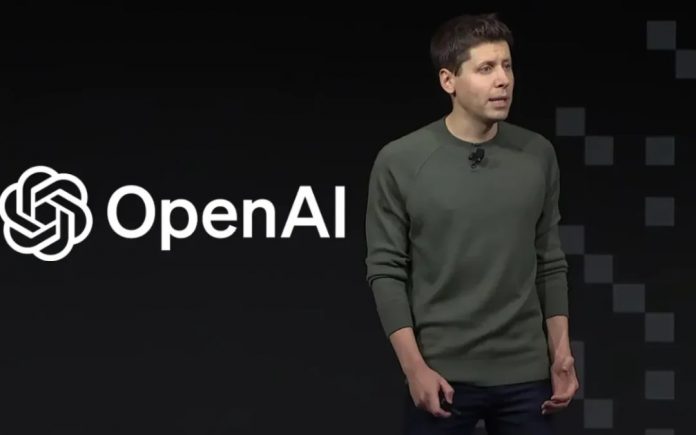
Sam Altman is openly conflicted about the idea of taking OpenAI public, a hesitation that underscores the tension between the company’s explosive growth and the structural demands that come with operating at unprecedented scale.
Speaking on the Big Technology Podcast published on Thursday, the OpenAI chief executive made clear that while he sees advantages in an eventual stock market listing, the costs — particularly for leadership and long-term decision-making — loom large.
“Am I excited for OpenAI to be a public company? In some ways, I am, and in some ways I think it’d be really annoying,” Altman said.
On the prospect of personally running a listed company, he asked: “Am I excited to be a public company CEO?”
Those remarks come at a time when OpenAI’s trajectory increasingly resembles that of a mega-cap public company, even as it remains privately held. Founded in 2015 as a research-focused lab, OpenAI has been transformed since the launch of ChatGPT in late 2022 into one of the most influential forces in global technology. ChatGPT now has around 800 million weekly users, a scale that rivals or exceeds many established consumer platforms, and OpenAI has embedded its models across enterprise software, developer tools, and consumer applications.
The company has also entered into sweeping commercial and infrastructure arrangements with some of the biggest names in technology. Altman said OpenAI has inked deals worth about $1 trillion with partners including Oracle, Nvidia, and AMD, underscoring both the scale of its ambitions and the capital intensity of building and running frontier AI models. These agreements reflect OpenAI’s reliance on vast amounts of compute, energy, and specialized hardware, costs that continue to rise as models grow more capable and more widely deployed.
That capital intensity sits at the heart of the IPO debate. Altman acknowledged that OpenAI “needs lots of capital” and will eventually run into shareholder and regulatory limits that make staying private difficult. Private markets have so far been willing to supply funding at eye-watering valuations. In October, OpenAI was valued at about $500 billion in a secondary share sale, briefly overtaking Elon Musk’s SpaceX as the most valuable private company in the world before SpaceX reclaimed the top spot. This week, The Information reported that OpenAI is seeking to raise billions more at a valuation of roughly $750 billion.
Such figures point to extraordinary investor confidence, but they also raise questions about sustainability and expectations. OpenAI’s revenues, while growing rapidly, still lag far behind its valuation. The company is reported to be generating annual run-rate revenue of around $20 billion, driven by ChatGPT subscriptions, enterprise licensing, and API access. Against that, its spending runs into the tens of billions of dollars a year, much of it tied to inferencing costs, data center expansion, and long-term compute commitments that cannot be fully offset by cloud credits or partnerships. An IPO would expose that imbalance to the full glare of public markets, where tolerance for prolonged losses can shift quickly.
There are also governance considerations. OpenAI’s unusual structure — originally a nonprofit with a capped-profit arm — was designed to prioritize safety and long-term research over short-term financial returns. While that structure has already evolved significantly as the company has commercialized, becoming a public company would further tilt incentives toward quarterly performance and shareholder returns. For a firm racing rivals like Google, Anthropic, Meta, and xAI to develop ever more powerful models, that pressure could complicate decisions about research timelines, safety investments, and deployment speed.
Still, Altman does not dismiss the idea of going public outright. He said he likes the idea that “public markets get to participate in value creation,” framing an IPO as a way to broaden ownership and give ordinary investors access to the upside of AI development, rather than confining gains to venture capital and sovereign wealth funds.
Signs of preparation are already emerging. Reuters reported in October that OpenAI is considering filing with securities regulators as soon as the second half of 2026. That timeline would allow the company to further scale revenues, refine its corporate structure, and, potentially, narrow the gap between spending and income before subjecting itself to public scrutiny. Yet when asked directly on the podcast whether OpenAI would list next year, Altman replied, “I don’t know,” adding that if it does happen, “we will be very late to go public.”
However, OpenAI appears intent on buying time — raising ever-larger private rounds, deepening strategic partnerships, and pushing its technology into more products and markets for now.