DD
MM
YYYY

PAGES

DD
MM
YYYY

spot_img

PAGES

Home Blog

China extends gold buying streak as reserve strategy persists amid price volatility

0

China’s continued gold accumulation points to a structural shift in reserve management, even as price volatility exposes the risks and contradictions of the current gold boom.

China’s central bank extended its gold-buying streak for a 15th month in January, reinforcing a long-term reserve strategy that appears increasingly detached from short-term price swings and domestic consumption trends, even as the global gold market grapples with extreme volatility.

Data from the People’s Bank of China (PBOC) showed that the country’s official gold holdings edged up to 74.19 million fine troy ounces at the end of January, from 74.15 million ounces in December. While the incremental increase was small, the persistence of the buying matters more than the volume. It signals that Beijing continues to treat gold as a strategic reserve asset rather than a tactical trade, despite sharp fluctuations in global prices.

The value of China’s gold reserves rose sharply to $369.58 billion at the end of January, up from $319.45 billion a month earlier. That jump was largely driven by price effects, underscoring how volatile gold markets can amplify changes in reserve valuations even when physical purchases are modest.

January was one of the most turbulent months for gold in recent years. Prices surged to a record near $5,600 per ounce during a speculative run fueled by geopolitical uncertainty, aggressive positioning by investors, and expectations of looser U.S. monetary policy. The rally proved fragile. Following the nomination of Kevin Warsh as the next chair of the U.S. Federal Reserve late in the month, gold prices fell sharply, dropping to as low as $4,403.24 per ounce earlier this week before rebounding to around $4,960.

That whipsaw has highlighted the risks of short-term speculation in gold, but China’s continued buying suggests the central bank is largely indifferent to near-term price direction. For policymakers in Beijing, gold serves as a hedge against currency risk, financial sanctions, and broader geopolitical uncertainty, particularly at a time when trust in the dollar-centric global financial system is being questioned by several emerging economies.

China has been one of the most consistent official buyers of gold globally over the past two years, alongside other central banks seeking to diversify reserves. Although the PBOC briefly halted purchases in May 2024, ending an 18-month buying streak, it resumed accumulation six months later. That pause was widely interpreted as a tactical breather rather than a change in policy, and the subsequent resumption has reinforced expectations that gold will remain a core component of China’s reserve strategy.

Despite the sustained buying, gold still accounts for a relatively modest share of China’s total foreign exchange reserves compared with the United States and major European economies. That leaves room for further accumulation over time, particularly if Beijing continues to prioritize diversification away from dollar-denominated assets.

At the same time, China’s domestic gold market is moving in a different direction. Total gold consumption fell for a second consecutive year in 2025, declining 3.75% to 950 metric tons, according to the state-backed China Gold Association. The drop reflects weaker jewelry demand amid slower economic growth and cautious household spending.

Yet beneath that headline figure lies a notable shift in behavior. Purchases of gold bars and coins surged 35.14% in 2025, accounting for more than half of total gold consumption. This rise in investment demand points to heightened risk aversion among households, many of whom have grown wary of property, equities, and other traditional stores of wealth.

The contrast between falling overall consumption and booming investment demand highlights how gold is increasingly being used as a financial shelter rather than a consumer good. It also mirrors broader economic anxieties, as Chinese savers seek protection against uncertainty at home and abroad.

China’s official gold purchases and the shift in domestic demand mean that the metal is now playing an integral role in the country’s financial landscape. For the central bank, gold remains a tool for strategic insulation rather than short-term profit.

Last week, the flagship ideology journal of China’s Communist Party published remarks from President Xi Jinping that outlined plans to turn the renminbi into a global reserve currency. Currently, the US dollar plays that role – the main currency for the vast majority of foreign transactions.

According to the journal Qiushi, Xi told government officials that China should aspire to establish “a [gold-backed] strong currency widely used in international trade and foreign exchange,” with a “powerful central bank” and the ability to attract investment and influence global pricing.

However, China’s steady accumulation provides an underlying source of support for gold prices, even when speculative rallies unwind abruptly. While sharp corrections expose the risks of momentum-driven trading, sustained central bank demand suggests that gold’s strategic appeal remains intact.

With global monetary policy, geopolitics, and financial fragmentation continuing to shape investor behavior, Beijing is signaling by its actions that gold is likely to remain a central pillar of its long-term financial planning, regardless of short-term turbulence in prices.

Bitcoin Core Developer Gloria Zhao Steps Down As RNBW Goes Live

0

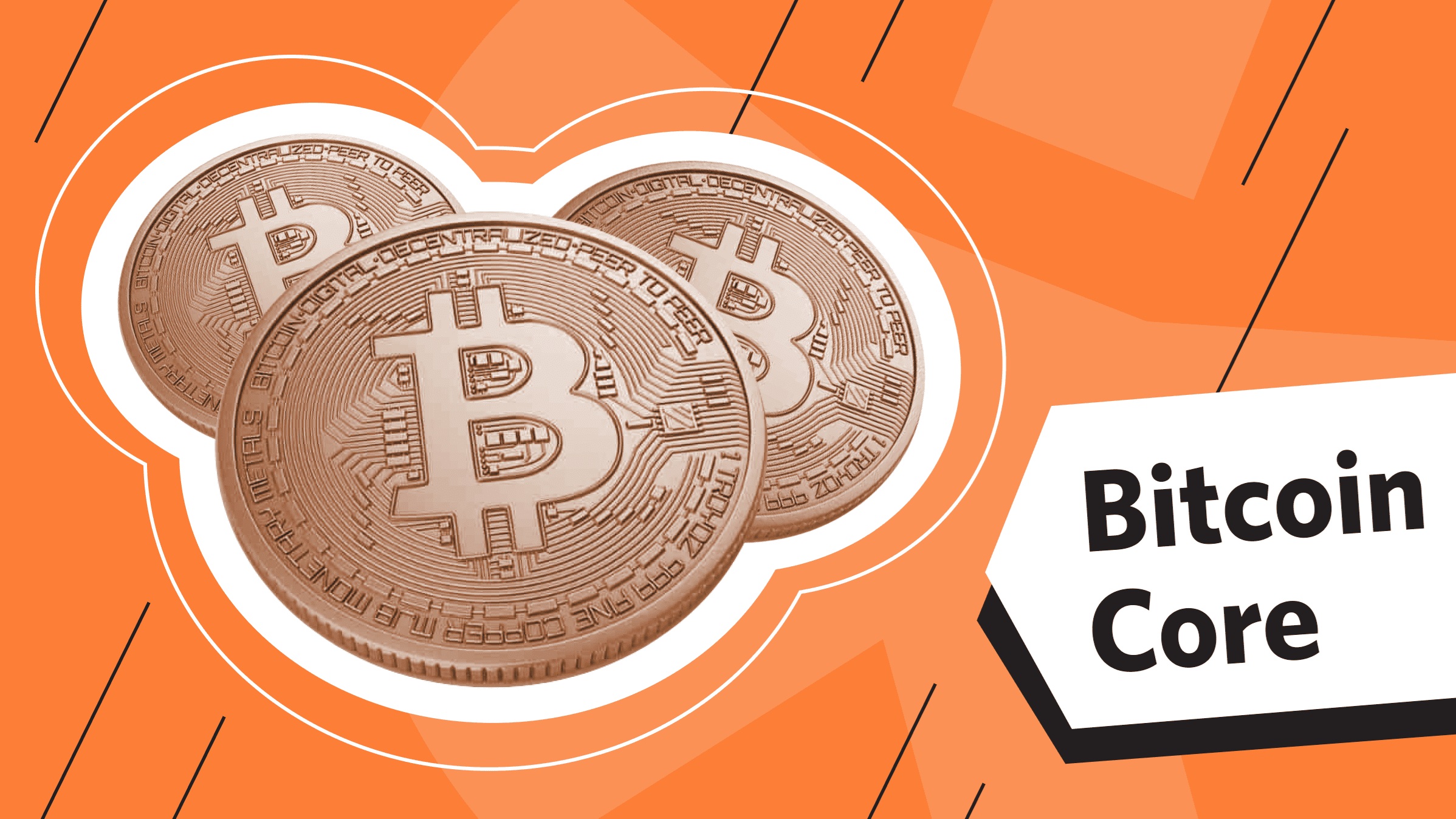
Gloria Zhao, a prominent Bitcoin Core maintainer, has stepped down from her role after approximately six years of contributions to the project. She submitted a final pull request on the Bitcoin GitHub repository, removing herself from the list of trusted keys and maintainers.

She also revoked her PGP signing key, a standard procedure when departing such a position to ensure no further official releases are signed under her credentials. Zhao joined as a maintainer in 2022, becoming the first known woman in that role, succeeding Pieter Wuille.

Funded in part by Brink (a nonprofit supporting Bitcoin development), she specialized in critical areas like mempool policy (rules for transaction acceptance in nodes’ memory pools), transaction relay, fee estimation, peer-to-peer protocol enhancements, and related Bitcoin Improvement Proposals (BIPs) such as package relay (BIP 331), TRUC (BIP 431), and RBF (Replace-By-Fee) improvements.

Her work helped improve transaction propagation, reduce inefficiencies, and mitigate potential censorship risks in the network.The departure appears amicable and routine for open-source projects—maintainers come and go without impacting Bitcoin’s consensus rules, network security, or transaction processing.

Bitcoin Core remains maintained by a small group of trusted contributors, and her exit creates a vacancy but no immediate operational concerns. Some reports describe her as “controversial” amid past debates on policy changes or community dynamics, but the move is widely viewed as a normal transition.

Pieter Wuille is a Belgian computer scientist and one of the most influential Bitcoin Core developers. He discovered Bitcoin in late 2010 and began contributing to Bitcoin Core then Bitcoin-Qt in May 2011.

Over more than a decade, he authored or co-authored numerous key improvements, focusing on performance, security, privacy, scalability, and usability. He held maintainer status with commit access from around 2011 until July 2022, when he stepped down from that role but continued contributing code, reviews, and related projects.

Wuille has been recognized for his work, including receiving the Finney Freedom Prize in January 2025 shared with Gregory Maxwell from the Human Rights Foundation for advancements in Bitcoin’s usability, scalability, and privacy during Bitcoin’s early growth phase roughly 2012–2016.

Rainbow Wallet’s RNBW Token Goes Live

Rainbow Wallet, a popular non-custodial Ethereum wallet known for its user-friendly interface, NFT support, and multi-chain features (especially on Ethereum and Layer-2s like Base), has launched its native token $RNBW.

The Token Generation Event (TGE) occurred on February 5, 2026, at around 13:00 UTC, converting the existing Rainbow Points loyalty program earned via swaps, holdings, referrals, etc., since late 2023 into on-chain tokens. Users can claim their airdropped allocations directly in the Rainbow app under the Rewards tab.

Total supply: 1 billion RNBW. Initial circulating supply: Roughly 18-20% at launch including ~15% for airdrops to points earners and other allocations. Powers governance, rewards, staking/incentives, and ecosystem features in Rainbow’s “onchain Robinhood”-style app. Live on major exchanges like Gate.io, KuCoin, MEXC, Coinbase, and others, plus Uniswap via a CCA auction for fair price discovery and liquidity bootstrapping on Uniswap v4.

Contract address on Base http://0xa53887F7e7c1bf5010b8627F1C1ba94fE7a5d6E0:Post-launch, the token experienced volatility—initial hype drove prices up with some all-time highs around $0.11 reported early, but it quickly corrected, trading in the $0.03-$0.04 range in recent data amid broader market conditions and reports of launch hiccups.

Some early CoinList buyers at ~$0.10 faced losses, but the project positions $RNBW as a step toward community governance and real utility in wallet/DeFi activities. Both events highlight ongoing evolution in Bitcoin’s core development and Ethereum’s wallet/DeFi ecosystems—decentralized projects rely on contributor transitions and token incentives to sustain growth.

ETH Weakens, POL Finds Its Footing, While BlockDAG’s Private Sale Signals a 200x Crypto Play

0

Crypto markets remain volatile, with sharp moves on both sides of the order book driving short-term direction. Among top crypto coins, Ethereum is showing continued weakness, as the Ethereum price USD remains well below key moving averages, reinforcing a bearish technical structure. In contrast, the Polygon price prediction has improved following a recent rebound, hinting that selling pressure may be easing.

Beyond these familiar names, however, attention is shifting toward BlockDAG (BDAG). The project has unveiled a private sale priced at $0.00025 per coin, offering immediate access with no vesting.

For early participants, the risk-reward profile is drawing strong interest. Below, we break down ETH and POL outlooks and examine why analysts are highlighting BlockDAG as a standout early-stage opportunity.

Ethereum Price USD Outlook: Pressure from Sellers

Ethereum (ETH) continues to trade under heavy selling pressure, with the Ethereum price USD sitting well below its short-, medium-, and long-term moving averages. This positioning reflects firm seller control across multiple timeframes.

Recent outflows from institutional wallets have added to downside pressure, even as more than 30% of ETH’s circulating supply remains locked in staking, providing longer-term structural support.

Momentum indicators such as RSI and MACD suggest oversold conditions, but that alone does not guarantee a bounce. If selling persists, the Ethereum price USD may test support near the $2,030 zone. Until ETH can reclaim resistance around $2,270, downside risk remains elevated, and price action is likely to stay cautious.

Polygon Price Prediction: Is the Recovery Sustainable?

Polygon (POL) has staged a notable recovery after falling to roughly $0.098 in late January, rising close to 25% while broader market conditions stayed mixed. This rebound indicates that downside pressure may be easing, even though the longer-term trend has yet to fully stabilize.

Technically, a potential double-bottom formation near $0.098 suggests seller exhaustion could be developing. On-chain metrics reinforce this view, showing reduced token distribution during the rally. From a Polygon price prediction perspective, this reflects improving holder sentiment.

With short positions still outweighing longs, further upside could unfold if momentum holds. A decisive break above $0.18 would strengthen the bullish case, while rejection at that level could reopen downside risks.

BlockDAG’s Private Sale Offers a High-Conviction Entry

When discussions turn to top crypto coins, most attention stays locked on short-term price action. However, the way tokens are distributed often matters just as much as charts. BlockDAG is leaning into this advantage with its final private sale, offering tokens at $0.00025 per coin ahead of a confirmed $0.05 launch price, with exchange listings scheduled for February 16.

That pricing gap alone highlights why interest is accelerating. For early participants, the structure points to a potential upside of up to 200x once public trading begins. What strengthens the setup further is the absence of vesting. Unlike many private allocations that lock tokens for months, BlockDAG’s private sale delivers full token balances directly to user wallets on launch day, eliminating uncertainty around access and liquidity.

Timing is another crucial factor. Buyers in this round are granted up to nine hours of early trading access before public markets open. This window allows participants to engage with initial liquidity, observe price discovery, and position themselves before the surge of volume typically seen at public launch. It also reduces the pressure that often comes with competing against heavy retail inflows at the opening bell.

Once exchange listings go live, BlockDAG will move entirely into the open market. When the private allocation fills, or the deadline passes, early access ends permanently. From a risk-reward perspective, this creates a rare alignment of price, timing, and access that many early-stage crypto opportunities simply do not offer.

Final Takeaway

Ethereum remains under pressure, with the Ethereum price USD struggling below key technical levels and signaling continued caution. At the same time, the improving Polygon price prediction suggests that POL holders are regaining confidence, with scope for further upside if key resistance levels are cleared.

Still, BlockDAG emerges as the most compelling opportunity in this lineup. Its $0.00025 private sale, early trading access, and full token delivery at launch create a uniquely favorable setup ahead of February 16 exchange listings.

With structural advantages stacked firmly in favor of early participants, BDAG is positioning itself as one of the most attractive high-upside plays currently available in crypto.

Private Sale: https://purchase.blockdag.network

Website: https://blockdag.network

Telegram: https://t.me/blockDAGnetworkOfficial

Discord: https://discord.gg/Q7BxghMVyu

Odds for Bitcoin Dropping Below $50k Reached 59% on Polymarket 

0

The odds (implied probability) on Polymarket for Bitcoin dropping below $50,000 this year i.e., by the end of 2026 have reached around 59%. This figure appears in multiple sources, including: Seeking Alpha coverage noting Bitcoin to $50K at 58% very close, likely fluctuating.

Direct references from financial commentators like The Kobeissi Letter on social media stating exactly 59% chance for BTC below $50K this year. Related bearish sentiment where probabilities for nearby levels are higher, 74% for below $55K in some reports, 78% for $65K earlier in the week.

Polymarket hosts various Bitcoin price markets, often structured as “What price will Bitcoin hit in period?” or binary outcomes for specific thresholds e.g., will BTC drop below X by end of year/month. These are crowd-sourced prediction markets where share prices reflect probabilities e.g., a “Yes” share at 59¢ implies 59% odds.

Bitcoin has been in a sharp downturn recently, dipping below $72K and trading around the low-to-mid $70K range with futures and spot prices showing volatility in the $67K–$78K area depending on the exact timestamp and source.

This has shifted trader bets toward more downside risk, with higher probabilities assigned to sub-$60K or sub-$55K levels in shorter-term markets. For comparison, shorter-term or different thresholds show lower odds for sub-$50K specifically ~21% for below $55K in February-specific contracts, but the “this year” market captures broader bearish expectations.

Prediction markets like Polymarket can move quickly based on trading volume and news, so the exact figure may have shifted slightly. For the live view, check Polymarket’s crypto section directly, likely under annual or end-of-year BTC price buckets. This reflects growing pessimism amid the recent pullback from prior highs.

The recent market turmoil, with Bitcoin (BTC) trading in the low $70,000s after a sharp pullback from its 2025 highs above $120,000, has intensified scrutiny on its long-standing portrayal as a “safe haven” asset—often dubbed “digital gold.”

Prediction markets like Polymarket assigning a 59% probability to BTC dipping below $50,000 by year-end further amplifies this debate. Bitcoin’s safe haven thesis posits it as a store of value decoupled from traditional markets, providing protection during economic uncertainty, inflation, or geopolitical stress—much like gold or U.S. Treasuries.

However, the ongoing sell-off reveals BTC behaving more like a high-beta risk asset, closely correlated with volatile sectors such as tech stocks and AI plays. Amid global rate shocks and deleveraging, BTC has plunged alongside the Nasdaq and S&P 500, while gold and silver have seen inflows as true safe havens.

This contradicts the narrative, as investors are selling BTC to fund positions in these traditional assets rather than holding it as a hedge. Heightened volatility—evidenced by a 44% drop from peaks and trillions in market cap wiped out—undermines its appeal even for long-term holders, prompting some analysts to recommend “sell on rise” strategies.

If BTC breaches $50,000, this could solidify views of it as a speculative play rather than a reliable refuge, potentially accelerating outflows from BTC ETFs already down below $100 billion in assets. A sustained drop could debunk the inflation-hedge and censorship-resistant aspects of the narrative, as seen in forecasts labeling 2026 a “bear-market year” with moderated cycle impacts.

This might shift capital toward proven safe havens, reducing BTC’s institutional allure and prolonging a “crypto winter.” The narrative has fueled BTC’s adoption, attracting sovereign funds, corporations, and retail investors seeking financial freedom or diversification.

A sub-$50K scenario challenges this: Extreme fear in sentiment indices reflects waning confidence. Companies like MicroStrategy, holding large BTC treasuries, face amplified losses, potentially deterring corporate adoption.

Analysts warn of a “plot twist” where BTC’s safe-haven story “hits a snag,” leading to broader skepticism. While some argue rising tensions could boost BTC as a “neutral” reserve asset. The current rout—tied to tech deleveraging and restrictive central bank policies—suggests otherwise.

If BTC fails to rebound amid uncertainty, it could validate critics like Jim Cramer calling it “unreliable.” This could slow mainstream integration, such as U.S. strategic reserves treating BTC as a sovereign asset, and prompt a reevaluation of its value generation or lack thereof.

On the flip side, a quick reset at lower levels might attract dip-buyers, viewing $50K-$60K as a foundation for future growth if macro conditions ease. Not all views are bearish; some see this as a maturation phase. For example, JPMorgan now positions BTC as more attractive than gold long-term due to institutional shifts, and historical patterns show BTC avoiding consecutive annual declines.

Analysts like Peter Brandt forecast a dip to $50K before upside to $200K+. Reclaiming $80K-$100K could restore bullish momentum, hinging on liquidity injections or ETF inflows. While a $50K breach risks fully debunking the safe-haven myth in the short term,

it might evolve into a more nuanced story—perhaps as a “digital commodity” in portfolios—once volatility subsides. Ultimately, 2026’s trajectory depends on whether BTC decouples from risk assets or continues mirroring them, potentially reshaping crypto’s role in global finance.

February’s Top Presale Cryptos! DeepSnitch AI, LiquidChain, AgoraLend Trail Behind ZKP Crypto’s 600x Potential!

0

February’s crypto market continues to reward projects that deliver real utility over short-lived hype. As volatility persists and traders grow more selective, the focus has shifted toward presale cryptos that solve genuine problems with practical tools.

DeepSnitch AI equips traders with powerful on-chain analytics and smart contract auditing during uncertain times, LiquidChain bridges major blockchains to eliminate liquidity fragmentation, and AgoraLend unlocks high-yield opportunities for niche tokens, each carving out its own valuable niche in the current cycle.

Yet among all presale cryptos right now, Zero Knowledge Proof (ZKP) stands out as the most ambitious and potentially transformative. With massive self-funding, a record-breaking auction projection, and enterprise-grade privacy infrastructure, ZKP is quietly positioning itself to lead the next wave of Web3 adoption.

1. Zero Knowledge Proof (ZKP): The Privacy Powerhouse Quietly Reshaping 2026

Imagine a blockchain where sensitive data stays completely hidden, yet still powers secure AI computations for banks, hospitals, and global enterprises. That’s exactly what Zero Knowledge Proof (ZKP) delivers: a Layer-1 network built for privacy, massive scalability, and real-world enterprise performance without ever sacrificing decentralization.

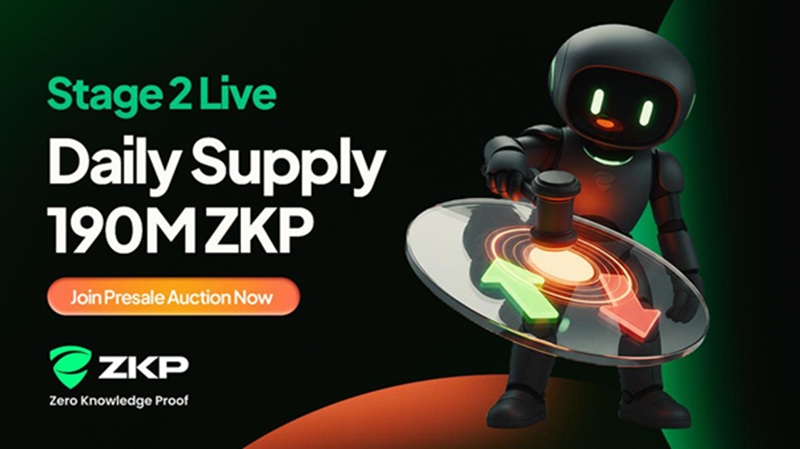
Backed by more than $100 million in self-funding, ZKP is already proving its seriousness. The project has raised over $1.77 million in its ongoing 450-day Initial Coin Auction, which runs across 17 carefully structured stages. Right now, in Stage 2 (round 3), the auction releases up to 190 million tokens every day. Any tokens left unclaimed are permanently burned, creating a tightly controlled and deflationary token economy.

Analysts project this presale crypto could ultimately raise an astonishing $1.7 billion, making it one of the most ambitious and well-capitalized launches of the cycle. The current entry price positions early participants for what many are forecasting as 100x to 600x returns once global adoption accelerates.

Among the top presale cryptos right now, ZKP stands apart thanks to its mature technology, sustainable token design, and clear utility in high-stakes sectors. The early-access window is narrowing fast. This is not a project waiting for hype; it’s already building the infrastructure the next wave of Web3 demands.

2. DeepSnitch AI: Providing Real-Useful Trader Tools

DeepSnitch AI stands out as a strong presale crypto during market downturns because it focuses on real tools traders need. The project has raised over $1,470,000 so far, with the token price now at $0.03830. This price growth shows investors prefer useful projects over pure speculation when markets turn red. Over 33M tokens are already staked, which keeps supply tight and supports future value.

Over 33M tokens are already staked, keeping supply tight as demand rises with every red candle. This presale crypto offers early access to powerful tools before the public launch. Investors see it as a safe bet for big returns, buying the essential gear that powers the crypto economy, no matter the conditions.

3. LiquidChain: Solving Cross-Chain Liquidity Issues

LiquidChain works to fix scattered liquidity across blockchains by creating a Layer 3 network. It combines Bitcoin’s large capital with the fast transaction speeds of Ethereum and Solana. This setup allows developers to build apps once and reach users on multiple chains without risky bridges. The presale crypto for $LIQUID lets early investors join before wider adoption.

The project has passed clean audits from SpyWolf and CertiK, adding trust to its foundation. While full growth may take time as ecosystems connect, LiquidChain offers a solid bet for the future. It appeals to those who want safer, more efficient ways to move value between major chains like BTC, ETH, and SOL.

4. AgoraLend: High Potential but With Clear Risks

AgoraLend is a decentralized lending platform where users deposit niche tokens, such as meme coins, to create yield-generating assets. The token has seen a huge 950% price increase, making it look attractive for quick gains in the current market. This rapid rise draws attention as one of the more exciting new ICOs available.

However, security questions remain since major firms like CertiK report no verified third-party audit. In a downturn, unproven high-yield projects often face big problems. Tools like DeepSnitch AI’s SnitchScan can spot these red flags early, helping investors avoid risks and choose safer options instead of chasing short-term hype.

To Recap

While DeepSnitch AI, LiquidChain, and AgoraLend bring strong value to presale cryptos, each serves a clear niche. DeepSnitch AI delivers essential trader tools, LiquidChain tackles cross-chain liquidity with clean audits from SpyWolf and CertiK, and AgoraLend offers high-yield potential, though it carries notable security risks.

However, clearly emerging as the standout among presale cryptos in 2026 is Zero Knowledge Proof (ZKP). Backed by $100M in self-funding, its massive $1.7B auction target, daily 190M token releases with burns, and privacy-focused infrastructure position it for 100x to 600x returns. Early entry remains the key advantage before adoption accelerates globally.