DD
MM
YYYY

PAGES

DD
MM
YYYY

spot_img

PAGES

Home Blog

Cyber Threats Intensify Across Africa, as Nigeria’s Digital Adoption Drives 4,200 Weekly Attacks

0

As Africa enters a critical phase of digital transformation, technology is driving unprecedented growth, connectivity, and innovation across the continent.

However, this rapid digital expansion has also significantly widened the cyber threat landscape, exposing organizations and governments to increasingly sophisticated attacks

In a report titled “2025 African Perspectives on Cyber Security” by Check Point, cyber attacks across Africa are becoming faster, more targeted, and increasingly powered by Artificial Intelligence (AI).

Check Point noted that Africa’s digital growth continues to outpace security maturity creating opportunity for identity-led intrusions. Across Africa, organizations are operating under sustained and elevated cyber pressure. Over the past six months, on average an organization has faced 3,153 attack attempts per week, compared with 1,963 globally.

Information disclosure remains the most common exploit class in the region, impacting 77% of organizations. Email remains the dominant delivery vector, accounting for 80% of malicious files.

In Nigeria, organizations now record an average of 4,200 attack attempts per week, more than double the global average, confirming that adversaries are scaling fast as digital transformation itself.  The financial sector remains the epicentre of these threats.

Phishing and business e-mail compromise persist as dominant entry points, proving that awareness training is just as vital as technology. Beyond finance, energy, and healthcare operators are integrating IoT and cloud-based systems, creating efficiencies but also new vulnerabilities.

Nigeria’s threat picture aligns with global shifts. Nation-state operators leverage AI-assisted disinformation, disruptive malware, and hacktivism to weaken trust and set conditions for access. Ransomware affiliates emphasize data-leak extortion over encryption and infostealers have surged, harvesting browser and VPN tokens to feed initial access brokers.

Government entities remain high-value targets for both state-aligned and financially motivated actors. Higher education and research institutions face consistent pressure from infostealers and botnet-delivered leaders that harvest credentials and tokens, with targeted data-leak extortion following mailbox compromise. Common gaps include SSO/email misconfigurations, exposed tokens, and over-permissive data shares that increase lateral movement risk across academic platforms.

On the other hand, Banks, insurers, and payment providers draw persistent attention from organised cybercrime. Infostealers that capture VPN/session tokens remain a primary on-ramp while credential stuffing and API abuse target consumer portals. Telcos face sustained risk-across customer-facing portals and management planes. Identity misuse and exposed APIs drive incidents, while ransomware crews lean on data-leak extortion and pervasive infostealer infections siphon tokens from BYOD/VPN contexts.

Encouragingly, Nigeria’s cybersecurity maturity is rising. Organizations are deploying layered prevention-first architectures across perimeter, endpoint, and cloud environments.

Elsewhere on the continent, South Africa remains one of the most targeted markets in Africa, facing a complex mix of legacy vulnerabilities, rapid digital adoption, and an expanding threat surface that mirrors its economic growth. Check Point reveals that South African entities face thousands of attacks weekly with phishing, data exfiltration, and DDoS activity dominating the threat spectrum.

In Kenya, the East African country faced 3,758 attacks per week on average, compared with 1,963 globally. The most common vulnerability exploit type in the country, is information disclosure, impacting 77% of the organizations. The country’s embrace of mobile banking, fintech innovation, and digital government has accelerated national growth, but has also expanded cyber attacks.

As Africa’s leading markets continue to face escalating and sophisticated cyber pressure, the continent’s resilience lies in the strength of its partnerships. Stronger public–private partnerships, cross-border intelligence sharing, workforce training, and identity-centric security strategieswill be critical.

As digital transformation accelerates, aligning cybersecurity maturity with innovation will determine whether Africa can sustain growth while safeguarding trust in its digital future.
Trump Chief of Staff Susie Wiles Offers Rare, Candid Assessment of Elon Musk and His Turbulent DOGE Role

0

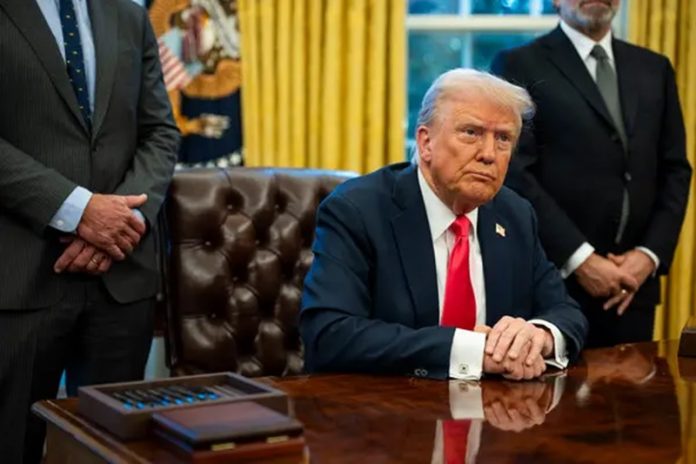
One of President Donald Trump’s closest aides has offered an unusually frank window into Elon Musk’s brief but disruptive presence inside the White House, lifting the curtain on internal tensions, clashing management styles, and unease over the rapid dismantling of a major U.S. government agency.

In a series of interviews published Tuesday by Vanity Fair, White House Chief of Staff Susie Wiles spoke at length about Musk’s time as the de facto leader of the Department of Government Efficiency (DOGE), his personality, and his role in the shutdown of the U.S. Agency for International Development (USAID).

“The challenge with Elon is keeping up with him,” Wiles told the magazine.

She described Musk as an “odd, odd duck,” adding that his unconventional habits — including sleeping in a sleeping bag inside an office building adjacent to the White House — were part of a broader pattern that came with working alongside someone she repeatedly described as a genius operating at extreme speed.

Wiles also made remarks about Musk’s reported drug use that quickly became one of the most contentious aspects of the interview. She referred to Musk as an “avowed ketamine” user and, when asked about a meme he reposted and later deleted — one that compared public sector workers to mass murderers under the dictatorships of Adolf Hitler, Joseph Stalin, and Mao Zedong — she responded: “I think that’s when he’s microdosing.”

Musk has publicly rejected claims that he is currently using ketamine. In June, he wrote on X that he was “NOT taking drugs,” saying he had been prescribed ketamine “a few years ago” but had not taken it since. When asked for comment following the Vanity Fair publication, a spokesperson for Musk’s artificial intelligence company, xAI, responded tersely: “Legacy Media Lies.”

The remarks soon triggered a second round of controversy. In an interview published Monday by The New York Times, Wiles denied having commented on Musk’s drug use at all, saying she “wouldn’t have said it and I wouldn’t know.” The Times reported that journalist Chris Whipple, who conducted the interviews for Vanity Fair, later played a recording for the paper in which Wiles could be heard making the statements.

Beyond Musk’s personal behavior, Wiles also addressed what she described as her initial shock over the dismantling of USAID, one of the most dramatic policy moves associated with Musk’s tenure.

“I was initially aghast,” she told Vanity Fair. She said that her understanding, shared by many who have worked in or studied government, was that USAID “do very good work.” While she acknowledged long-standing concerns about inefficiencies within the agency, Wiles said the execution of its shutdown crossed lines.

“That’s not the way I would do it,” she said, adding that she explicitly told Musk that “you can’t just lock people out of their offices.”

Wiles framed the episode as a clash of philosophies rather than a personal feud. She said Musk’s approach was rooted in urgency and disruption, likening it to the mindset required to build rockets and push technological boundaries.

“Elon’s attitude is you have to get it done fast,” she said. “If you’re an incrementalist, you just won’t get your rocket to the moon.” That mindset, she added, inevitably leads to collateral damage. “With that attitude, you’re going to break some china.”

At the same time, Wiles made clear she did not believe the existing USAID structure was defensible in its entirety.

“No rational person could think the USAID process was a good one. Nobody,” she said, signaling agreement with the goal of reform even as she questioned the method.

Musk ultimately exited the White House in the spring after a falling-out with Trump over the so-called “Big Beautiful Bill.” While tensions between the two men were widely reported at the time, their relationship has appeared to stabilize in recent months.

Following the publication of the Vanity Fair story, Wiles pushed back publicly. Writing on X on Tuesday morning, she described the article as a “disingenuously framed hit piece,” saying “significant context was disregarded” to create what she called an “overwhelmingly chaotic and negative narrative” about Trump and his administration.

The White House quickly moved to close ranks around Wiles. Asked about her comments, the administration shared a statement from Press Secretary Karoline Leavitt expressing firm support.

“Chief of Staff Susie Wiles has helped President Trump achieve the most successful first 11 months in office of any President in American history,” Leavitt said. “President Trump has no greater or more loyal advisor than Susie. The entire Administration is grateful for her steady leadership and united fully behind her.”

Taken together, the interviews offer one of the clearest accounts yet of how Musk’s fast-moving, Silicon Valley style collided with the realities of governing, and how even Trump’s most trusted aides struggled to manage the consequences of speed, scale, and disruption at the highest levels of power.

Next Tekedia Capital Portfolio Business Update – Feb 28, 2026

0

Hello,
Greetings. Our next portfolio business update is scheduled as follows:
Date: Saturday, Feb 28, 2026
Time: 4-6pm WAT
Zoom link will be sent later.

If you are not in the WhatsApp Group, please read this note published here for context ahead of the session. Note that you can schedule anytime with the provided Zoom for update; no need to wait for the Group scheduled session.

Tekedia Team


Best Crypto to Buy Now: Ripple (XRP), Cardano (ADA), Ethereum (ETH) Bulls Buy New Coin Under $0.0025 Before a $1 Run

0

As markets swell with optimism, seasoned bulls are looking at three stalwarts, Ripple (XRP), Cardano (ADA), and Ethereum (ETH), as solid anchors.  But beyond the blue-chips, an emerging presale star, Little Pepe (LILPEPE), is capturing attention for its parabolic potential. With a current presale price of just $0.0022, LILPEPE is being framed by some as the meme-powered underdog that could run toward $1, and bulls are not shy about calling it their moonshot bet.

Ripple (XRP): The Regulatory Milestone and Payments Powerhouse

Ripple’s native token, XRP, has entered a new chapter. In a landmark change, legal battle with U.S. regulators over high fees has ended with Ripple paying a fine of $125 million, which has wiped out one of its biggest overhangs. This resolution prepares the way for new institutional trust and a more obvious mainstream way. When paired with the growing sentiment around tokenization, especially in real-world assets, XRP could become a deep liquidity rail for global finance. Analysts from Standard Chartered have even projected it reaching $5 by 2025, citing both payment use-cases and a strategic push into tokenized finance. On the technical front, some 6-month outlooks place XRP’s bullish target in the $3.20–$4.00 zone, driven by ETF speculation, institutional inflows, and favorable macro trends.  Taken together, XRP’s recent regulatory clarity, real-world utility, and bullish price forecasts make it a strong contender for the next leg up.

Cardano (ADA): PoS Sustainability Meets Long-Term Vision

Bulls still have an interest in Cardano because of its slow, research-oriented strategy. Its PoS consensus is energy-efficient by design and scales in a manner that is sustainable to adopt Web3. Academic rigor combined with peer-reviewed developmental model Layer 1 competition provides an interesting alternative to more rapid, yet less rigorous ecosystems. Although the gains of Cardano in the short term are not as epic as those of meme coins, its long-term runaway is substantial. ADA is starting to be framed as the base standard of a decentralized application, governance, and real-life solutions. For investors who believe in measured, principled growth rather than speculative mania, ADA remains a favorite.

Ethereum (ETH): Programmability and Institutional Reawakening

Ethereum is the foundation of innovation in smart contracts. It is used to run most DeFi, NFTs, and decentralized applications, and its discourse is supported with institutional inertia. In 2025, ETH surpassed its 2021 all-time high, with a market cap approaching $600 billion, a clear sign that capital is returning in force.  Beyond price action, Ethereum’s ecosystem benefits from research on scalability. New models for parallel transaction execution are being explored, which could dramatically increase throughput and lower costs. For bulls, ETH stands as the programmable backplane for Web3, powerful, battle-tested, and primed for the next wave of global adoption.

Little Pepe (LILPEPE): The Sub-$0.0025 Underdog with Meme Energy and Utility

While XRP, ADA, and ETH anchor the core, speculative bulls are zeroing in on a different kind of bet: Little Pepe. Currently in stage 13 of its presale, LILPEPE is priced at $0.0022 and has reportedly raised over $27.5 million so far. The presale has been blazing, with more than 16.7 billion tokens sold.  What makes LILPEPE stand out is not just its cheap entry, but its foundation: rather than being a purely speculative meme token, it is built on its own EVM-compatible Layer 2 blockchain designed for high throughput and near-zero trading fees.  Presale mechanics amplify the bullish case. Since Stage 12 sold out early at $0.0021, Stage 13’s $0.0022 price already reflects strong demand. With a confirmed listing price of $0.003, early buyers are eyeing a 30% return even before secondary trading begins. Given the rapid adoption, the community-driven launch structure, and the meme-native utility, many bulls believe LILPEPE could orbit far beyond its initial valuation.

Conclusion

For those who believe this bull market is not just about speculative noise but a return to serious infrastructure plays, combining these assets could capture both reliability and upside.  Little Pepe, in particular, represents an asymmetric bet: a low-cost presale entry with high-leverage potential, underpinned by a technical roadmap and community energy.

For more information about Little Pepe (LILPEPE) visit the links below:

Website: https://littlepepe.com 

Whitepaper: https://littlepepe.com/whitepaper.pdf

Telegram: https://t.me/littlepepetoken

Twitter/X: https://x.com/littlepepetoken

$777k Giveaway: https://littlepepe.com/777k-giveaway/

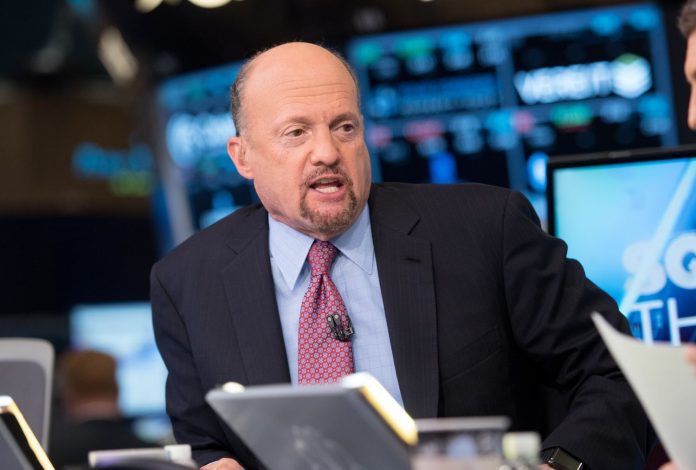
Cramer Warns Oracle Could Become the Brake on Big Tech’s AI Spending Spree as Wall Street Loses Patience

0

CNBC’s Jim Cramer on Tuesday argued that Oracle may be nearing a financial and market-imposed limit in the artificial intelligence arms race, positioning the software giant as a potential catalyst for a broader slowdown in hyperscalers’ spending.

His comments come as Oracle’s stock and credit profile have become focal points for growing investor unease about whether today’s AI investments can realistically pay for themselves.

Cramer said Oracle’s balance sheet is now under sharper scrutiny after the company committed to an unprecedented expansion of its data center footprint to support AI workloads, particularly for OpenAI. While Oracle has leaned heavily into AI infrastructure as a growth engine, Wall Street’s reaction suggests investors are increasingly concerned about leverage, execution risk, and the long wait before returns materialize.

“Oracle already has a huge amount of debt. Their balance sheet’s not that good,” Cramer said on CNBC. “At some point, they’ll heed the warning of the bond market and slow things down. These data centers cost a fortune and even the best builders stumble. Oracle can’t risk blowing up its balance sheet for Sam Altman.”

Those warnings intensified after Oracle’s recent earnings report, which, like Broadcom’s, showed strong demand for AI services but failed to reassure investors about financing and profitability. Oracle beat earnings expectations but missed on revenue, and management offered limited clarity on how it plans to fund its rapidly expanding AI commitments without further stretching its balance sheet.

Since early September, Oracle’s stock has been under sustained pressure, losing nearly half its value from a peak triggered by optimism over a massive AI backlog. Over just a few trading days last week, the shares fell sharply again, reflecting a broader reassessment of AI-linked infrastructure stocks. Investors who once rewarded aggressive expansion are now questioning whether the pace of spending has outstripped realistic cash flow generation.

The pressure is not confined to equities. Oracle’s growing reliance on debt markets has amplified concerns. The company recently issued $18 billion in bonds, a move that drew intense scrutiny from credit investors. According to Cramer, demand for credit default swaps tied to Oracle surged after the issuance, a signal that bondholders are increasingly hedging against the risk that the company’s leverage could become problematic if AI economics disappoint.

Oracle has also disclosed massive long-term obligations tied to its cloud and data center strategy. As of late November, the company reported hundreds of billions of dollars in lease commitments for data centers and cloud capacity, many stretching 15 to 19 years into the future. That scale of fixed obligation has unsettled investors at a time when pricing, utilization rates, and long-term demand for AI services remain uncertain.

Cramer argued that Oracle’s position makes it the weakest link in what he described as a spending standoff among five major players: Amazon, Microsoft, Google, Meta, and OpenAI, which relies heavily on Oracle as a core infrastructure partner. These companies, he said, are locked in a race to outspend one another, building data centers wherever power and land are available, while trying to prevent rivals from encroaching on their core businesses.

“This reckless, imprudent data center spending has crushed these stocks,” Cramer said, adding that OpenAI’s spending posture is particularly aggressive.

He described the ChatGPT maker as venture-funded and unusually willing to absorb losses in pursuit of scale, committing more than $300 billion over five years to Oracle’s technology alone, with total commitments across partners approaching $1.4 trillion.

In that context, Oracle’s market performance has become a warning sign. Equity investors have punished the stock, while credit markets are demanding higher compensation for risk. Cramer suggested that if Oracle responds by slowing its AI buildout, it could give other hyperscalers political and financial cover to do the same.

“If Oracle pumps the brakes on spending, competitors could follow suit and see their stocks climb,” he said, arguing that restraint could ease fears of runaway capital expenditure and restore confidence in valuations.

He also said a slowdown would force OpenAI to prioritize its ambitions rather than trying to dominate every segment of the AI economy simultaneously.

“This way Oracle stays alive, and OpenAI is forced to choose which businesses it truly wants to target,” Cramer said. “Because he who defends everything defends nothing.”

Oracle’s recent market performance has become emblematic of a broader shift in sentiment for Wall Street. The AI trade is no longer being judged solely on growth narratives and demand projections. Investors are now focused on debt levels, long-term obligations, and the credibility of returns.