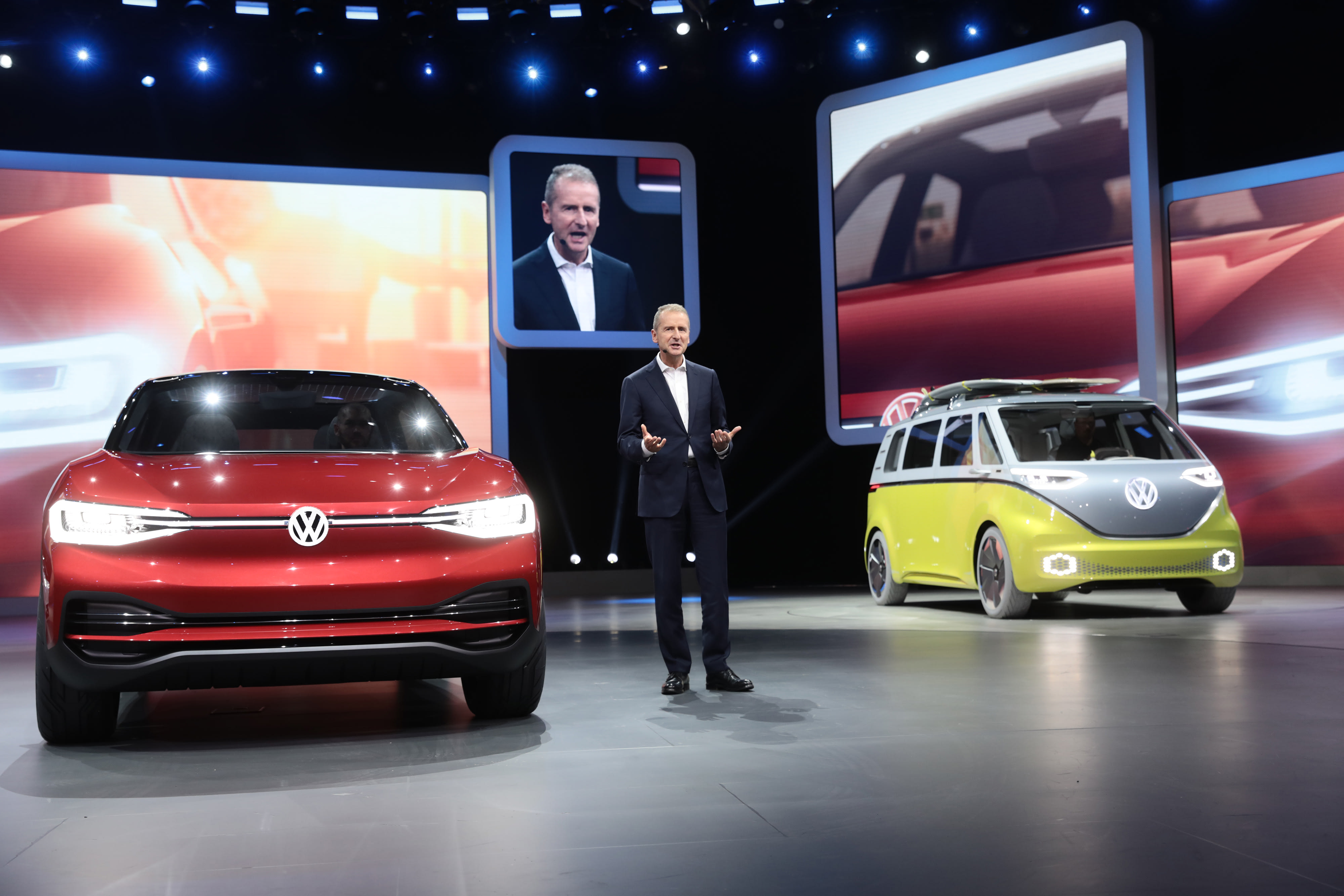
Germany’s automotive industry is once again facing a period of profound transformation, with Volkswagen (VW), Europe’s largest carmaker, preparing for what executives have described as a major realignment of its operations.
The announcement has sparked widespread concern among labor unions and employees, who fear that as many as 100,000 jobs could eventually be at risk as the company restructures to adapt to a rapidly changing global automotive landscape.
Volkswagen has long been regarded as one of Germany’s industrial champions, employing hundreds of thousands of workers and serving as a cornerstone of the nation’s manufacturing economy.
The company now finds itself under intense pressure from multiple fronts.
Rising competition from Chinese electric vehicle manufacturers, slowing demand in Europe, increasing production costs, and the expensive transition toward electric mobility have forced the automaker to rethink its long-term strategy.
The shift toward electric vehicles (EVs) represents one of the most significant challenges in Volkswagen’s history. Unlike traditional internal combustion engine vehicles, EVs require fewer mechanical components and less labor to assemble.
As a result, the industry-wide move toward electrification naturally leads to reduced labor requirements. This structural change has heightened fears among German unions that large-scale job reductions may become unavoidable.
Volkswagen executives have emphasized that the company must improve efficiency and competitiveness if it is to remain a global leader in the automotive sector.
The company has struggled to maintain profitability amid declining market share in China, once its most important growth market.
Chinese manufacturers such as BYD and other domestic brands have rapidly gained market dominance by offering technologically advanced electric vehicles at lower prices, placing immense pressure on traditional European carmakers.
High energy costs and relatively expensive labor conditions in Germany have further complicated Volkswagen’s position. Producing vehicles in Germany has become increasingly costly compared with other regions, prompting discussions about shifting some production activities abroad or reducing capacity at domestic plants.
Such proposals have naturally alarmed workers and labor representatives, who fear that decades of industrial strength could be undermined. German labor unions, particularly IG Metall, have reacted strongly to the prospect of major job cuts.
Union leaders argue that employees should not bear the burden of strategic mistakes or changing market conditions alone. They have called for constructive dialogue, investment in workforce retraining, and long-term employment guarantees rather than mass layoffs.
The possibility of up to 100,000 job losses would have significant economic and political implications.
Germany’s automotive industry supports millions of jobs directly and indirectly through suppliers, logistics companies, and related services. Large-scale workforce reductions at Volkswagen could have ripple effects across the broader German economy, especially in regions heavily dependent on automotive manufacturing.
Some analysts argue that restructuring may be necessary to secure Volkswagen’s future competitiveness. The global automotive sector is undergoing one of the largest transformations in its history, driven by electrification, software integration, autonomous technologies, and changing consumer preferences.
Companies that fail to adapt quickly risk losing relevance in an increasingly competitive marketplace. For Volkswagen, the challenge lies in balancing financial sustainability with social responsibility.
The company must invest heavily in future technologies while preserving as many jobs as possible and maintaining Germany’s industrial base. Achieving this balance will require cooperation between management, labor unions, and policymakers.
The coming months will therefore be critical for Volkswagen and Germany’s manufacturing sector as a whole. Whether the company’s realignment leads to renewed competitiveness or deeper social tensions may ultimately shape the future of Europe’s automotive industry in the electric age.
German Consumers Gain Relief as Inflation Stays Near ECB Target
Germany’s inflation rate remained relatively stable in June, with official data confirming annual consumer price growth at 2.3%.
The figure, while slightly above the European Central Bank’s long-term target of 2%, signals that price pressures in Europe’s largest economy continue to ease compared with the inflationary peaks experienced over the past few years.
One of the key factors behind the moderation in prices was a government-backed fuel rebate that helped lower transportation costs and provided relief to households and businesses.
Inflation has been one of the defining economic challenges for Germany since the energy crisis triggered by geopolitical tensions and supply chain disruptions. Rising energy costs, food prices, and wage pressures had previously pushed inflation to multi-decade highs, squeezing household purchasing power and weakening consumer confidence.
The latest reading, however, suggests that Germany may be entering a more stable pricing environment. A major contributor to June’s lower inflation rate was the decline in fuel prices. Government measures and market dynamics combined to reduce the cost of gasoline and diesel, easing transportation expenses across the economy.
Lower fuel prices tend to have a broad impact because transportation costs influence the prices of numerous goods and services, from food distribution to manufacturing logistics.
The fuel rebate effectively acted as a buffer against external price shocks, helping consumers cope with persistent economic uncertainty.
For many German households still recovering from years of elevated living costs, lower energy and transportation expenses provided welcome relief. The moderation in inflation may also support consumer spending, which has remained relatively weak due to concerns about economic growth and future income prospects.
Despite the encouraging inflation figures, several challenges remain. Core inflation, which excludes volatile items such as energy and food, continues to indicate underlying price pressures in sectors like services and housing.
Wage increases negotiated in recent years have also contributed to higher service-sector costs, creating a risk that inflation could remain sticky even as energy prices decline. For policymakers at the European Central Bank (ECB), Germany’s inflation data carries significant importance.
As the eurozone’s largest economy, Germany often serves as a bellwether for broader regional trends. The confirmation of a 2.3% inflation rate reinforces expectations that the ECB may continue its gradual shift toward a less restrictive monetary policy stance if inflation continues to move closer to target levels.
Lower inflation could provide room for interest rate reductions in the coming months, potentially stimulating investment and economic activity. Germany’s economy has faced considerable headwinds, including sluggish industrial production, weak exports, and slower global demand.
Easing price pressures may improve business confidence and encourage both consumer and corporate spending.
However, economists remain cautious. Global geopolitical risks, fluctuations in energy markets, and potential supply disruptions could quickly reverse recent progress. Any significant rise in oil prices or renewed trade tensions could reignite inflationary pressures and complicate the policy outlook.
Overall, Germany’s confirmed June inflation rate of 2.3% represents a positive development for both consumers and policymakers. The fuel rebate played a crucial role in moderating price increases and easing the burden on households.
While inflation has not yet fully returned to the ECB’s preferred target, the latest data suggest that Germany is moving toward greater price stability, offering hope that the country’s economy may gradually regain momentum after several challenging years.