
DD
MM
YYYY

PAGES

DD
MM
YYYY

spot_img

PAGES

Home Blog

Bitcoin Price Prediction Eyes $83K After a 24% Weekly Surge, XRP Targets $1.35, Could Apeing Be the Best Crypto to Watch?

0

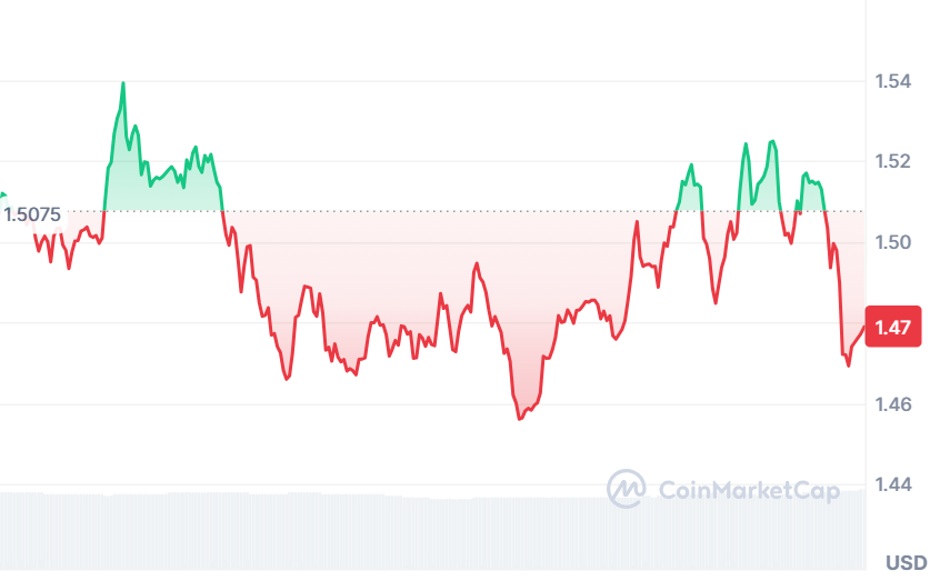
Could Bitcoin’s climb toward $80K and XRP’s sharp rebound be setting the stage for a much bigger crypto rotation? Bitcoin has been pushing toward a recent high near $80,504, while XRP has jumped from around $1.00 to roughly $1.47 in just days, keeping both major names firmly in focus. A recent market report also flagged Bitcoin’s approach toward $80K while noting signs that its rally could be showing fatigue. That mix of strength and caution makes the best crypto to watch conversation far more intriguing.

But here’s where the story takes a turn. While Bitcoin and XRP battle for attention, meme coin culture continues to prove that the next interesting project doesn’t always come from an established name. Ethereum and Cardano have helped shape crypto adoption, while frogs, dogs, penguins, peanuts, and cats have repeatedly turned internet culture into token communities. Now, Apeing is entering the conversation through its ongoing whitelist, with community, utility, engagement, security, and official communication at the core of its approach. With the whitelist moving toward its close and the upcoming presale ahead, Apeing could be one of the names worth keeping on the best crypto to watch radar.

Best Crypto to Watch: Apeing Whitelist Closing Soon as Presale Excitement Builds

Could the next best crypto to watch be the one that gets attention before its presale even opens? Apeing is creating exactly that kind of curiosity as its whitelist moves toward closing and the upcoming presale draws closer. The project is centered on meme culture, community, fun utility, and security, while official updates are designed to keep participants informed as the next stage approaches. For anyone tracking early crypto opportunities, the whitelist offers a chance to get ahead of the action instead of watching from the sidelines.

The Apeing whitelist is becoming the key entry point for those who want early access to presale information and official instructions. Once the window closes, catching up could mean waiting for the next opportunity rather than being prepared from the start. That gives the best crypto to watch narrative a sharper edge, especially as crypto’s meme-driven side continues attracting attention from younger market participants. The message is simple: follow the official channels, secure whitelist access while it’s available, and stay ready because the next Apeing chapter could arrive sooner than expected.

Apeing Upcoming Presale Price: Early Entry Details to Watch

The upcoming Apeing presale is drawing attention around its proposed Stage 1 price of $0.0001, while the stated listing price is $0.01. These figures are part of the project’s promotional information and should be verified through Apeing’s official announcements before the presale opens. With the whitelist closing soon, these early-stage details are giving the project an extra sense of urgency for those tracking the next potential meme coin opportunity.

How to Join the Apeing Whitelist

To join, go to the official Apeing website, enter an email address in the whitelist section, and complete the confirmation process sent by email. Whitelist members can then receive updates and simple instructions for accessing the official presale when it becomes available. The official site currently provides the whitelist form directly.

Bitcoin Price Prediction, BTC Faces $80K Wall as Bulls Target $83K Breakout

Bitcoin price is losing momentum near the $80,000 mark after three consecutive days of gains pushed BTC to around $79,464 before a sharp pullback. The move has placed Bitcoin between key technical levels, with the 50-week EMA near $77,237 and the 100-week EMA around $78,451 forming a resistance cluster. A visible sell wall around $80,000 is adding further pressure, leaving traders watching for a decisive breakout or a deeper correction. Despite the pullback, institutional demand remains supportive, with spot Bitcoin ETFs recording $307 million in net inflows on August 21 and five consecutive days of inflows.

The next major test for Bitcoin price comes at the $77,000 to $79,000 resistance zone, followed by stronger resistance near $83,000. A decisive weekly close above $83,000 could strengthen the bullish setup and potentially open the path toward $90,000 to $95,000, while rejection could send BTC toward support near $69,200 and $68,500. With U.S. inflation, jobs data and Fed policy in focus, the coming sessions could determine whether Bitcoin resumes its rally or enters a deeper correction.

XRP Pushes for $1.70 After Landing on FedNow via Volante

XRP is steady at approximately $1.50, up 0.22%, following Volante’s integration that brings XRP support directly into the FedNow payment network and boosts real-world utility. This key infrastructure milestone is attracting renewed interest and opens the door for a move toward approximately $1.60 to $1.70 if demand continues to build.

Resistance still sits overhead, however, and any slip below approximately $1.45 to $1.48 risks a return to $1.35 or lower. The coming days will determine whether this payment network upgrade sparks a stronger rally or leaves XRP consolidating near current levels.
Final Words: Bitcoin and XRP Face Key Price Moves as Apeing Whitelist Nears Its Next Chapter

Based on the latest research and the market trends, Bitcoin and XRP price predictions point toward two very different setups worth watching over the coming months. Bitcoin’s outlook remains tied to market strength, institutional demand, liquidity, and whether bullish momentum can continue, while XRP could have room for further upside if its recent momentum develops into a stronger trend. That keeps both coins firmly in the best crypto to watch conversation, but the bigger question may be what comes next for early-stage projects.

Apeing brings that fresh angle with its whitelist closing soon and an upcoming presale waiting in the wings. Its community-first approach, meme-driven identity, and focus on utility and security are giving the project a reason to stay on the radar. For anyone tracking the best crypto to watch, the window to join the Apeing whitelist is moving toward its next stage, making now a key moment to follow official updates, secure whitelist access, and stay ready for the presale.

For More Information:

Website: Visit the Official Apeing Website

Telegram: Join the Apeing Telegram Channel

Twitter: Follow Apeing ON X (Formerly Twitter)

FAQs for Best Crypto to Watch

Could Bitcoin Reach a New All-Time High in the Next Market Cycle?

Bitcoin’s next major move will depend on liquidity, institutional demand, regulation, and overall risk appetite. A stronger macro backdrop could support another attempt at record levels, while tighter financial conditions could slow momentum.

What Could Drive XRP Higher in the Coming Months?

XRP could benefit from stronger adoption, regulatory clarity, broader altcoin momentum, and renewed investor demand. The key question is whether buying pressure can remain strong enough to support a lasting trend..

Is Apeing currently on a crypto whitelist?

Yes. The official Apeing website currently provides a whitelist signup and describes the whitelist as a way to receive updates about the upcoming presale.

How can someone join the Apeing whitelist?

The official process requires visiting the Apeing website, entering an email in the whitelist section, and completing the email confirmation process.

Is Apeing a 1000x crypto?

No reliable source can confirm a 1000x outcome. Claims about extreme returns should be treated as speculation. Apeing’s own terms state that participation carries risk and does not provide a guaranteed financial outcome.

Summary

Bitcoin is trading near $77,500 after a strong August move, while XRP is around $1.49 following a sharp weekly rally. Current momentum gives both assets important levels to watch over the next 6 to 12 months. The best crypto to watch question, however, is not limited to established coins. Apeing is drawing attention through its active whitelist and planned presale, with its official site emphasizing community, utility, audits, and verified announcements. The Bitcoin Price Prediction remains tied to liquidity, ETF flows, regulation, and macro conditions, while XRP depends heavily on momentum, adoption, and market demand.


Strategy Sets Aside $1.6 Billion Cash Pool for Bitcoin Purchases, Buybacks

0

Michael Saylor’s Strategy has set aside about $1.6 billion in cash to finance future bitcoin purchases, share buybacks, and other corporate needs, giving the world’s largest corporate bitcoin buyer a larger liquidity buffer as it continues to build its cryptocurrency holdings.

The company disclosed the new “USD Cash” pool in a regulatory filing on Monday, distinguishing it from a separate reserve established to cover dividends on its preferred stock and interest payments on outstanding debt.

The new pool is deliberately more flexible. Strategy can use it to buy bitcoin, repurchase its own shares or fund other corporate transactions, allowing the company to preserve liquidity rather than commit all available capital to cryptocurrency purchases.

The move has attracted attention because Strategy’s business model has revolved around converting capital raised from investors and creditors into bitcoin. Maintaining $1.6 billion in cash gives the company additional room to pursue that strategy while reducing the need to raise fresh capital at an unfavorable time.

It also provides a cushion if bitcoin enters another prolonged downturn.

Strategy has turned bitcoin into the central component of its corporate treasury, but that strategy carries substantial market risk. A sharp decline in bitcoin can reduce the value of its holdings while potentially making equity and debt financing more expensive. A sizeable cash balance gives the company an alternative source of liquidity during such periods.

The reserve could also allow Strategy to be more opportunistic. If bitcoin prices fall sharply, the company would have capital available to increase its holdings without immediately relying on a new stock or debt offering. Conversely, if its shares trade at levels that management considers attractive, the same pool can be used for buybacks.

That flexibility is becoming more relevant as Strategy balances several competing demands: accumulating bitcoin, servicing debt, paying preferred-stock dividends and managing the value of its common shares.

The company’s decision comes after a strong rebound in bitcoin. The cryptocurrency gained more than 13% over five trading sessions and broke above $70,000 last week for the first time since June. The rally has been supported by improving sentiment toward digital assets, including U.S. President Donald Trump’s call for Congress to establish clearer rules for the cryptocurrency industry.

Bitcoin has also benefited from a broader improvement in risk appetite following the U.S. Treasury Department’s decision to increase its purchases of longer-dated government bonds. The move has helped ease pressure on long-term Treasury yields.

That matters for bitcoin because the cryptocurrency competes for capital with traditional assets. When Treasury yields rise sharply, investors can obtain higher returns from relatively low-risk government debt, reducing the appeal of speculative assets. Lower yields can have the opposite effect by making risk assets relatively more attractive.

The relationship has become necessary for Strategy because the company effectively offers investors a leveraged way to gain exposure to bitcoin. Its share price can respond not only to movements in the value of its bitcoin holdings but also to expectations about future purchases, financing costs, and the premium or discount at which its stock trades relative to its underlying assets.

The $1.6 billion cash allocation could help Strategy manage that leverage more carefully. Rather than deploying every dollar into bitcoin during a rising market, the company can retain liquidity and wait for more attractive opportunities. In a falling market, the cash can help it continue buying without immediately accessing capital markets.

That does not eliminate the risks associated with Strategy’s approach. Bitcoin remains highly volatile, while the company has significant financial obligations independent of the cryptocurrency’s price. A sustained decline in bitcoin could put pressure on the value of its holdings and make future capital raising more difficult.

The cash reserve therefore represents a shift toward greater financial flexibility rather than a retreat from Saylor’s bitcoin strategy.

Strategy is effectively maintaining two different pools of liquidity. The dedicated reserve protects payments to preferred shareholders and creditors, while the new USD Cash pool gives management discretionary capital that can be deployed according to market conditions. That separation could become more useful as Strategy’s bitcoin holdings grow and the company becomes more exposed to the cryptocurrency’s price cycles.

Despite its recent recovery, bitcoin remains well below the highs reached during last year’s rally. For Strategy, that leaves the opportunity to accumulate more bitcoin against the risk of deploying too much capital before another downturn. The company’s latest filing suggests Saylor wants to preserve both options. Strategy can remain one of the most aggressive corporate buyers of bitcoin while keeping enough cash on hand to withstand market volatility, repurchase its shares, or meet other capital-allocation needs.

U.S. Treasury Weighs Tapping $1 Trillion Cash Account To Bolster Bond-Buying Plan

0

The U.S. Treasury could use part of its nearly $1 trillion cash balance at the Federal Reserve to help finance a larger programme of government bond purchases, potentially giving the department greater influence over long-term borrowing costs at a time when rising yields are unsettling financial markets.

Two senior Treasury officials, according to CNBC, said the department considers its General Account, or TGA, available to support the recently announced purchases, although they declined to say whether any of the funds would actually be used, how much could be deployed or when a decision might be announced.

The possibility adds a new dimension to Treasury Secretary Scott Bessent’s plan to increase purchases of older, less actively traded government securities. Treasury last week said it would double its minimum purchases of off-the-run securities at the long end of the yield curve to at least $4 billion from $2 billion. Bessent has indicated that the operations could ultimately be larger than that minimum.

The Treasury did not specify how the purchases would be financed when it announced the programme, prompting most market participants to assume that the department would issue additional short-term Treasury bills while buying longer-dated securities.

Bessent described the approach as a “Treasury Twist”, borrowing the name from earlier operations in which the government or Federal Reserve buys longer-term bonds while financing those purchases through short-term issuance.

The potential use of the TGA changes the calculation because it would allow the Treasury to deploy cash that has already been collected rather than immediately raising an equivalent amount through new bill issuance. The TGA is effectively the federal government’s checking account at the Federal Reserve. It is funded primarily through tax receipts and other government revenues and is used to meet federal payment obligations.

Bessent has built the balance to about $950 billion, well above the roughly $550 billion to $600 billion level that Treasury officials targeted under the Biden administration.

The size of the account is discretionary, meaning Treasury has some flexibility over how much cash it holds. Under former Treasury Secretary Janet Yellen, officials described their objective as maintaining enough cash to cover roughly a week of government needs. The current Treasury describes its policy as maintaining a balance consistent with its long-standing cash-management approach.

That gives Bessent some room to reduce the balance without creating an immediate funding problem.

A lower TGA balance would, however, leave the government with a smaller cash buffer in the event of a debt-ceiling confrontation. Current estimates suggest the next debt limit would not become binding until winter 2027 or potentially early spring, providing Treasury time to rebuild the account if necessary.

Even a relatively modest drawdown could therefore have significance for markets if investors believe Treasury is willing to use its cash reserves as part of its strategy to manage the supply and composition of government debt.

That possibility has become relevant because the Treasury’s buyback programme has so far struggled to convince some investors that it will have a meaningful effect on long-term yields.

Treasury securities sold off after an initial rally following last week’s announcement, pushing yields higher. Market participants have questioned whether Treasury’s planned purchases are large enough to materially alter the enormous supply of U.S. government debt and whether the programme can address the underlying factors driving long-term yields higher.

Using the TGA could strengthen the credibility of the operation by giving Treasury another source of financing beyond additional bill issuance. It could also reduce speculation that the Federal Reserve might eventually be asked to assist the Treasury.

The Fed holds the TGA as the government’s banker but does not regard the account as part of its monetary policy toolkit. A Treasury-funded operation using its own cash would therefore maintain a clearer separation between debt management and monetary policy.

The Treasury officials also rejected suggestions that the announcement represented a departure from the department’s long-standing commitment to making debt issuance “regular and predictable.”

The enhanced buyback announcement came two weeks after the quarterly refunding statement, when details of Treasury’s borrowing plans are normally communicated to the market. That timing prompted criticism that the department had surprised investors and potentially encouraged speculative trading.

Treasury officials said there had been no change to the government’s official auction schedules. They also pointed out that the first enhanced buyback operation is not scheduled until Sept. 9, giving investors nearly three weeks to adjust to the plan. The department also disclosed its plans for the entire quarter in its Aug. 19 announcement, rather than providing only a one-off intervention, they said.

Bessent has stated that the objective is not to manipulate markets but to improve the functioning of the Treasury market and prevent temporary trading conditions from distorting prices.

“The intent is to get the market to focus on the fundamentals and not trade the headlines during … a quiet period in a thin market,” Bessent told CNBC. “So we are trying to keep the market in equilibrium.”

The intervention comes as long-term Treasury yields have risen sharply. The 10-year yield has moved above 4.7%, while the 30-year yield has climbed above 5.2%, increasing borrowing costs for the government, companies and households.

Higher long-term yields have also become a major concern for equity investors because they increase the discount rate used to value future corporate earnings and raise the cost of financing large capital-intensive projects, including the enormous infrastructure investments associated with artificial intelligence.

The Treasury’s move therefore has implications beyond the bond market. A successful reduction in long-term yields is expected to ease financial conditions more broadly, while an unsuccessful intervention could bolster investor concerns about the government’s borrowing requirements and fiscal outlook.

Bessent has sought to reassure investors that the administration’s longer-term fiscal position can improve as tariff revenues increase. He told CNBC that he expects deficit conditions to improve once tariff revenue returns following court-mandated refunds and new tariff collections begin to flow through.

He also said senior officials would soon meet to develop measures aimed at improving the fiscal situation.

That fiscal backdrop remains central to the bond market’s concerns. Treasury buybacks can change the composition of government debt and potentially improve liquidity in specific parts of the yield curve, but they cannot by themselves eliminate the need for the U.S. government to finance large deficits.

Investors are increasingly focused not only on the Federal Reserve’s interest-rate policy but also on the amount of debt Treasury must issue, and the compensation investors require to absorb it.

If Treasury uses the TGA, it could temporarily reduce the need for additional financing and give the department greater flexibility in executing its buyback strategy. But maintaining the account at a lower level would eventually require rebuilding its cash balance through future borrowing or government receipts.

The Future of AI Agents Depends on Data, Tools and Connectivity

0

Artificial intelligence agents are becoming increasingly capable, but their usefulness is constrained by a simple principle: an agent is only as good as what it can reach.

Intelligence may determine how effectively an agent can reason, analyze information and make decisions, but access determines the quality of the world it can actually understand and act upon.

This distinction is becoming increasingly important as AI evolves from chatbots into autonomous systems. A traditional chatbot can provide an answer based largely on its training and the information supplied by a user.

An AI agent, however, is expected to interact with external systems. It may search databases, access financial information, operate software, retrieve documents, monitor markets, execute workflows or communicate with other applications.

Without those connections, even an extremely sophisticated model can become surprisingly limited. Consider an AI agent responsible for analyzing financial markets.

Its reasoning capabilities might be exceptional, but if it cannot access current market prices, company filings, economic indicators or relevant news, its analysis will inevitably operate with incomplete information. The problem is not intelligence. The problem is reach.

This creates a new competitive layer in the AI industry. The most valuable agents may not necessarily be those powered by the largest models. Instead, they could be the agents with the strongest combination of reasoning, permissions, tools, data and reliable connections to the systems where information and economic activity actually exist.

Access also introduces an important question of trust. Giving an agent broader reach means giving it more opportunities to make meaningful decisions, but it also increases the potential consequences of mistakes. An agent connected to an email account can retrieve information. An agent connected to banking infrastructure can potentially move money.

An agent connected to corporate systems can modify data or trigger operational processes. Therefore, the future of agents will depend not simply on expanding their intelligence but on designing controlled access.

Permissions, identity, authentication, audit trails and human oversight will become fundamental components of agent infrastructure. The objective should not be unlimited access, but appropriate access.

The same principle applies to decentralized systems and blockchain. Agents that can interact with smart contracts, wallets, prediction markets and decentralized applications could eventually operate as economic participants.

They could monitor conditions, identify opportunities and execute transactions according to predefined rules. But their effectiveness would depend on the quality of the protocols, data feeds and interfaces available to them.

This suggests that the next major phase of AI development may be less about making models merely smarter and more about making them better connected. Intelligence provides the reasoning engine; tools provide capabilities; data provides context; permissions provide agency.

The winners in the agent economy may therefore be companies and protocols building the infrastructure between AI and the digital world. APIs, identity systems, secure data layers, payment rails and interoperable software could become just as important as model performance.

An agent cannot reason about information it cannot obtain, act on systems it cannot access or create value in environments where it has no permissions. The intelligence of an AI agent may determine what it can understand, but its reach determines what it can accomplish.

That is why the next AI race may not simply be a competition to build smarter agents. It may be a competition to connect those agents to more of the world—securely, reliably and responsibly.

From Creating Wealth to Preserving It: The Institutions That Make Prosperity Endure

0

The podcast’s central thesis is simple: earning a high income is not the same as creating wealth, and creating wealth is not the same as preserving it. Wealth must be deliberately built, structured, protected and transferred.

The discussion features Dr. Wesley Ogude, who presents money as a “game” with rules that are rarely taught in school. People may be highly educated and earn substantial incomes yet remain financially vulnerable because they do not understand ownership structures, taxation, leverage, asset allocation and intergenerational planning.

Main ideas from the podcast

1. Move from income to assets

Income becomes wealth only when part of it is converted into productive assets. The podcast identifies four principal asset classes:

  • Businesses
  • Real estate
  • Commodities, including gold, oil, gas and other natural resources
  • Paper assets, including shares, bonds, mutual funds and ETFs

A salary may support a lifestyle, but assets create ownership, cash flow and long-term value. The objective is therefore not merely to earn more, but to continually convert earnings into assets that can grow or produce income.

2. Wealth creation follows life stages

The guest divides a person’s productive financial life into broad ten-year periods:

  • Ages 25–35: build knowledge, acquire assets and take intelligent risks.
  • Ages 35–45: accelerate investment and avoid allowing lifestyle expenses to consume income.
  • Ages 45–55: consolidate assets, reduce avoidable risks and strengthen structures.
  • Ages 55–65: prioritize preservation, succession and reliable income.
  • Age 65 and above: the podcast calls this “injury time,” when recovery from major financial mistakes becomes more difficult.

The lesson is that time is a critical component of wealth. The earlier a person begins acquiring assets and compounding returns, the greater the capacity to absorb mistakes and exploit opportunities.

3. Avoid becoming “house poor”

The podcast warns against committing so much income to a primary residence that little remains for investments. A prestigious house may signal prosperity while simultaneously preventing its owner from building genuine wealth.

Real estate should be purchased with discipline:

  • Evaluate the price and cash-flow potential at the point of purchase.
  • Do not depend entirely on future appreciation.
  • Avoid excessive mortgage obligations.
  • Consider income-producing arrangements, such as purchasing a duplex, occupying one unit and renting the other.
  • Be cautious about speculative, pre-construction properties whose values may decline before completion.

The larger principle is that an asset should strengthen the owner’s financial position, not merely improve outward appearance.

4. Financial knowledge has exceptional returns

The guest considers education, mentorship and professional advice among the most valuable investments a person can make. Understanding taxation, insurance, investment structures and risk can prevent expensive mistakes and uncover opportunities that are invisible to the uninformed.

His argument is not that every consultant is valuable. It is that specialized knowledge can produce returns far exceeding its cost when applied to large financial decisions.

The core message on preserving wealth

The podcast’s strongest contribution is the distinction between transferring money and transferring the capacity to manage money.

Wealth does not preserve itself. If one generation transfers financial assets without transferring knowledge, discipline, values, relationships and governance, the wealth will gradually enter what the speaker describes as “entropy”—disorder, fragmentation and eventual destruction.

The capitals that must be transferred

The podcast presents wealth as broader than financial capital. A successful intergenerational transition should include:

  1. Human capital: the competence, discipline, health, leadership ability and productive capacity of family members.
  2. Intellectual capital: the family’s knowledge, investment principles, business methods, historical lessons and decision-making playbook.
  3. Social and relational capital: relationships with customers, partners, advisers, accountants, lawyers, regulators, financiers and other trusted institutions.
  4. Spiritual or values capital: the beliefs that guide stewardship, integrity, responsibility, unity and the purpose of wealth.
  5. Financial capital: businesses, real estate, securities, insurance benefits, cash and other economic assets.

The message is powerful: financial capital should be transferred last, after the rising generation has been prepared through the other forms of capital.

A will may distribute wealth, but it may not preserve it

The speaker argues that a will is useful but often inadequate as a complete wealth-preservation system. A will generally determines how assets are distributed after death; it does not necessarily create the governance, training and continuity required to manage those assets successfully.

The podcast advocates considering structures such as:

  • Family trusts
  • Holding companies
  • Family business offices
  • Shareholder agreements
  • Succession plans
  • Insurance arrangements
  • Family constitutions and investment policies
  • Professional trustees and advisers

A trust may separate legal ownership, beneficial interests and asset management. However, trusts, insurance and tax structures are highly jurisdiction-specific. They must be created with qualified legal and tax advisers, particularly where family members or assets are located in different countries.

The preservation playbook

The podcast can be distilled into the following practical sequence:

  1. Earn income through valuable work or enterprise.
  2. Control consumption and avoid lifestyle inflation.
  3. Convert surplus income into productive assets.
  4. Diversify across appropriate asset classes.
  5. Use leverage carefully rather than excessively.
  6. Protect assets through suitable legal, corporate and insurance structures.
  7. Maintain accurate ownership, tax and succession records.
  8. Educate beneficiaries before transferring significant assets.
  9. Create a family investment and governance playbook.
  10. Transfer relationships, knowledge and values alongside money.
  11. Review the structure as laws, family circumstances and asset values change.
  12. Treat wealth as a stewardship responsibility, not merely a private entitlement.

My distilled interpretation

The deepest message is this:

The first generation may create wealth through enterprise, but only institutions can preserve it across generations.

Creating wealth is primarily an economic challenge: find opportunities, mobilize capital, acquire assets and compound value. Preserving wealth is an institutional challenge: establish governance, define ownership, manage risk, prepare successors and design an orderly transfer system.

Money without preparation can become a liability to beneficiaries. A large inheritance may attract consumption, conflict, taxation, litigation and poor investment decisions. Conversely, beneficiaries who inherit knowledge, values, trusted relationships and sound governance can rebuild financial capital even if some of it is lost.

The goal, therefore, should not be merely to leave assets for children. It should be to develop children and successors who are capable of owning, managing and expanding those assets responsibly.

One caution: some tax, trust and insurance claims in the podcast are broad and appear to draw from Canadian, British and American contexts. They should be treated as ideas for professional review—not as universally applicable tax or legal advice. This summary is based on the podcast’s available subtitle-derived material.