DD
MM
YYYY

PAGES

DD
MM
YYYY

spot_img

PAGES

Home Blog

Nigeria’s Maturing Fintech Ecosystem Faces Growing Regulatory Complexity, CBN Report Reveals

0

Nigeria has emerged as one of Africa’s most dynamic fintech hubs, driven by a combination of technological innovation, progressive regulations, and a growing entrepreneurial ecosystem.

Over the past decade, the country has witnessed a remarkable expansion in digital financial services, from mobile payments and e-wallets to lending platforms, wealth management apps, and blockchain-based solutions.

As fintech becomes increasingly embedded in everyday economic activity, the scale and complexity of regulatory oversight have grown significantly. The Central Bank of Nigeria (CBN) recognizes fintech’s transformative potential to deepen financial inclusion, modernize service delivery, reduce transaction costs, and strengthen economic resilience.

However, as outlined in its report “Shaping the Future of Fintech in Nigeria: Innovation, Inclusion and Integrity,” the CBN also acknowledges that this transformation introduces new risks and places unprecedented strain on existing supervisory frameworks. Maintaining market integrity and financial stability in this evolving landscape has therefore become a central regulatory priority.

From a regulatory perspective, four key systemic challenges have emerged, informed by ongoing market surveillance, international best practices, and direct engagement with industry stakeholders.

Regulator–Regulatee Disconnect

Fintech innovation has, in many cases, outpaced structured engagement between regulators and innovators. A residual perception persists among some fintech operators that regulation functions more as a constraint than a catalyst for growth. This perception is reinforced by limited routine dialogue and insufficient co-creation during policy design.

For regulators, this disconnect increases the risk of policy misalignment, slower compliance uptake, and missed opportunities to leverage industry insights. For fintech firms, it can translate into uncertainty, friction in product launches, and reluctance to engage regulators early.

Compliance Gaps and Financial Integrity Risks

As fintech adoption accelerates, so too does exposure to systemic vulnerabilities, particularly in Know Your Customer (KYC), fraud prevention, and anti-money laundering (AML). While many firms maintain strong compliance frameworks, observable gaps remain especially among smaller or rapidly scaling operators.

Inconsistent KYC implementation, weak fraud controls, and limited transaction monitoring can expose the wider financial system to illicit activity. The regulatory challenge lies in strengthening financial integrity without stifling innovation, underscoring the need for sector-wide solutions such as shared compliance utilities and more granular, real-time oversight tools.

Supervisory Capability Constraints

The pace, scale, and technical complexity of fintech innovation continue to challenge traditional supervisory approaches. These limitations can delay risk identification and hinder proactive intervention. Given Nigeria’s global leadership in real-time payments and digital adoption, there is growing recognition that supervisory tools and capabilities must evolve at a comparable pace to ensure effective oversight.

Jurisdictional Complexity and Regulatory Overlap

Fintech business models often cut across multiple sectors, combining financial services, data analytics, telecommunications infrastructure, and cross-border operations. This multi-sectoral nature creates regulatory uncertainty, oversight gaps, and, in some cases, duplicative obligations. Regulators in turn, must navigate overlapping mandates across agencies and jurisdictions, while firms face unclear or conflicting compliance requirements.

Stakeholder feedback highlights a divided perception of the regulatory environment: 50% of respondents describe it as supportive, while the other 50% view it as restrictive. This split reflects both the progress made and the gaps that persist in regulatory engagement. Procedural clarity and the speed of regulatory decision-making emerged as the most consistent concerns. Notably, 62.5% of respondents cited approval delays and ambiguous guidelines as major constraints on product development and innovation timelines.

A strong consensus has formed around the need for more structured, two-way engagement. About 75% of stakeholders called for regular industry dialogue and feedback mechanisms to enhance transparency and alignment. Several participants proposed the creation of a dedicated fintech engagement forum similar to the Bankers’ Committee to enable high-trust, ongoing dialogue on strategy, policy, and market dynamics.

In parallel, stakeholders advocated for a Single Regulatory Window, a centralized engagement channel designed to streamline interactions across multiple regulatory bodies. Approximately 62.5% of respondents supported this proposal, describing it as a potential game changer capable of reducing regulatory friction, accelerating time-to-market, and improving inter-agency coordination.

However, participants cautioned that previous coordination initiatives, such as the Start-up Act, have struggled to achieve their objectives. For the Single Regulatory Window to succeed, clear implementation roadmaps and technology-driven solutions to multisectoral bottlenecks will be essential.

Operationally, industry actors identified lengthy product approval cycles and rising compliance costs as key barriers to scale. About 37.5% of respondents reported that bringing a new product to market can take over a year, limiting agility in a fast-moving sector. Compliance costs were highlighted as a significant burden, with 87.5% of stakeholders noting their impact on innovation capacity particularly spending related to fraud prevention, cybersecurity, and AML/CFT infrastructure.

Despite these challenges, there is strong industry support for shared compliance solutions. Stakeholders endorsed concepts such as Compliance-as-a-Service (CaaS) and fraud intelligence hubs. Around 62.5% of respondents expressed interest in a CaaS utility, citing its potential to reduce duplicative reporting, ease compliance burdens for smaller firms, and enhance supervisory visibility.

Outlook

Nigeria’s fintech ecosystem stands at a critical inflection point. Continued growth will depend not only on innovation and capital but on the evolution of regulatory frameworks that are adaptive, collaborative, and technology enabled.

The challenge ahead lies in execution ensuring that regulatory reforms keep pace with innovation while preserving trust, financial integrity, and systemic stability. If executed properly, Nigeria could reinforce its position as Africa’s fintech leader while setting a global benchmark for balanced, innovation-friendly regulation.


Chromebooks Head for a Managed Exit as Google Prepares Android PCs for the Post-ChromeOS Era

0

Google is quietly preparing to draw the curtain on Chromebooks, ending a 16-year experiment that reshaped low-cost computing in schools and offices, as newly revealed court filings, reported by Arstechnica, point to a full phase-out of ChromeOS by 2034.

The disclosure, buried in documents filed during the remedies phase of the U.S. government’s landmark antitrust case against Google, offers the clearest signal yet that the company has already decided the long-term fate of ChromeOS. While Chromebooks will continue to be supported for years, Google’s strategic focus has shifted decisively toward an Android-based PC platform known internally as Aluminium, which it expects to eventually replace ChromeOS across enterprise and education markets.

Chromebooks began modestly in 2010 with the Cr-48, a lightweight prototype laptop distributed for free to selected testers. At the time, Google was betting that the web browser could become the operating system. The idea was radical but timely: a cheap, secure device that relied almost entirely on cloud services, required minimal maintenance, and could be easily managed at scale. That proposition resonated strongly with schools, governments, and businesses looking to cut costs and simplify IT.

Over the next decade, Chromebooks became synonymous with classroom computing in the United States and several other markets, and a popular option for organizations that prioritized security and ease of deployment over flexibility. The platform also enjoyed a brief surge during the COVID-19 pandemic, when remote learning and work drove demand for inexpensive laptops. Outside those moments, however, Chromebooks struggled to break into the mainstream consumer market or compete with Windows and macOS for power users.

The court filings now suggest that Google sees little future in trying to push ChromeOS beyond those narrow use cases. As part of its defense during the antitrust proceedings, Google was required to outline how its various operating systems would evolve, particularly as regulators scrutinized its control over search, browsers, and platforms. According to reporting by The Verge, those filings confirm that Google plans to sunset ChromeOS once its existing support obligations expire.

Google currently guarantees 10 years of support for Chromebooks, but the policy is tied to hardware platforms rather than individual devices. The most recent ChromeOS hardware platform launched in 2023, meaning Google must provide updates through 2033. The documents are explicit about what follows.

“The timeline to phase out ChromeOS is 2034,” one filing states.

That timeline aligns with Google’s plans for Aluminium. Sameer Samat, Google’s Android chief, previously told the court that the company was targeting a first release of Aluminium-based machines in 2026. The newer filings add that Google hopes to put early versions of Aluminium into the hands of trusted testers by late 2026, with a broader consumer rollout likely delayed until around 2028. Over time, Aluminium is expected to supplant ChromeOS entirely in enterprise and education, effectively putting Chromebooks “on the chopping block,” as the documents suggest.

The shift reflects a long-running tension inside Google between ChromeOS and Android. When ChromeOS launched, Android was still in its infancy, designed primarily for smartphones with limited ambitions beyond that form factor. ChromeOS, by contrast, was built with laptops in mind, even if its early capabilities were spartan. Initially, Chromebooks could barely function offline and did not support local applications at all.

As user expectations grew, Google gradually expanded ChromeOS. Android apps arrived, followed by Linux support, allowing developers to run more complex software. Google even attempted to bring PC gaming to Chromebooks through Steam, an effort it quietly abandoned. More recently, the company tried to rejuvenate interest with AI-branded features under the Chromebook Plus initiative, but those additions failed to meaningfully change the platform’s perception or market position.

Android, meanwhile, has grown into Google’s most important operating system, powering billions of devices worldwide. Yet it has consistently struggled on larger screens. Tablet modes, window management, and desktop-class productivity have remained weak spots. Aluminium is designed to address those shortcomings. It is described in the filings as a long-running internal project to re-architect Android for laptops and desktops, potentially transforming it into a more powerful and flexible computing platform.

What eventually launches may not resemble today’s phone-centric Android experience. While it will share core components, Aluminium is expected to be heavily modified for PC hardware, with better support for keyboards, large displays, multitasking, and high-performance workloads. When running on modern laptops, Google believes Android’s capabilities will far exceed what ChromeOS can offer.

There are also strategic and regulatory considerations at play. Under Aluminium, Google’s own apps, including Chrome and the Play Store, are expected to enjoy special system-level privileges, while third-party apps operate with more limited access. That structure gives Google greater control over the ecosystem and user experience, while also helping it navigate the constraints imposed by recent antitrust rulings. Notably, Judge Amit Mehta’s final order excluded devices running ChromeOS or a ChromeOS successor from certain remedies, a carve-out that required Google to clearly define what counts as a successor and how Aluminium fits into its broader platform strategy.

For schools, businesses, and governments that rely heavily on Chromebooks, the message is mixed. There is no immediate disruption, and Google has years of support commitments left to honor. However, the long-term direction is clear. ChromeOS is entering maintenance mode, and future investment will increasingly flow toward Android PCs.

For Google, the transition represents a consolidation of platforms after years of parallel development. Maintaining both ChromeOS and Android has grown increasingly redundant, particularly as Android becomes more capable and regulators scrutinise Google’s sprawling ecosystem. Folding ChromeOS into a broader Android strategy allows Google to focus resources on a single, scalable operating system, even if it means retiring a product that once symbolized its cloud-first vision.

Sixteen years after the Cr-48 hinted at a browser-centric future of computing, ChromeOS is approaching a quiet, managed exit. Its demise is not marked by a press release or keynote announcement, but by a line in a federal court filing, laying out a timeline that ends in 2034.

As Funding Dries Up, Lesson for Nigerian Founders from Slim And Templeton

0

Startup Founders: As Nigeria passes through a difficult fundraising season, what many describe as funding paralysis, I want you to remember a simple but enduring truth: nations rarely fail. Economies bend, currencies weaken, systems stall, but societies recover. History is remarkably consistent on this point. So, that your growth fund is not coming does not mean you have to give up. Go back to the drawing board and update your business model to see if you can modulate on that scaling to preserve cash.

For me, there are two men I often study in moments like this: Franklin Templeton, arguably the greatest stock picker of the twentieth century, and Carlos Slim, the Mexican billionaire. Both built enduring empires at moments when their countries appeared broken. While others saw ruin, they saw an unbounded future, and they won.

As I write, I am investing big in Nigeria. I expect to have about 100  NEW people in a new business in Nigeria by the end of 2026.

Franklin Templeton founded his investment firm in 1947, at the wreckage of World War II. Europe was in ashes, confidence was low, and capital was scarce. Yet he trusted humanity. He bought what others dismissed as “useless” stocks, betting not on balance sheets alone but on the human instinct to rebuild.

Carlos Slim did something similar decades later. At one of the lowest points in Mexican history, when the peso collapsed and markets were in disarray, he bought aggressively. His father had taught him a powerful lesson: countries do not die; they reset. Slim believed that when stability returned, value would follow.

We have seen this pattern repeat. Uber was founded during the Great Recession. Airbnb was also born in that same crisis. Had both been conceived during a time of abundance, they likely would have failed. Yes, too much comfort dulls imagination. Scarcity, on the other hand, sharpens thinking.

Success is not about being busy. It is about understanding context and making sense of moments. Today, Nigeria has acres of diamonds, scattered across sectors and markets. They are not obvious. They are buried in constraints, inefficiencies, and unmet needs. You must believe in people because if you do not trust human aspiration, you will never see opportunity.

This challenging funding moment will pass. Like cryolite hidden inside periwinkle, beauty often emerges only after pressure. Unless the shell is cracked, the gem remains unseen. Do not lose confidence. Abundance is still ahead. Yes, funding will return but we must survive for the moment when it does.

The task is productive exploration. Think deeply. Build deliberately. Nigeria still has vast “diamond fields” waiting to be mined and the best playbook is to understand our long gestation period and then retool business models to accommodate that reality. Drop the Silicon Valley playbook and build an African model, accounting for the realities we have on ground on funding.

Good People, the question is now: Who can thrive in a “funding recession”? Yes, The Nigerian equivalents of Uber and Airbnb which rose out of the miry clay of great recession. #build.

Nvidia’s Urgent HBM4 Push Spotlights Korean Memory Giants’ Rising Dominance in AI Supply Chain

0

Nvidia Corp. has reportedly pressed Samsung Electronics to hasten deliveries of its sixth-generation high-bandwidth memory (HBM4) chips, even before completing full reliability and quality evaluations, according to Chosun.

The move signals a high-stakes scramble for advanced memory that underscores the shifting power dynamics in the global AI ecosystem.

Industry sources indicate Samsung is finalizing inspections for mass production and shipments starting in February 2026, but Nvidia’s request to bypass detailed testing reflects urgency driven by intensifying competition from rivals like AMD and Google in AI accelerator design.

This marks a notable role reversal from the HBM3E era, where Samsung’s supply hinged on passing Nvidia’s rigorous qualifications; now, within a single generation, Nvidia is prioritizing speed over exhaustive verification, viewing HBM4 as sufficiently vetted. The company plans to integrate HBM4 into its next-generation Rubin AI accelerators, which demand unprecedented bandwidth and capacity for handling massive AI workloads.

The collaboration extends beyond basic supply: Nvidia and Samsung are synchronizing production timelines, with HBM4 modules slated for immediate use in Rubin performance demonstrations ahead of the official GTC 2026 unveiling. This partnership tightens Korea-U.S. supply loops for top-tier AI silicon, but rushing shipments risks exposing issues in reliability, thermal management, or yield consistency—challenges that have plagued prior HBM ramps.

The urgency highlights a profound shift in the AI supply chain, where Korean memory giants Samsung and SK Hynix now command bottleneck control. Once viewed as subordinate suppliers, these firms have ascended to “super subcontractor” status, dictating terms in a market where HBM scarcity directly impacts AI chip launches, data center expansions, and competitive edges.

Without sufficient HBM, even Nvidia’s advanced GPUs falter, as the memory supports the computational intensity required for frontier AI models.

Market forecasts underscore this dominance. Counterpoint Research projects SK Hynix capturing 54% of the global HBM4 market in 2026, with Samsung at 28%—together holding over 80% share.  UBS anticipates SK Hynix securing approximately 70% of Nvidia’s HBM4 needs for the Rubin platform, while Samsung aims for over 30%. In the broader HBM market for Q3 2025, SK Hynix led with 53% revenue share, followed by Samsung at 35% and Micron at 11%.

Financial projections reflect the “memory supercycle” boom. Morgan Stanley forecasts Samsung’s 2026 operating profit at 245 trillion won ($180 billion)—nearly six times its 43.6 trillion won in 2025—while SK Hynix is expected to hit 179 trillion won, up from 47.2 trillion won.

Combined, the duo could exceed 200 trillion won in profits, per some estimates. SK Hynix’s Q4 2025 operating profit surged 137% to 19.2 trillion won ($13.5 billion), beating forecasts, while Samsung’s memory division recorded 24.9 trillion won for FY2025. Both firms have sold out their 2026 memory inventory, entering a phase of severe supply constraints and elevated margins.

Capital expenditures are ramping up accordingly. SK Hynix plans over 30 trillion won in 2026 (up from mid-20 trillion in 2025), with 90% allocated to DRAM and HBM; Samsung anticipates exceeding 40 trillion won, focusing on HBM output, Pyeongtaek expansion, and its Texas fab. This investment surge responds to insatiable AI demand, with Nvidia’s Jensen Huang warning of massive memory needs straining supply chains.

Broader shortages in commodity DRAM and NAND—exacerbated by HBM prioritization—have driven explosive price hikes: consumer DRAM up 750% to $11.50 from $1.35 in January 2025, NAND to $9.46 from $2.18. These dynamics enhance Korean firms’ bargaining power, likened by KB Securities’ Kim Dong-won to TSMC’s foundry dominance.

KAIST professor Kim Jeong-ho noted memory’s evolution toward customized products amplifies their influence: “In the future AI era, memory will dominate the industry.”

SK Hynix shares surged 23% in a week amid speculation of Nvidia HBM4 breakthroughs.

This shift elevates Korean memory makers to “super subcontractor” status, controlling the AI bottleneck. As demand outpaces supply into 2027, their leverage is expected to reshape alliances, pricing, and innovation timelines.

Intel Hires “Architect”, Announces Plan to Get Into GPUs as CEO Warns Huawei Is Closing the Chip Design Gap

0

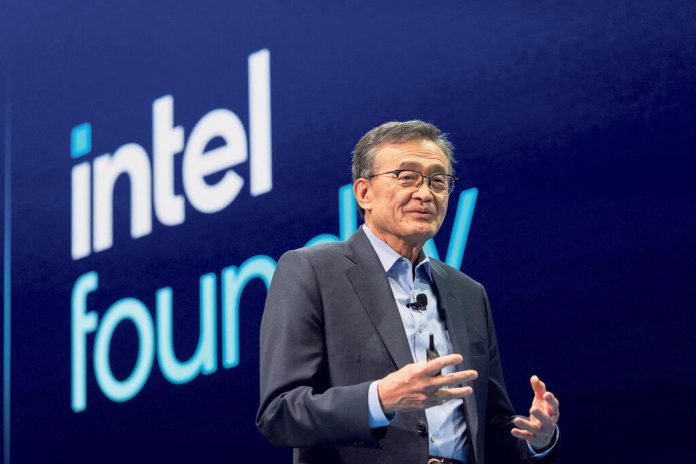
Intel is preparing to enter the graphics processing unit (GPU) market in a more serious way, a move that would pit the once-dominant chipmaker more directly against Nvidia in data centers.

This comes as the chipmaker’s chief executive, Lip-Bu Tan, sounds a note of urgency about China’s rapid progress in chip design despite U.S. restrictions.

The renewed ambition marks a significant strategic pivot for a company that once defined the cutting edge of the global semiconductor industry but has spent much of the past decade playing catch-up. Comments from Lip-Bu Tan on Tuesday underline both the scale of Intel’s aspirations and the competitive pressures driving them, from Nvidia’s dominance in AI chips to China’s accelerating capabilities under export restrictions.

Speaking at the Cisco AI Summit, Tan confirmed that Intel is actively developing GPUs, the class of chips that has become central to artificial intelligence workloads and the primary engine of Nvidia’s extraordinary growth. GPUs, originally designed for graphics rendering, are now the backbone of data centers used for training and running large AI models, an area where Intel has been notably underrepresented.

“I just hired the chief GPU architect, and he’s very good. I’m very delighted he joined me,” Tan said, adding that it took some effort to persuade him to come on board. While Tan did not disclose timelines or product specifics, the hire signals that Intel’s GPU push is no longer experimental but structural, anchored by senior technical leadership.

In an interview with Reuters on the sidelines of the event, Tan made clear that Intel’s GPU ambitions are tightly integrated with its data center strategy rather than aimed at consumer graphics or gaming, where Nvidia and AMD are also strong.

“It’s tied in with the data center,” Tan said. “We’re working with customers, and will then define what the customer needs.”

That customer-first framing reflects lessons Intel has learned the hard way. Nvidia’s success has been driven not just by powerful chips but by tight collaboration with hyperscalers and AI developers, alongside a mature software ecosystem. Intel, by contrast, has often been accused by customers and analysts of designing products in isolation and arriving late to fast-moving markets.

A key figure in Intel’s renewed effort is Eric Demmers, a senior executive who joined from Qualcomm last month. Demmers will report to Kevork Kechichian, Intel’s head of data center chips, reinforcing the message that GPUs are now a core part of Intel’s data center roadmap. Demmers’ move is notable because Qualcomm itself has been expanding its ambitions beyond mobile chips, and Intel’s ability to attract senior talent from rivals suggests a degree of renewed confidence under Tan’s leadership.

Beyond product development, Tan also highlighted early momentum at Intel Foundry, the contract manufacturing arm that sits at the heart of the company’s turnaround plan. Intel has bet heavily on becoming a leading alternative to Taiwan Semiconductor Manufacturing Company (TSMC), offering advanced manufacturing to external customers while also supplying its own chips.

Tan said “a couple of customers are engaging heavily” with Intel Foundry, particularly around its upcoming 14A process technology. He indicated that volume manufacturing on 14A could ramp up later this year, though he stressed that firm commitments depend on customers specifying volumes and products well in advance.

“In order to have a customer … they have to let us know what is the volume and which product, so that we can plan and take time to build the capacity,” Tan said.

This cautious tone reflects the reality that Intel’s foundry ambitions are still unproven at scale. While interest from customers is encouraging, Intel must demonstrate that it can deliver leading-edge manufacturing on time and with competitive yields, something it has struggled with internally in recent years.

Perhaps the most striking part of Tan’s remarks, however, was his warning about China’s progress, particularly at Huawei Technologies. Tan said he was “shocked” to discover during a recent hiring drive that Huawei had recruited around 100 highly skilled chip designers, despite U.S. restrictions that have cut the company off from advanced manufacturing tools and key design software.

When Tan asked Huawei engineers why they chose to work for a firm operating under such constraints, their answer was telling.

“They said, ‘Even though we don’t have access to the best tools, like electronic design automation tools from Cadence and Synopsys, we have the poor man way to do it, and we can do it,’” Tan said.

His conclusion was stark. “To me, they are just shortly behind us, and if you’re not careful, they will just leap forward ahead of us.”

The warning cuts to the heart of the global semiconductor race. U.S. export controls were designed to slow China’s technological progress, but Tan’s comments suggest that talent, ingenuity, and scale can partially offset restrictions on tools. This adds urgency to Intel’s efforts to rebuild leadership in advanced chips, not just as a commercial imperative but as part of a broader geopolitical competition.