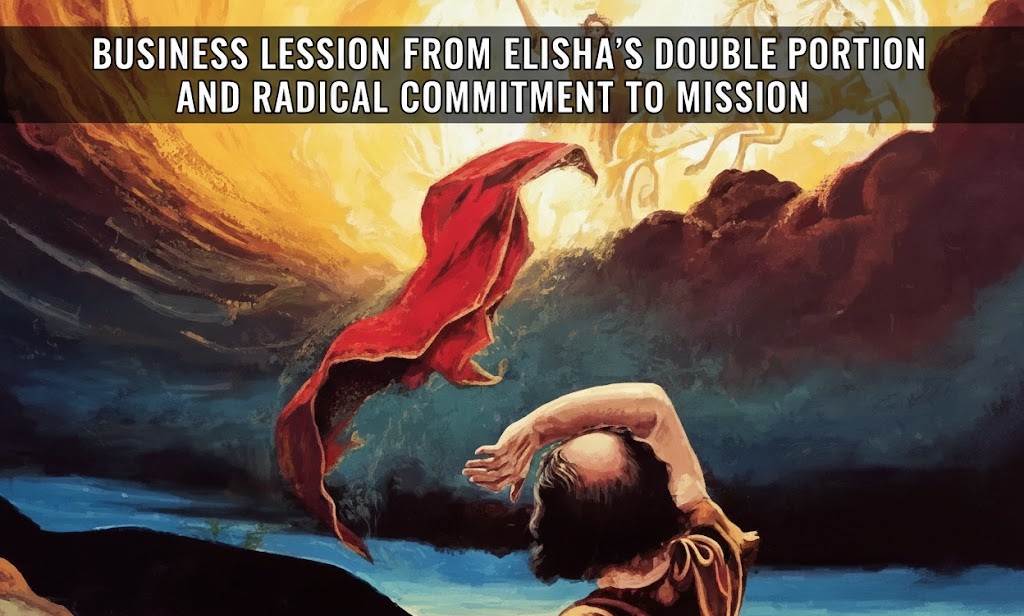
In corporate leadership, the most challenging moment is not the rise of power; it is the transfer of it. Many organizations fail not because the founder was weak, but because the successor was unprepared, or worse, uncommitted. The Bible offers a timeless business case in the relationship between Elijah and Elisha, a masterclass in mentoring, succession planning, and leadership seriousness.
When Elisha asked Elijah for a “double portion,” he was not asking for comfort, title, or ceremonial inheritance. In the Hebrew context, the double portion is the share of the firstborn, the one expected to carry continuity, responsibility, and growth. Elisha was effectively saying: I do not want to merely maintain what you built; I want the capacity to exceed it. That is ambition with accountability.
Elijah did not resist that request. He prepared Elisha. He walked with him, exposed him to the work, and allowed him to observe leadership in motion. This is active succession, not accidental handover. Great leaders do not disappear; they deliberately develop successors.
Before leaving, Elijah gave Elisha the mantle, a visible symbol that authority had been transferred. In modern organizations, this looks like a departing CEO staying on as an advisor, signaling continuity, confidence boosting, and institutional memory. The leader may be stepping aside, but the system is not abandoned.
Yet symbols alone do not solve problems. Elisha proved readiness when he used the mantle to part the River Jordan. He did not frame it, announce it, or debate its meaning. He deployed it. Leadership authority is validated not by possession, but by problem-solving. Power that cannot be used is not power; it is decoration.
But note this, long before that moment, Elisha had already demonstrated something rarer: absolute commitment to the mission. When Elijah first called him, Elisha burned his plowing equipment and slaughtered his oxen. This was not emotion; it was strategy. He eliminated the option of retreating. No side hustle. No fallback plan. No divided attention. He severed his past to fully enter his future. That act alone explains why he could carry the double portion because he had the capacity to carry weight. Good People, most of the CEOs we hail take uncommon personal sacrifices, while holding the mantle in the firm.
For most of us, we ask for authority, campaign for power, negotiate titles, but when authority arrives, we are still distracted. Elected to the Senate but treating it as a part-time role. Appointed CEO but mentally invested elsewhere. Power is requested, but mission is optional. Elisha teaches a harder truth: if you want authority, you must be ready to deploy it, and deploy it on the assignment for which it was given.