
DD
MM
YYYY

PAGES

DD
MM
YYYY

spot_img

PAGES

Home Blog

Oloolu and Wasilat: How Fear is Communicated and Contested

0

The controversy surrounding the Oloolu masquerade and Wasilat has become more than a cultural dispute in Ibadan. It has evolved into a national conversation about belief, tradition, authority, social media, and the power of fear. Beyond deciding who is right or wrong, the incident invites us to ask a more important question: how does fear influence the choices people make, and what happens when that fear is openly challenged?

For generations, societies have relied on stories to preserve values and regulate behaviour. Some stories encourage courage and compassion, while others discourage actions considered dangerous or unacceptable. In many communities, cultural beliefs have survived because they were passed down through powerful narratives that warned people of the consequences of violating sacred rules.

The Oloolu tradition reflects this reality. Long before smartphones and social media existed, stories about the masquerade had established clear boundaries. Women were warned not to see the masquerade. Residents were told not to photograph or record it. These instructions were not presented as ordinary advice but as serious prohibitions carrying severe consequences. Whether expressed through family conversations, community elders, or historical accounts, the message remained remarkably consistent that some boundaries should never be crossed.

The Wasilat incident changed the conversation because it unfolded in the digital age. Instead of remaining within the confines of local tradition, the story spread instantly across TikTok, Facebook, WhatsApp, and other social media platforms. Millions of people who had never heard of Oloolu suddenly became participants in a debate about culture, religion, gender, and human rights.

Interestingly, the internet did not simply spread one version of events. It became a battleground of competing narratives. One group insisted that Wasilat’s experience confirmed the power of tradition. To them, the incident demonstrated that ancient customs should not be mocked or ignored. They urged respect for cultural practices, regardless of whether outsiders understood them.

Another group reached the opposite conclusion. They questioned the supernatural explanations, pointing to inconsistencies in the story and demanding evidence. Some described the events as intimidation or exploitation rather than proof of spiritual power. Others called for legal investigations into allegations that Wasilat was compelled to undergo rituals and pay money before being released.

Perhaps the most fascinating aspect of this controversy is that both sides understood the importance of storytelling. Supporters of the traditional account relied on history, community memory, and inherited beliefs to reinforce their position. Those questioning the claims responded with interviews, personal testimonies, legal arguments, and public appeals for accountability. Instead of swords or physical confrontation, words became the primary weapon. Every video, interview, Facebook post, and WhatsApp message sought to persuade the public to accept one version of reality over another.

The incident also establishes how fear influences behaviour long before anyone verifies whether a claim is true. Reports of people running indoors, closing shops, avoiding certain roads, and warning their daughters reveal that belief alone can shape public action. Whether these responses arise from personal conviction, respect for tradition, or uncertainty about possible consequences, they demonstrate the remarkable influence that deeply rooted narratives continue to have in contemporary society.

Yet fear rarely remains uncontested. As more information emerged, new voices challenged earlier accounts. Wasilat herself publicly denied several circulating claims, saying she neither intended to record the masquerade nor experienced some of the dramatic events attributed to her before undergoing the alleged ritual process. Her account shifted public attention from supernatural punishment to questions about personal rights, due process, and accountability.

This shift illustrates an important reality about today’s information environment. The same technologies capable of spreading rumours can also expose inconsistencies. A viral claim can be questioned just as quickly as it can be shared. Public opinion is no longer shaped solely by traditional authorities or community elders; it is increasingly influenced by competing voices, citizen journalists, eyewitnesses, legal experts, religious leaders, and ordinary social media users.

None of this means that cultural traditions should automatically be dismissed. Every society has customs that deserve respect because they embody history, identity, and collective memory. At the same time, respect for culture should not prevent legitimate questions about justice, transparency, or the protection of individual rights. Strong traditions should be able to withstand honest scrutiny without relying on silence or intimidation.

The Oloolu and Wasilat controversy therefore offers a lesson that extends far beyond Ibadan. It reminds us that fear is one of the most powerful forces in public life, not simply because people experience it, but because stories about fear shape what communities believe, whom they trust, and how they act.

In an era where every smartphone can become a broadcasting station, societies face a new responsibility. We must learn to distinguish between genuine respect for cultural heritage and unquestioning acceptance of every narrative surrounding it. We should preserve traditions that enrich our communities while remaining willing to investigate allegations, protect human dignity, and uphold justice wherever questions arise.

The lasting legacy of the Oloolu and Wasilat episode may not lie in whether one side wins the public argument. Its greater significance is that it has encouraged Nigerians to reflect on how beliefs are formed, how stories gain influence, and why open dialogue remains essential in a society where culture, faith, and modern technology increasingly intersect.
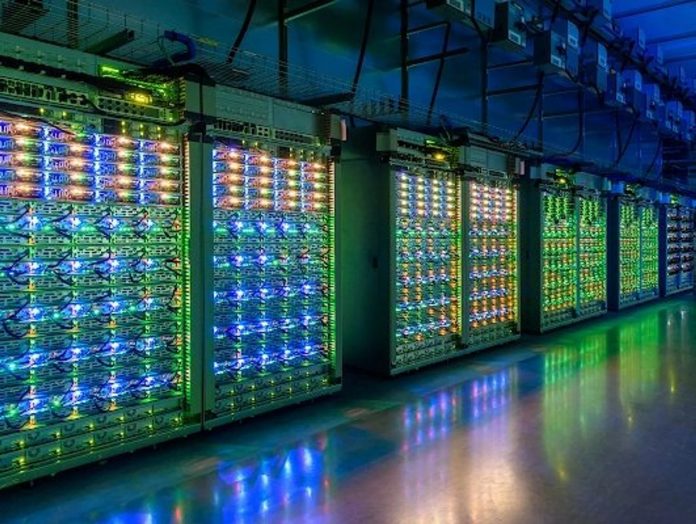
SK Hynix Faces Fresh Labor Tensions As Union Rejects Stock-Based Bonus Proposal Amid AI-Driven Profit Boom

0

SK Hynix is facing renewed labor tensions as management and representatives of one of its South Korean unions entered a fifth round of negotiations on Tuesday over a lucrative bonus package.

The talks, taking place at the company’s semiconductor manufacturing complex in Cheongju, center on a proposed overhaul of SK Hynix’s profit-sharing scheme after record earnings driven by soaring demand for AI memory chips.

Last year, SK Hynix agreed to allocate 10% of its annual operating profit to employees under a new bonus formula. With the company posting record profits from sales of high-bandwidth memory (HBM) chips used in artificial intelligence servers, Reuters calculations indicate the programme could deliver an average payout of about 779 million won ($547,127) per employee in 2026, one of the richest bonus packages in South Korea’s corporate sector.

Management has proposed paying more than half of those bonuses in company shares instead of cash while restricting employees from selling the stock for a specified period. According to a union document reviewed by Reuters, the company also wants greater flexibility to reduce bonus payments in years when it records losses.

The union has rejected the proposal, arguing that it transfers market risk from shareholders to employees.

“We would absolutely not accept any arrangement in which union members bear the risk of stock-price fluctuations,” the union said in a note to members.

It warned that if management fails to present “a concrete and forward-looking revised proposal” during Tuesday’s negotiations, “resolving the matter through dialogue alone would be difficult,” adding that it would “take necessary action.”

SK Hynix has become one of the world’s biggest winners from the AI boom as Nvidia’s primary supplier of high-bandwidth memory chips, a technology that has become indispensable for training and running large AI models. Strong demand from hyperscale cloud providers and AI developers has transformed the company’s financial performance, lifting operating profits to record levels and fueling expectations among employees that compensation should rise in tandem.

For management, paying part of bonuses in equity would reduce immediate cash outflows, strengthen employee ownership and encourage longer-term retention. For workers, however, stock-based compensation introduces exposure to share-price volatility while limiting their ability to immediately realize the value of their bonuses.

Those concerns have become more pronounced because SK Hynix shares have experienced sharp swings this year. Although the stock remains up more than 130% since the beginning of the year, it has surrendered nearly half of its value from the record highs reached in June as investors reassessed valuations across AI-related semiconductor companies amid concerns over the sustainability of AI infrastructure spending.

The recent decline has strengthened the union’s argument that employee compensation should not depend on unpredictable market movements.

Part of A Wider Labor Dispute Across South Korea’s Chip Industry

The disagreement at SK Hynix comes against the backdrop of broader labor unrest that has swept through South Korea’s semiconductor sector during the AI boom. The country’s chipmakers have enjoyed unprecedented revenue growth as demand for AI processors and memory chips surged, but employees have been demanding that the financial windfall be shared more generously.

Samsung Electronics, SK Hynix’s largest domestic rival and the world’s biggest memory chip producer, has also been embroiled in labor disputes over wages, bonuses and working conditions over the past two years. Samsung faced a series of strikes and work stoppages after unions said that employee compensation had failed to keep pace with the company’s earnings potential and the strategic importance of its semiconductor business.

Although Samsung and SK Hynix face different labor issues, both disputes highlight a structural shift in South Korea’s semiconductor industry, where organized labor is becoming more assertive after decades in which management largely dictated compensation policies.

The labor pressures also arrive at a critical moment for the industry. South Korean chipmakers are investing tens of billions of dollars to expand production capacity for AI memory chips while competing with rivals including Micron Technology and Chinese semiconductor manufacturers. At the same time, companies are trying to balance higher labor costs, volatile capital markets and massive investment requirements needed to maintain leadership in advanced chip manufacturing.

However, the outcome of the negotiations carries implications beyond employee compensation.

Stable labor relations are important as SK Hynix races to meet strong demand for next-generation HBM chips from customers including Nvidia and other AI infrastructure providers. Any escalation in labor tensions could complicate production planning at a time when advanced AI memory remains in short supply globally.

Trump Administration Plans Ban on New Chinese Data Center Components to Secure U.S. AI Infrastructure

0

The Trump administration is preparing new restrictions that would prohibit imports of new Chinese-made optical transceivers used in U.S. data centers, escalating Washington’s efforts to secure critical artificial intelligence infrastructure and reduce reliance on Chinese technology in strategic sectors.

According to Reuters, the Federal Communications Commission is drafting a measure that would block imports of new models of Chinese optical transceivers, networking components that transmit data through fiber-optic cables at extremely high speeds inside data centers that power AI training and cloud computing.

The proposal, which has not been previously reported, is expected to be published later this year if approved. However, the sources cited by Reuters cautioned that the FCC could still revise or abandon the plan before implementation.

The move represents the latest step in the Trump administration’s broader efforts to prevent Chinese technology from becoming deeply embedded in America’s AI supply chain, where officials fear it could create long-term national security vulnerabilities.

Optical transceivers are essential components of modern data centers, enabling ultra-fast communication between thousands of servers and AI processors.

As investment in AI infrastructure accelerates, U.S. officials are increasingly scrutinizing every layer of the hardware stack, extending beyond advanced semiconductors to include networking equipment that keeps massive AI clusters connected.

The proposed restrictions are intended to reduce the risk that Chinese-made networking equipment could be used to steal sensitive data, introduce malicious software or disrupt the operation of facilities that host advanced AI models.

“Transceivers definitely pose a risk,” said Divyansh Kaushik, an AI policy expert at Beacon Global Strategies.

“As the data center buildout scales up, you want to make sure the data center supply chain is secure from the get-go.”

The U.S. national security policy treats AI infrastructure as critical infrastructure comparable to telecommunications networks or power grids.

China Warns of Retaliation

China criticized the reported proposal, warning that it would respond if its interests were harmed. A spokesperson for the Chinese embassy in Washington urged the United States to “heed the objective and rational voices of the business communities in both countries” and “stop smearing Chinese companies and threatening them with sanctions.”

The embassy added that “China will take all necessary measures in response to any action that causes material harm to its interests.”

The latest tensions come even as Washington and Beijing have sought to stabilize parts of their economic relationship following last year’s easing of trade tensions.

Officials involved in the proposal are reportedly determined to avoid repeating what many in Washington consider the Huawei experience.

During previous administrations, equipment from Huawei Technologies became deeply integrated into U.S. telecommunications infrastructure before national security concerns prompted extensive efforts to remove it.

Replacing Huawei equipment ultimately proved costly and time-consuming, amplifying the view among U.S. policymakers that potential security risks should be addressed before foreign technology becomes entrenched. The proposed restrictions on optical transceivers mirror that preventive approach by targeting components before they become more deeply embedded in rapidly expanding AI data centers.

Chinese Manufacturers Could Be Hardest Hit

A ban would primarily affect Zhongji Innolight, one of the world’s largest suppliers of optical transceivers. According to Counterpoint Research, Innolight controls approximately 27% of the global data center transceiver market, making it the industry’s largest supplier.

The company was added to the Pentagon’s list of alleged Chinese military-linked companies in June, a designation that often precedes broader U.S. restrictions, although it does not itself impose sanctions.

Industry research cited by Reuters indicates that roughly 90% of Innolight’s revenue is generated outside China, underscoring its importance to global cloud infrastructure providers.

Analysts expect the restrictions to increase costs for major U.S. cloud operators, including Amazon Web Services, by limiting access to one of the industry’s largest hardware suppliers. American manufacturers including Coherent and Lumentum Holdings are expected to benefit from any shift away from Chinese suppliers.

However, analysts note that neither company currently has sufficient manufacturing capacity to fully replace Chinese production.

A report by the Foundation for American Innovation concluded that while U.S. firms produce competitive technologies, scaling output quickly enough to substitute for Chinese suppliers would present a significant challenge.

The proposed action would continue the FCC’s aggressive use of its Covered List, a national security mechanism created by Congress to restrict future imports and sales of equipment produced by companies deemed to pose security risks.

In recent months, the regulator has expanded restrictions beyond telecommunications equipment to include Chinese drones, networking routers, industrial robots and power inverters.

According to Reuters, the optical transceiver proposal would follow a similar approach by prohibiting imports of new Chinese models while allowing many non-Chinese manufacturers to continue introducing new products into the U.S. market.

The initiative also reveals the FCC’s growing role in U.S. technology policy. Reuters reported earlier this year that the U.S. Department of Commerce paused several planned restrictions on Chinese technology imports after a trade détente was reached with Beijing last October, including measures affecting data center equipment.

The FCC has since emerged as one of the administration’s most active agencies in limiting Chinese technology, particularly after a Supreme Court ruling in June strengthened President Donald Trump’s authority over certain independent regulatory agencies.

That shift has enabled the commission to pursue a series of national security-related restrictions independently of broader trade negotiations.

However, the proposed restrictions signal that Washington’s technology competition with Beijing is expanding beyond semiconductors into the broader infrastructure underpinning artificial intelligence. While export controls have largely focused on limiting China’s access to advanced AI chips, the latest proposal targets the networking hardware that enables those processors to operate at scale.

OpenAI Rebuts Apple’s Trade Secrets Lawsuit, Says Internal Emails Undercut Key Allegations

0

The legal dispute between OpenAI and Apple intensified on Tuesday after OpenAI publicly rejected Apple’s trade secrets lawsuit, accusing the iPhone maker of filing a complaint riddled with factual inaccuracies and releasing email exchanges that it says undermine several of Apple’s central allegations.

In a sharply worded blog post, OpenAI described Apple’s lawsuit as a “careless, aggressive and oddly personal lawsuit,” explaining that the company has misrepresented key events surrounding its contacts with OpenAI and former Apple employees.

The latest exchange marks a significant escalation in what has become one of Silicon Valley’s most closely watched legal battles, highlighting growing tensions between two companies whose relationship has deteriorated as competition in artificial intelligence expands beyond software into hardware and consumer devices.

Apple filed suit in July, accusing OpenAI of engaging in a “coordinated pattern of misconduct at an institutional level” to obtain confidential information and trade secrets.

Among its allegations, Apple claimed that:

  • A former Apple employee exploited an authentication vulnerability before joining OpenAI.
  • OpenAI encouraged Apple engineers to bring proprietary hardware to job interviews.
  • Senior OpenAI executives fostered a culture that tolerated such conduct.
  • OpenAI ignored Apple’s attempts to raise concerns earlier this year.

OpenAI has denied each of those allegations.

In Tuesday’s response, the AI company noted that Apple had made several factual errors before filing suit and said documentary evidence contradicts portions of Apple’s complaint.

A central part of OpenAI’s rebuttal concerns Apple’s assertion that it unsuccessfully attempted to contact the company regarding its concerns.

According to OpenAI, Apple’s outside legal counsel mistakenly sent correspondence to the wrong individual after confusing two people with similar Asian surnames.

“Apple had claimed that they contacted OpenAI in February and that we didn’t respond,” the company wrote.

“They now admit that their outside lawyers emailed the wrong person after confusing two Asian last names only after we brought this to their attention.”

OpenAI also disputed Apple’s claim that its legal team had discussions with OpenAI’s general counsel.

“Apple also claimed they had a discussion with our General Counsel, which they now concede never happened,” the company said.

To support its position, OpenAI published copies of what it says are email exchanges involving Apple’s legal representatives.

The lawsuit also centers on Chang Liu, a former Apple engineer who now works at OpenAI, and former Apple executive Tang Tan. Apple alleges OpenAI improperly benefited from confidential information allegedly taken by Liu.

OpenAI counters that Apple employees themselves continued contacting Liu after he departed from the company. According to messages released by OpenAI, former Apple colleagues asked Liu to help locate files, answer technical questions, and assist with file transfers after he had already left the company.

OpenAI argued that the communications demonstrate an internal access management problem rather than any misconduct by Liu.

“This is a common issue with Apple which is caused by them failing to properly manage system access when people leave,” OpenAI said.

The company added that former employees may retain access to company files even when they neither seek nor expect such access.

The legal battle comes as competition between major technology companies increasingly extends beyond AI models into consumer hardware and integrated AI ecosystems. Relations between Apple and OpenAI have become more strained following OpenAI’s expansion into AI-powered devices and its recruitment of several prominent former Apple executives.

Among the most notable hires is Jony Ive, Apple’s longtime design chief, whose collaboration with OpenAI on next-generation AI hardware has intensified competitive pressures between the companies.

Across Silicon Valley, competition for elite AI engineering talent has led to aggressive legal battles over trade secrets, intellectual property and employee mobility.

The lawsuit represents an effort by Apple to protect proprietary technology and reinforce safeguards around confidential engineering work as AI becomes central to future consumer products. But by publicly rebutting the allegations, OpenAI appears to be aiming at defending its reputation at a time when it is expanding relationships with hardware partners, enterprise customers and government agencies.

Amazon’s Historic $3 Trillion Market Cap Reflects Investor Confidence in AI

0

Amazon has reached a historic financial milestone by surpassing a $3 trillion market capitalization for the first time, joining an exclusive group of the world’s most valuable publicly traded companies.

The achievement underscores the company’s remarkable transformation from an online bookstore into a global technology powerhouse spanning e-commerce, cloud computing, artificial intelligence, digital advertising, logistics, and entertainment.

The milestone also reflects growing investor confidence in Amazon’s long-term growth strategy and its ability to capitalize on the rapidly expanding AI economy.

Founded by Jeff Bezos in 1994, Amazon has consistently reinvented itself over the past three decades. While its e-commerce business remains a dominant force in global retail, the company’s diversification into high-margin technology services has become the primary driver of its valuation.

Amazon Web Services (AWS), the firm’s cloud computing division, has emerged as one of the most profitable businesses in the world, powering millions of applications and serving enterprises, governments, and startups across nearly every industry.

The recent surge in Amazon’s valuation has been fueled largely by optimism surrounding artificial intelligence. AWS has accelerated investments in AI infrastructure, custom chips, foundation models, and enterprise AI services, positioning itself as a leading provider of cloud-based AI solutions.

As businesses increasingly integrate generative AI into their operations, Amazon stands to benefit from higher demand for cloud computing resources, storage, and machine learning tools.

Beyond cloud computing, Amazon’s retail business has continued to improve operational efficiency. The company has streamlined its logistics network, optimized fulfillment centers, and leveraged automation to reduce delivery times and operating costs.

These improvements have strengthened profit margins while allowing Amazon to maintain its leadership in online shopping. Its advertising business has become one of the fastest-growing digital advertising platforms, generating billions of dollars in high-margin revenue by enabling brands to reach shoppers directly on Amazon’s marketplace.

The $3 trillion milestone reflects broader market enthusiasm for technology companies leading the AI revolution. Investors have increasingly rewarded firms with strong AI strategies, robust cloud infrastructure, and sustainable earnings growth.

Amazon’s combination of recurring cloud revenue, expanding advertising operations, subscription income from Prime, and continued innovation across multiple sectors has made it one of the market’s most attractive long-term investments.

Competition remains intense. Amazon continues to face strong rivals in cloud computing, including Microsoft and Google, while its retail operations compete with traditional retailers and emerging e-commerce platforms.

Regulatory scrutiny has intensified, with governments in the United States and Europe examining the company’s market power, competitive practices, and acquisitions. Despite these challenges, Amazon has demonstrated resilience through continuous innovation and strategic investment.

Amazon’s achievement is more than just a symbolic number. Crossing the $3 trillion threshold signals confidence in the company’s future earnings potential and its central role in the evolving digital economy. It also highlights the growing importance of AI infrastructure, cloud services, and data-driven business models as key drivers of corporate value.

As Amazon enters this new chapter, its ability to sustain growth will depend on continued innovation, disciplined investment, and successful execution across its diverse business segments. While market capitalizations fluctuate with stock prices.

Surpassing $3 trillion represents a defining moment in Amazon’s history and reinforces its position as one of the world’s most influential technology companies. With AI adoption accelerating globally, Amazon appears well-positioned to remain at the forefront of the next wave of technological transformation.