

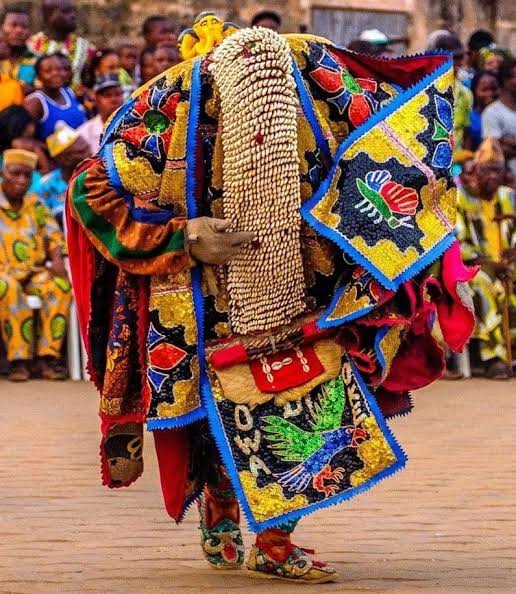
The controversy surrounding the Oloolu masquerade and Wasilat has become more than a cultural dispute in Ibadan. It has evolved into a national conversation about belief, tradition, authority, social media, and the power of fear. Beyond deciding who is right or wrong, the incident invites us to ask a more important question: how does fear influence the choices people make, and what happens when that fear is openly challenged?
For generations, societies have relied on stories to preserve values and regulate behaviour. Some stories encourage courage and compassion, while others discourage actions considered dangerous or unacceptable. In many communities, cultural beliefs have survived because they were passed down through powerful narratives that warned people of the consequences of violating sacred rules.
The Oloolu tradition reflects this reality. Long before smartphones and social media existed, stories about the masquerade had established clear boundaries. Women were warned not to see the masquerade. Residents were told not to photograph or record it. These instructions were not presented as ordinary advice but as serious prohibitions carrying severe consequences. Whether expressed through family conversations, community elders, or historical accounts, the message remained remarkably consistent that some boundaries should never be crossed.
Register for the next Tekedia Mini-MBA.
Register for Tekedia AI in Business Masterclass.
Join Tekedia Capital Syndicate and co-invest in great global startups.
The Wasilat incident changed the conversation because it unfolded in the digital age. Instead of remaining within the confines of local tradition, the story spread instantly across TikTok, Facebook, WhatsApp, and other social media platforms. Millions of people who had never heard of Oloolu suddenly became participants in a debate about culture, religion, gender, and human rights.
Interestingly, the internet did not simply spread one version of events. It became a battleground of competing narratives. One group insisted that Wasilat’s experience confirmed the power of tradition. To them, the incident demonstrated that ancient customs should not be mocked or ignored. They urged respect for cultural practices, regardless of whether outsiders understood them.
Another group reached the opposite conclusion. They questioned the supernatural explanations, pointing to inconsistencies in the story and demanding evidence. Some described the events as intimidation or exploitation rather than proof of spiritual power. Others called for legal investigations into allegations that Wasilat was compelled to undergo rituals and pay money before being released.

Perhaps the most fascinating aspect of this controversy is that both sides understood the importance of storytelling. Supporters of the traditional account relied on history, community memory, and inherited beliefs to reinforce their position. Those questioning the claims responded with interviews, personal testimonies, legal arguments, and public appeals for accountability. Instead of swords or physical confrontation, words became the primary weapon. Every video, interview, Facebook post, and WhatsApp message sought to persuade the public to accept one version of reality over another.
The incident also establishes how fear influences behaviour long before anyone verifies whether a claim is true. Reports of people running indoors, closing shops, avoiding certain roads, and warning their daughters reveal that belief alone can shape public action. Whether these responses arise from personal conviction, respect for tradition, or uncertainty about possible consequences, they demonstrate the remarkable influence that deeply rooted narratives continue to have in contemporary society.
Yet fear rarely remains uncontested. As more information emerged, new voices challenged earlier accounts. Wasilat herself publicly denied several circulating claims, saying she neither intended to record the masquerade nor experienced some of the dramatic events attributed to her before undergoing the alleged ritual process. Her account shifted public attention from supernatural punishment to questions about personal rights, due process, and accountability.

This shift illustrates an important reality about today’s information environment. The same technologies capable of spreading rumours can also expose inconsistencies. A viral claim can be questioned just as quickly as it can be shared. Public opinion is no longer shaped solely by traditional authorities or community elders; it is increasingly influenced by competing voices, citizen journalists, eyewitnesses, legal experts, religious leaders, and ordinary social media users.
None of this means that cultural traditions should automatically be dismissed. Every society has customs that deserve respect because they embody history, identity, and collective memory. At the same time, respect for culture should not prevent legitimate questions about justice, transparency, or the protection of individual rights. Strong traditions should be able to withstand honest scrutiny without relying on silence or intimidation.
The Oloolu and Wasilat controversy therefore offers a lesson that extends far beyond Ibadan. It reminds us that fear is one of the most powerful forces in public life, not simply because people experience it, but because stories about fear shape what communities believe, whom they trust, and how they act.
In an era where every smartphone can become a broadcasting station, societies face a new responsibility. We must learn to distinguish between genuine respect for cultural heritage and unquestioning acceptance of every narrative surrounding it. We should preserve traditions that enrich our communities while remaining willing to investigate allegations, protect human dignity, and uphold justice wherever questions arise.
The lasting legacy of the Oloolu and Wasilat episode may not lie in whether one side wins the public argument. Its greater significance is that it has encouraged Nigerians to reflect on how beliefs are formed, how stories gain influence, and why open dialogue remains essential in a society where culture, faith, and modern technology increasingly intersect.