DD
MM
YYYY

PAGES

DD
MM
YYYY

spot_img

PAGES

Home Blog

Extreme Fear Grips Crypto Market as Bitcoin Plunges to $73K

0

Bitcoin plunged sharply this week, sending shockwaves through the cryptocurrency market as fear and uncertainty spiked. The crypto asset dropped below its critical buy zone around $80,000 last week, trading as low as $72,889 on Tuesday.

Over $730 million in leveraged positions were liquidated in just 24 hours, as investors grappled with sustained selling pressure and heightened market uncertainty. Ethereum, Solana, XRP, and other major tokens also saw sharp losses, signaling that the crypto market remains in the grip of extreme fear.

Bitcoin which is trading at $76,445 at the time of this report, is struggling to reclaim the $80,000 level, with price action remaining fragile and rebound attempts failing to gain strong momentum. Analysts note that this indicates the market may be undergoing a broader structural correction rather than a short-term pullback.

The current Bitcoin price marks levels last seen before President Trump’s election night victory in 2016, a period that had historically catalyzed growth in the crypto market due to his campaign support for digital assets. While Bitcoin traded sideways in the mid-$80,000 range between February and March 2025, it surged to an all-time high of $126,080 on October 6, 2025, according to The Block.

Top analyst Axel Adler describes Bitcoin’s recent trajectory as part of a bear cycle that began in October 2025. Matt Hougan, Chief Investment Officer at Bitwise, emphasizes that the flagship coin is in a multi-month bear market, driven by factors such as excess leverage and profit-taking by early investors. “This is not a bull market correction or a dip. It is a full-bore, 2022-style crypto winter set into motion by excess leverage and widespread profit-taking,” Hougan said.

The selloff has impacted the wider crypto market. Ethereum fell over 9% to below $2,200, Solana dropped more than 7% to under $100, and XRP declined 6.6% to approximately $1.52. Canton experienced the steepest losses among the top 25 tokens by market capitalization, falling over 10% to $0.17. Crypto-related equities also mirrored the downturn, with Coinbase down over 6% and the bitcoin-focused Strategy down more than 8%.

Contributing factors to the market decline include macroeconomic uncertainty amid the risk of a U.S. government shutdown and broader equity market weakness, with the Nasdaq Composite falling 2.2%. Geopolitical developments may also add to volatility, as tensions between the U.S. and Iran remain unresolved despite preparations for talks in Turkey. Analysts warn that any military escalation in the Middle East could drive oil prices higher and push cryptocurrency prices lower, given Bitcoin’s historical sensitivity to geopolitical risk.

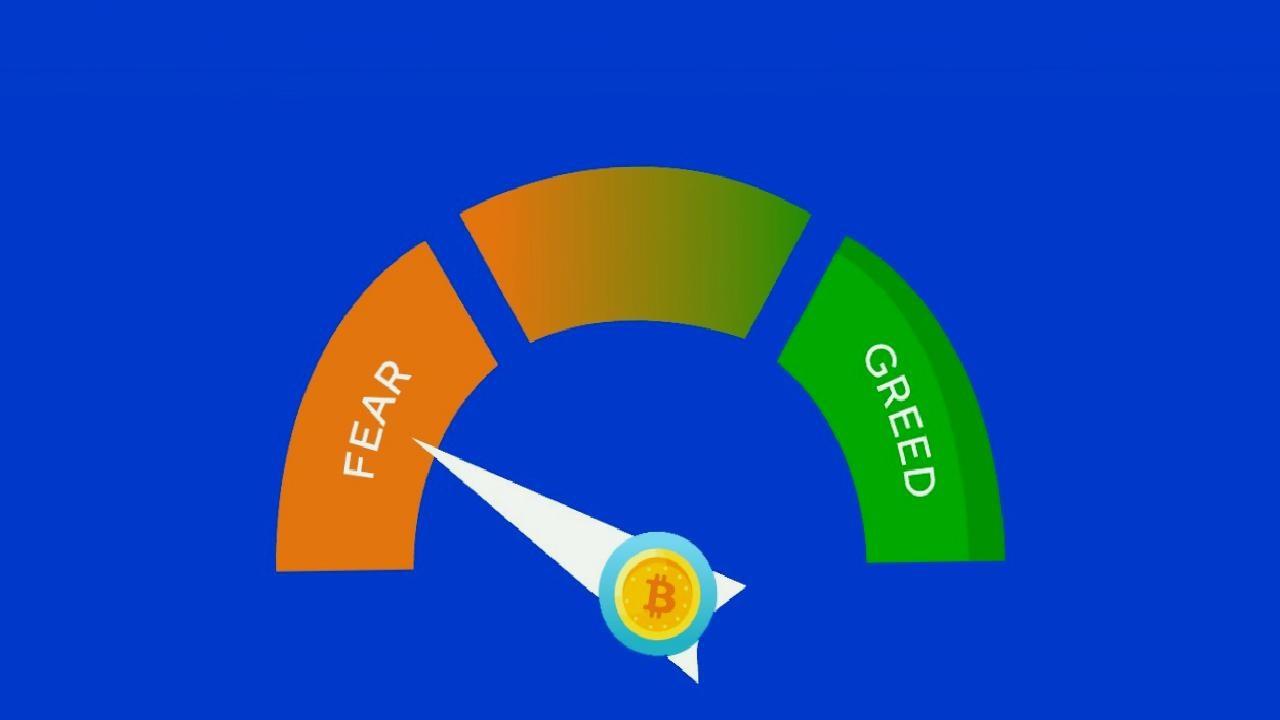
On the positive side, some analysts view the current extreme market fear as a potential indicator for a future rebound. The Crypto Fear and Greed Index has plunged to 12, a level associated historically with market bottoms and subsequent recoveries. Previous extreme fear readings, such as the one preceding Bitcoin’s push toward $100,000, suggest that a stabilization or rally could follow the current capitulation.

Outlook

Bitcoin and the broader crypto market remain under pressure, with technical indicators signaling that volatility may persist in the near term. Investors are closely watching the $70,000 to $75,000 support zone, while macroeconomic and geopolitical developments could further influence market direction.

While short-term weakness may continue, historically, periods of extreme fear have preceded recoveries, suggesting that opportunities may exist for strategic buyers once broader market sentiment begins to normalize.

Intersection of Banks, Stablecoins and Politics in the United States 

0

The intersection of banks, stablecoins, and politics in the U.S. has created a contentious battleground, particularly around stablecoin yields and broader cryptocurrency regulation.

Stablecoins are digital assets pegged to stable fiat currencies like the USD, designed for payments, trading, and value storage without the volatility of other cryptocurrencies.

Their rapid growth—surpassing $200 billion in market cap by early 2026—has positioned them as a direct competitor to traditional banking deposits. The core conflict stems from the Guiding and Establishing National Innovation for U.S. Stablecoins (GENIUS) Act, signed into law in July 2025, which established a federal framework for stablecoins but prohibited issuers from directly paying interest or yields to holders.

This was intended to prevent stablecoins from blurring lines with banking activities and to maintain separation between commerce and finance. However, the law left room for third-party platforms or “rewards” programs to offer yields indirectly, often through staking or other mechanisms, making stablecoins attractive alternatives to low-yield bank accounts.

Banks, which earn significant profits from the spread between what they pay depositors often near 0% and what they earn on reserves around 3-4% at the Fed, view this as an existential threat, potentially leading to a “deposit flight” that could erode their margins and lending capacity.

Politically, this has escalated into intense lobbying. Traditional banks and their allies in Congress, including figures on the Senate Banking Committee, argue that allowing stablecoin yields creates regulatory loopholes, enabling crypto firms to perform bank-like functions without equivalent oversight or capital requirements.

They frame it as a risk to financial stability, community banks, and the broader economy, pushing for amendments to close these gaps. On the other side, crypto advocates, including firms like Coinbase and Galaxy Digital CEO Mike Novogratz, accuse banks of protectionism to safeguard their oligopolistic profits at the expense of innovation and consumer benefits.

They point out that stablecoins could democratize access to yields, foster competition, and integrate crypto into mainstream finance, but entrenched interests are blocking this. This clash has stalled progress on the broader CLARITY Act, a bipartisan bill aimed at clarifying crypto market structure, including custody, trading, and oversight between agencies like the SEC and CFTC.

Despite support from both parties and the Trump administration’s pro-crypto stance, negotiations have dragged on due to the stablecoin yield debate, with Senate delays and last-minute lobbying derailing votes.

Efforts like Coinbase’s meetings with bank CEOs at Davos in January 2026 signal attempts at compromise, but public discourse on platforms like X highlights the impasse: crypto enthusiasts see it as banks undermining innovation, while some analysts warn of systemic risks if stablecoins bypass banking safeguards.

Ultimately, this political gridlock comes at the expense of regulatory clarity, which could accelerate U.S. leadership in digital finance amid global competition from places like Europe and China.

Without resolution, the U.S. risks lagging in tokenized assets and efficient payment systems, as the fight prioritizes incumbent protections over broader progress.

The ongoing collision between banks, stablecoins, and politics in the U.S. — particularly around the GENIUS Act (signed July 2025) and the stalled CLARITY Act — carries profound implications for financial stability, innovation, consumer access, and global competitiveness as of February 2026.

The GENIUS Act established a federal framework for payment stablecoins, restricting issuance to regulated entities with strict reserve requirements; 100% backing by high-quality liquid assets like Treasuries, audits, AML compliance, and a direct ban on issuers paying interest or yield to holders.

This was largely a win for banks, preventing stablecoins from directly competing as interest-bearing deposit alternatives and protecting their core business model: earning spreads on low- or zero-interest deposits while holding reserves at the Fed.

However, the loophole allowing indirect “rewards” via staking, liquidity provision, or third-party programs on platforms like Coinbase has become a flashpoint. Banks, led by the American Bankers Association (ABA) and executives like Bank of America’s Brian Moynihan, warn of massive deposit flight—potentially trillions of dollars shifting to yield-bearing stablecoin options.

This could: Raise banks’ funding costs forcing higher deposit rates or reliance on costlier sources like brokered deposits. Reduce lending capacity, especially for community banks funding local mortgages and small businesses.

Disrupt credit creation and increase borrowing costs economy-wide. Research including Fed analyses and even some crypto-funded studies supports this risk: yield-bearing stablecoins could drain $65 billion to $1.26 trillion from bank lending, accelerating “deposit substitution” and exposing banks to liquidity mismatches.

Banks are aggressively lobbying to close these gaps in the CLARITY Act, framing it as a financial stability imperative rather than protectionism. The GENIUS Act provided much-needed legitimacy and clarity, boosting adoption by embedding stablecoins in a regulated environment (market cap already over $200 billion).

It accelerated integration with traditional finance, with compliant issuers gaining credibility and attracting institutional use cases like tokenized assets and payments. Yet the yield ban limits consumer appeal—stablecoins remain low-yield compared to alternatives—pushing innovation toward workarounds that risk regulatory crackdowns.

Crypto firms argue these restrictions stifle competition, consumer benefits, and U.S. leadership in digital finance. A stricter ban could:Slow retail adoption and migration from low-yield bank accounts. Drive activity offshore or to unregulated/DeFi channels. Hinder platforms’ revenue models reliant on rewards.

The industry sees this as incumbents blocking progress, but some view it as necessary guardrails to avoid systemic risks like blockchain-enabled bank runs. The yield debate has derailed the CLARITY Act (Digital Asset Market Clarity Act of 2025), which aims to define SEC vs. CFTC oversight, custody rules, and market structure for broader crypto assets including tokenized securities and DeFi.

Despite House passage in 2025, bipartisan Senate progress stalled amid lobbying, committee delays, and failed White House compromises. Optimists predict passage by April 2026 under pro-crypto momentum, but Citi analysts and others warn delays could extend beyond midterms.

This impasse means: Lingering uncertainty hampers investment and innovation. The U.S. risks lagging behind clearer regimes (e.g., EU’s MiCA, Hong Kong’s licensing with yield allowances), where stablecoins integrate faster into payments and tokenization.

Unchecked yield-bearing stablecoins could trigger rapid deposit outflows during stress, but over-regulation might push activity underground or offshore, creating hidden fragilities. Prioritizing bank safeguards may preserve lending channels but slow tokenized finance, efficient payments, and DeFi growth.

Holders miss passive yields; everyday users gain safer stablecoins but lose competitive options. Regulated stablecoins could reinforce USD hegemony in digital payments—if resolved favorably—amid rising global alternatives.

This fight prioritizes short-term incumbent protections over comprehensive progress, stalling regulatory clarity that could accelerate U.S. digital finance leadership. Resolution likely via compromise on rewards is needed to balance stability with innovation; otherwise, the U.S. may cede ground in the tokenized economy while banks defend margins at the cost of broader advancement.

Results: The Only Fluent Language in the Boardroom [video]

0

This video teaches a simple but uncomfortable lesson: most times, it is execution that decides. Walk into a board meeting, and if the CEO has great numbers with revenue up, margins improving, market share expanding, you will meet an orator, as Board members are hearing what they seek. They see a CEO who speaks with confidence. He communicates fluently. His strategy sounds elegant. The vision becomes poetic. Good numbers have a way of improving diction. Before everyone is a rock star!

But you can travel to England and learn the best English in the world, but if revenue is down, profits are declining, and market share is slipping, that eloquence disappears. You begin to stammer before them, and they will interrupt you mindlessly. Because in business, the most powerful language is not grammar or storytelling. It is results. When no one sees that, confusion sets it because you are no longer communicating. They expected something based on the roadmap and you are sharing totally uncorrelated expectations.

That is what this video shows. Once the goal is on the scoreboard, everything changes. The team is winning. Number 9 has scored. Momentum shifts. Suddenly, everyone looks brilliant. Confidence rises. Energy follows outcome. Before that moment, the intensity was raw, inefficient, and unsettled. Results brought order!

Of course, we do not encourage excesses or unsporting behavior. But this reflects the age we live in, a high-octane, hyper-competitive world, where outcomes settle many debates. Execution silences noise. Results end arguments. And as a team, results can unite everyone because when a company does well, everyone working in that company becomes legendary. If you work in Nvidia, send out your resume to 10 companies; I promise you that you will get close to 9 offers! Why? Nvidia rocks and every staff therein is a star!

Everything is captured in this African wisdom: Victory has relations; vanquish is an orphan. In business, as in life, results do not just speak, they decide relationships.

Bullish Reasons Bitcoin May Rebound Above $80,000 Relatively Soon

0

As of early February 2026, Bitcoin (BTC) is trading around $76,000–$79,000 based on recent market data from sources like CME futures, Coinbase, and real-time trackers, having recently broken below the $80,000 level for the first time since mid-2025.

This represents a significant pullback—roughly 40% from its 2025 peak above $120,000—driven by factors like liquidity concerns in the U.S. financial system, speculation around a potentially tighter Federal Reserve policy under new leadership, a stronger U.S. dollar, leveraged position liquidations over $2 billion in recent sessions, and broader risk-off sentiment amid macro uncertainties.

The question implies reasons why this dip below $80,000 may prove temporary, with Bitcoin unlikely to remain suppressed there for an extended period. Here’s a breakdown of key bullish arguments and counterpoints drawn from current market analysis: Corrections of 35–40% or even deeper are common during Bitcoin bull runs, not signs of a bear market reversal.

Analysts note that $75,000–$80,000 aligns with a typical “deepest pullback” in this cycle, often serving as a buying opportunity rather than a floor for prolonged weakness. Previous cycles show quick recoveries after such drawdowns when sentiment extremes like current “fear” spikes hitting 2026 highs attract dip buyers.

Structural Support and On-Chain Metrics

Levels around $80,000 have acted as key support in late 2025 (e.g., November lows), with the “True Market Mean Price” (a long-term fair value metric) sitting near or just above it. ETF cost bases hover nearby ~$84,000 aggregate, suggesting institutional holders may defend these zones.

Some on-chain data indicates positive momentum building modestly, and extreme fear often precedes reversals. Expectations persist for eventual Fed accommodation post-May 2026 leadership clarity potentially turning dovish, rate cuts, or liquidity injections that favor risk assets.

Bitcoin has historically benefited from “debasement themes” e.g., rotation back from overcrowded assets like precious metals into crypto as real yields compress. Institutional inflows via spot ETFs and growing adoption could accelerate if regulatory clarity emerges.

2026 predictions remain constructive overall, with many targeting $100,000–$150,000+ by year-end or beyond some as high as $225,000–$250,000 in bull cases. Factors include Bitcoin’s fixed supply, ongoing institutional capital flows, and its role as a non-sovereign hedge against inflation/policy risks.

Even conservative views see rebounds to $100,000+ if key resistances are reclaimed. Ongoing liquidity squeezes, potential further Fed tightening signals, or macro shocks could push toward $70,000–$75,000 or lower in extreme bear cases, with outliers mentioning $40,000+ drawdowns over months.

Thin support in the $70,000–$80,000 range increases volatility, and leverage unwinds can cascade quickly. Fear is elevated, with social commentary and liquidation-driven slides dominating. Metals (gold/silver) are outperforming as safe-havens, diverting flows from crypto.

Bulls appear “silent” in the short term, and failure to reclaim higher levels (e.g., $90,000+) could extend the consolidation or downtrend. In summary, while Bitcoin is in a sharp correction amid macro headwinds and has broken key psychological/technical support at $80,000, many indicators point to this being a temporary phase within a broader bull cycle rather than a sustained bear market.

Rebounds often follow such fear extremes, especially if liquidity improves or dip-buying intensifies. However, crypto remains highly volatile—further downside is possible before any meaningful recovery. Always consider multiple sources and your risk tolerance, as prices can shift rapidly.

Meanwhile, BTC continues to struggle.

Concerns over Bitcoin’s stability mounted this week as a crypto selloff erased nearly half a trillion dollars in digital currencies. The market value of all crypto has fallen by $467.6 billion since Jan. 29, Bloomberg reports, with Bitcoin dropping roughly 40% since October to 15-month lows. Geopolitical instability has led investors to avoid risky assets, with one analyst noting that Bitcoin’s dip below $73,000 this week “has pushed sentiment into extreme fear.” Bitcoin’s volatility has shaken the belief it could serve as a “digital gold” safe haven.

Bitcoin Halving Enforces Scarcity and Historically Supported Long-term Price Appreciation

0
CREATOR: gd-jpeg v1.0 (using IJG JPEG v80), quality = 82

The Bitcoin halving is a programmed event in Bitcoin’s protocol that occurs approximately every four years; every 210,000 blocks, reducing the block reward for miners by 50%.

This mechanism, designed by Satoshi Nakamoto, controls Bitcoin’s issuance rate and enforces its fixed maximum supply of 21 million BTC. Halving cuts the daily influx of new BTC from ~900 BTC/day pre-2024 to ~450 BTC/day post-2024 halving.

Bitcoin’s inflation rate drops significantly with each event. Post-2024, the annual inflation rate fell to around 0.85% from 1.7% prior, and with ~94-95% of total supply already mined by 2026, future halvings have progressively milder supply shocks.

New supply slows until the final halving around 2140, when no new BTC will be created (rewards drop to zero, and miners rely on transaction fees). This supply-side reduction creates a “supply shock” if demand holds steady or grows, as fewer new coins enter circulation while miners may sell less to cover costs though profitability pressures can lead to short-term selling.

Historical Price Effects

Halvings have historically been associated with bullish price cycles, though causality is debated other factors like adoption, macro conditions, and speculation play roles. Peaks often occur 12-18 months post-halving.

1st Halving (Nov 28, 2012): Reward from 50 ? 25 BTC. Price ~$12 at event ? rose dramatically to over $1,000+ by late 2013 (multi-thousand % gains in the cycle). 2nd Halving (Jul 9, 2016): 25 ? 12.5 BTC. Price ~$650 ? surged to nearly $20,000 by end-2017 (over 1,200% in following period). 3rd Halving (May 11, 2020): 12.5 ? 6.25 BTC. Price ~$8,700 ? hit all-time high ~$69,000 in 2021 (645-700%+ gains post-event). 4th Halving (Apr 20, 2024): 6.25 ? 3.125 BTC. Price ~$64,000 at event.

Post-halving saw a rally to an ATH around $126,000 in October 2025 roughly 100% gain to that point, but with more subdued volatility compared to prior cycles due to institutional involvement like spot ETFs launched Jan 2024 absorbing flows far exceeding miner supply.

Post-halving performance shows a pattern of diminishing percentage returns as the market matures and absolute supply shock lessens. Reduced new supply + steady/increasing demand from adoption, institutional inflows, “digital gold” narrative pushes prices up.

Halvings generate hype, media attention, and FOMO, driving buying. Lower rewards can force inefficient miners out, consolidating hashrate, but price appreciation often compensates profitable ones.

Bull runs have followed halvings, though timing varies (e.g., initial dips or consolidations before major legs up). The classic “four-year cycle” (halving ? bull run ? peak ? correction) may be weakening. The 2024-2025 cycle showed smaller relative gains and lower volatility, influenced by: Institutional dominance: Spot ETFs and corporate treasuries (e.g., MicroStrategy) now drive flows 10x+ daily mining output, overshadowing miner selling.

Correlation with broader risk assets, liquidity, interest rates, and geopolitics often overrides halving effects. Diminishing supply impact: With most BTC mined, halvings create less dramatic scarcity shocks.

Some analysts argue the cycle is “dead” or evolving, with 2026 potentially seeing range-bound action ($90K-$120K base case) unless major catalysts like further Fed easing, regulatory clarity, or adoption surges emerge.

Short-term, halvings can cause volatility around the event due to anticipation and repositioning. In summary, halvings primarily enforce scarcity and have historically supported long-term price appreciation by curbing inflation and amplifying demand pressures.

However, they are not a guaranteed price pump—outcomes depend on broader market conditions, and past performance isn’t indicative of future results. Bitcoin remains highly speculative and volatile.