
DD
MM
YYYY

PAGES

DD
MM
YYYY

spot_img

PAGES

Home Blog

Dangote Blames Taxes, Levies for Nigeria’s Expensive Cement as Export Prices Undercut Local Market

0

Nigerian billionaire industrialist Aliko Dangote has offered a detailed explanation for why cement produced in Nigeria often sells for less abroad than it does at home, explaining that the country’s heavy tax burden and regulatory structure, rather than production inefficiencies, are the primary drivers of high domestic prices.

In an exclusive interview with Business Insider Africa, Dangote said Nigeria’s fiscal framework places multiple layers of taxes and levies on locally sold cement, sharply inflating prices for domestic consumers. By contrast, cement exported from Nigeria enjoys extensive exemptions, allowing it to compete favorably with products from global manufacturing hubs such as Turkey, Russia, and China.

The issue has become increasingly contentious as Nigerians struggle with rising construction costs and the government pushes large-scale infrastructure and housing projects. Public debate has intensified around why a commodity produced locally, using largely domestic raw materials, remains priced beyond the reach of many Nigerians while being sold more cheaply overseas.

Dangote said the discrepancy becomes clear when one looks at the cost structure behind each bag of cement.

“When you look at my invoice, the cement I export is cheaper than the one I’m selling domestically, because that’s how exports work,” he said. “In export I’m saving a lot of money. I’m not paying 30% income tax, I’m not paying 2% education, I’m not paying 1% health, I’m not paying 7.5% VAT, and I’m not paying 10% withholding tax.”

According to him, these exemptions significantly reduce production costs for export markets, while domestic sales must absorb income tax, value-added tax, sector-specific levies, and other statutory charges. The cumulative effect, he said, is that Nigerian consumers end up paying more to compensate for structural inefficiencies embedded in the tax system.

Dangote stressed that expanding local manufacturing capacity alone is not enough to bring down prices if the operating environment remains unchanged. He noted that without reforms to taxation and regulation, manufacturers have limited room to reduce prices sustainably, regardless of scale or efficiency gains.

His comments come amid mounting pressure from policymakers who have repeatedly called on cement producers to lower prices, citing improved macroeconomic conditions. In February 2025, Nigeria’s Minister of Works, Senator Dave Umahi, urged manufacturers to cut prices to about N7,000 per 50kg bag. Umahi pointed to a stabilizing naira, trading around N1,400 to the dollar at the time, and falling petrol prices as evidence that cost pressures had eased.

Umahi criticized cement prices that were hovering around N9,500, noting that manufacturers had raised prices sharply when the naira weakened to nearly N2,000 per dollar but had not adjusted them downward as the currency recovered. He warned that persistently high cement prices were undermining the government’s infrastructure plans, particularly road construction projects that rely on concrete pavements for durability.

He also cautioned that some contractors were already considering reverting to asphalt, which is cheaper upfront but less durable over time, because of the high cost of cement. Such a shift, he said, could increase long-term maintenance costs for the government.
Umahi isn’t the only government official to publicly criticize cement manufacturers. In February 2024, the Minister of Housing and Urban Development, Musa Dangiwa, accused cement manufacturers of exploiting foreign exchange volatility to justify steep price increases. At the time, cement prices had jumped from about N5,500 to nearly N10,000 per bag, raising alarms about affordability and the viability of government-backed housing programmes.

Dangiwa warned that rising cement costs threatened the ministry’s housing delivery targets, particularly for low- and middle-income earners, and urged manufacturers to innovate and cut inefficiencies instead of passing rising costs directly to consumers.

Despite these calls, cement prices have remained elevated. Market surveys show that a 50kg bag currently sells for between N9,500 and N10,200, depending on location. The high prices have had ripple effects across the economy, pushing up the cost of housing, private construction, and public infrastructure projects.

Dangote’s intervention reframes the debate by shifting focus from manufacturers’ pricing decisions to Nigeria’s broader policy environment. While critics continue to argue that dominant players in the cement market wield significant pricing power, his remarks highlight a deeper challenge facing Nigeria’s industrial sector: how overlapping taxes, levies, and regulatory costs often erode the benefits of local production, leaving consumers to bear the burden.

Amid the government’s need for revenue and its goal to boost industrial output and affordability, Dangote’s comments add urgency to calls for a review of fiscal policies that may be undermining domestic competitiveness and worsening the cost-of-living pressures faced by Nigerians.

Google Pushes Back Timeline to Fully Replace Assistant With Gemini on Android

0

Google has pushed back its plan to fully replace Google Assistant with its Gemini AI across most Android devices, signaling that the company is taking a more cautious approach to one of the most consequential platform shifts in Android’s history.

The company said it is adjusting its previously announced timeline, which had targeted the end of 2025 for making Gemini the default digital assistant on most Android phones. Instead, Google now expects the transition to continue into 2026, saying it wants to ensure a “seamless transition” for users. Further details on the revised roadmap will be shared in the coming months, suggesting that the final switchover could extend beyond early 2026.

The delay is attributed to the technical and strategic complexity of replacing Google Assistant, a service that has been deeply embedded in Android for nearly a decade, with a far more advanced and resource-intensive AI system.

Google Assistant’s retirement became all but inevitable once Gemini was unveiled and began inheriting Assistant’s core functions, including voice commands, app control, and smart home management. That shift became tangible in 2024, when Google launched the Pixel 9 series with Gemini set as the default assistant, effectively positioning Assistant as legacy software on Google’s flagship hardware.

Since then, Google has been steadily integrating Gemini across its product ecosystem, spanning Search, Gmail, Docs, Chrome, and Android. The company has also said Gemini will power experiences beyond smartphones, including tablets, in-car systems, and accessories such as smartwatches and wireless earbuds that connect to Android phones.

However, moving from a dual-assistant phase to a complete handover has proven more difficult than expected.

A key constraint is hardware compatibility. Google has confirmed that only devices running Android 10 or later with at least 2GB of RAM will be eligible for the Gemini upgrade. While modest by flagship standards, that threshold excludes a significant number of older and low-end Android devices, particularly in emerging markets where Android’s global dominance is strongest.

Google Assistant was designed to operate efficiently on a wide range of hardware, including entry-level phones. Gemini, by contrast, relies more heavily on on-device processing and cloud-based AI inference, placing greater demands on memory, processing power, and network reliability. Ensuring consistent performance across millions of devices with vastly different capabilities remains a major challenge.

Beyond hardware, Google appears wary of disrupting everyday user habits. Assistant handles a wide range of routine tasks, from alarms and reminders to navigation, dictation, and home automation. Any degradation in speed, accuracy, or reliability during the transition could undermine user trust, especially among those who rely heavily on voice interactions.

By extending the timeline, Google is effectively buying itself room to close feature gaps, improve latency, and ensure Gemini can handle edge cases that Assistant has refined over years of real-world use.

The delay also comes amid intensifying competition in AI assistants. Apple is rolling out deeper AI integration across iOS, Microsoft continues to embed Copilot across Windows and enterprise software, and Amazon is rebuilding Alexa around generative AI. In that context, Google faces pressure not just to replace Assistant, but to deliver a clearly superior experience that justifies the shift.

Internally, Gemini is central to Google’s broader AI strategy, positioning the company to defend its dominance in search, mobile software and advertising as user behavior evolves toward conversational and AI-driven interfaces.

For now, Google Assistant will continue to coexist with Gemini on many Android devices, with Gemini gradually assuming more responsibilities as updates roll out. The extended timeline suggests Google is prioritizing stability and user confidence over speed, even as it pushes aggressively to make Gemini the connective tissue across its products.

While Assistant’s days are clearly numbered, Google’s revised plan signals that the company would rather arrive late with a fully formed AI assistant than rush a transition that risks alienating its massive Android user base.

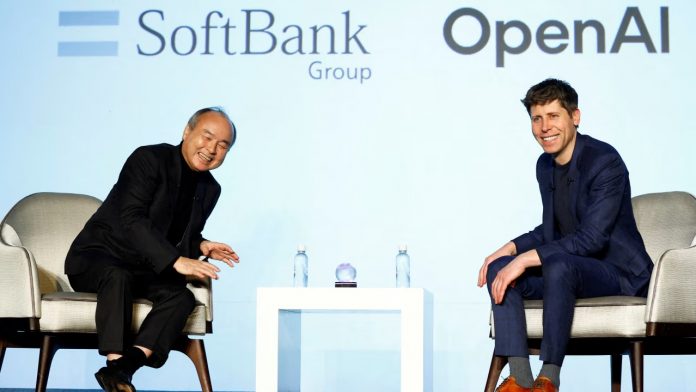
SoftBank Reportedly In A Race to Complete $22.5bn OpenAI Funding by End of 2025

0

SoftBank Group, the Japanese conglomerate led by billionaire CEO Masayoshi Son, is in a high-stakes sprint to fulfill a remaining $22.5 billion funding commitment to OpenAI by the end of 2025, leveraging a mix of asset divestitures, untapped borrowing facilities, and operational streamlining.

This aggressive maneuver, disclosed to Reuters by sources close to the matter, highlights the intensifying capital requirements in the artificial intelligence sector, where skyrocketing valuations and ambitious infrastructure projects are reshaping global tech investment landscapes.

The commitment forms part of a larger $30 billion pledge announced in April 2025, when SoftBank invested an initial $7.5 billion at OpenAI’s then-$300 billion valuation. OpenAI, the San Francisco-based pioneer behind ChatGPT, anticipates receiving the balance by December 31 as per contractual terms, despite not yet having the funds in hand. The infusion is contingent on OpenAI’s successful transition to a for-profit structure, achieved in October 2025—a move that positions the company for potential future public offerings amid its rapid growth.

Son, known for his bold bets through SoftBank’s Vision Funds, has framed this as a cornerstone of his vision to transform SoftBank into the “world’s No. 1 ASI (Artificial Superintelligence) Platform Provider,” as outlined in the company’s 2025 annual report. In a recent investor address, Son explained his decision to divest from high-performing assets like Nvidia, stating, “I didn’t want to sell a single share of NVDA, but I needed the money to invest in OpenAI and other opportunities. When superintelligence comes, at least 10% of global GDP will be replaced by AI and AI robots.”

This philosophy underpins SoftBank’s pivot toward AI dominance, even as it scales back broader dealmaking: Vision Fund investments now require Son’s personal approval for any deal over $50 million, effectively pausing non-AI activities. To marshal the necessary capital, SoftBank has executed several high-profile sales. It offloaded its entire $5.8 billion stake in Nvidia, the AI chip leader whose shares have surged amid the sector’s boom, and divested $4.8 billion in T-Mobile US holdings, retaining a 4% stake valued at approximately $11 billion as of September 30, 2025. Workforce reductions have also been implemented to conserve cash.

Looking ahead, the company is eyeing a partial exit from its investment in Didi Global, China’s ride-hailing giant, which is preparing for a Hong Kong relisting after a 2021 U.S. delisting due to regulatory pressures. A significant liquidity source lies in undrawn margin loans backed by SoftBank’s controlling stake in Arm Holdings, the British chip designer whose shares have tripled since its 2023 IPO.

SoftBank recently expanded this facility by $6.5 billion, bringing total undrawn capacity to $11.5 billion. As of September 30, SoftBank reported parent-level cash reserves of ¥4.2 trillion ($27.16 billion), providing additional flexibility alongside potential corporate bonds or bridge loans.

These mechanisms show the strain on even well-capitalized players in funding AI’s capital-intensive future. The urgency aligns with OpenAI’s escalating operational needs. Facing “code red” internal directives from CEO Sam Altman to enhance ChatGPT amid competition from Google’s Gemini—which has grown 3x faster in user engagement—OpenAI requires vast resources for model training and deployment. Altman has outlined ambitions for 30 gigawatts of computing capacity at a cost of $1.4 trillion, with goals to add 1 gigawatt weekly, each carrying a $40 billion price tag.

Current annualized revenue stands at around $20 billion, with profitability eyed for 2030, creating a yawning funding gap. Central to this is the Stargate project, a $500 billion joint venture announced in January 2025 between OpenAI, Oracle, SoftBank, and others to build U.S.-centric AI data centers. By July, Oracle committed to 4.5 gigawatts of additional capacity, and in September, five new sites were revealed, putting Stargate on track to meet its 10-gigawatt target by year-end.

The initiative, starting with a flagship facility in Abilene, Texas, aims to counter geopolitical risks, including U.S.-China tech tensions, and support national AI ambitions. Michigan was selected in November for a multi-billion-dollar site, with construction slated for early 2026. SoftBank’s involvement extends to a November 2025 joint venture with OpenAI, “SB OAI Japan,” focused on “Crystal Intelligence” for corporate transformation.

This deal comes amid a broader AI investment frenzy. OpenAI’s valuation has ballooned, with recent talks—potentially involving Amazon—pushing it toward $830-900 billion, tripling from April and yielding substantial paper gains for early backers like SoftBank. However, concerns mount over an “AI bubble”: hefty capital outlays by hyperscalers like Meta (committing unprecedented sums to data centers) raise questions about returns if adoption lags.

SoftBank’s history adds scrutiny—its Vision Fund, once valued at $100 billion, has faced losses from bets like WeWork, though AI-focused recoveries via Arm and others have bolstered its recovery. Market reactions have been mixed. SoftBank shares dipped modestly post-announcement, reflecting investor wariness over leverage, but analysts point to potential upsides.

Meanwhile, SoftBank continues selective AI investments, including in startups like Sierra and Skild AI—the latter potentially raising over $1 billion at a $14 billion valuation with Nvidia’s involvement.

How to Fix IP Ban on Instagram: Full Troubleshooting Guide

0

If Instagram suddenly stops working, won’t load, or won’t let you in, it’s usually not your account that’s the problem; it’s the IP address you’re using. An IP ban occurs when Instagram determines that your internet connection is untrustworthy and temporarily blocks access from that network.

For most users, this shows up out of nowhere and can be really confusing, especially when the account looks perfectly fine on another connection.

In this guide, I’ll tell you what leads to an Instagram IP ban, how to fix it step by step, and what actually works.

What Causes an Instagram IP Ban

Instagram flags an IP address when a connection starts acting suspiciously. Most of the time though, the problem lies with how the network’s being used, not the actual account in question.

  • You’re doing way too much on the platform all at once – liking, following, commenting, or constantly refreshing pages
  • Trying to manage several Instagram accounts from the same IP address
  • Using third-party tools, whether that’s automation, bots, scrapers or anything else that’s too aggressive
  • Constantly switching between Wi-Fi, mobile data, or frequently changing locations (be it a VPN or a new spot)
  • Using a free VPN, some crowded proxy services, or some unstable shared IP addresses from public Wi-Fi
  • Suddenly having a ton of activity on a brand new account before you’ve even got a chance to build up some trust with Instagram

Step-by-Step: How to Fix This Error

Most of the time, an Instagram IP ban is temporary, and it does not require any complex repairs. Use the steps below in order.

Change Your IP Address First

The fastest way to restore access is to switch to a clean network. Moving from Wi-Fi to mobile data or restarting your router to get a new IP is often enough, and it’s usually the first step people take when learning how to fix IP ban on Instagram.

Log Out and Take a Short Break

After changing the IP, log out of Instagram on every device. Wait at least 12-24 hours before doing anything on the account. Likes, follows, comments, and messages are to be avoided during this cooldown to allow Instagram to reset its trust signals.

Stop using VPNs and Public Networks

Open Wi-Fi and free VPNs rely on shared IPs, which Instagram already considers unsafe. During the process of fixing the issue, you should stop using one right away and switch to a personal, trustworthy connection.

Clear App Data or Reinstall Instagram

The Instagram app can preserve old session data that leads to errors even after the IP has been fixed. If you are on a browser, clear the cache of the app, reinstall Instagram, or reset cookies to open a new session.

Try a Different Device or Browser

It can be useful to log in using another phone, tablet, or browser so that Instagram can generate a new session associated with the clean IP rather than the blocked one.

Complete Any Security Checks

In case Instagram sends a login notification or verification via email or SMS, fill it in and attempt again. Any failure to take these steps can postpone access or trigger another block.

Proxy-Based Solutions

If your internet connection keeps getting blocked by Instagram, you might not be able to rely on it for your regular browsing. Using a proxy can be a lifesaver. Proxies work by routing your connection through a different IP address. If the IP is clean and stable, Instagram treats it as normal traffic, rather than flagging it for suspicious behavior.

  • Residential proxies (safest option) – They use real home IP addresses from internet service providers. They’re okay for logging in, posting and generally using your account without any issues.
  • ISP proxies (balanced option) – ISP proxies are hosted on servers but registered with internet providers. They generally offer a better experience in terms of speed than residential proxies and are still legitimate to Instagram.
  • Avoid free or shared proxies – Crowded proxy pools and free proxies frequently reuse IPs with a negative reputation. The risk of immediate bans is increased when they are used.
  • One proxy per account – If you only assign one proxy to one Instagram account, you avoid the problem of Instagram getting confused and one of them getting flagged.

Prevention Tips

Fixing an IP ban is only half the job. The real goal is making sure it doesn’t happen again. Most repeat bans come from the same mistakes being repeated.

  • Slow down all activity – Spread likes, follows, comments, and DMs throughout the day.
  • Stick to one stable connection – Avoid switching between Wi-Fi, mobile data, VPNs, and different locations too often.
  • Limit accounts per IP or proxy – Running multiple accounts on the same connection increases risk.
  • Avoid aggressive automation – Tools that ignore limits or force fast actions are easy for Instagram to detect.
  • Warm up new accounts properly – Build the profile, post normally, and increase activity gradually over time.
  • Watch for early warning signs – If actions start failing or slowing down, stop immediately and give the account a break.

Summary

An Instagram IP ban almost always means that the network you’re using has set off some alarms. Most of the time, the problem is caused by some sort of high activity, a suspicious shared IP address, or a network you’re using keeps changing. Switching over to a clean connection and giving your account a chance to cool down usually sorts the problem out pretty quickly.

The way to avoid getting blocked in the first place is to be consistent. Try and use the same stable network as much as possible, keep your activity at a level that looks like a normal person’s and steer clear of any tools that are trying to push the limits.

North Korean hackers Stole at Least $2.02 Billion in Cryptocurrency in 2025

0

The Democratic People’s Republic of Korea (DPRK) continues to pose the most significant nation-state threat to cryptocurrency security, achieving a record-breaking year for stolen funds despite an assessed dramatic reduction in attack frequency.

A report by Chainalysis reveals that North Korean hackers stole $2.02 billion in cryptocurrency in 2025, a 51% year-over-year increase, pushing their all-time total to $6.75 billion despite fewer attacks.

North Korean threat actors are increasingly achieving these outsized hacks often by embedding IT workers one of DPRK’s principal attack vectors inside crypto services to gain privileged access and enable high impact compromises.

Fueled in large part by the historic $1.5 billion breach of Dubai-based exchange Bybit in February the largest single heist on record these sophisticated operations highlight Pyongyang’s growing reliance on cyber theft to bypass international sanctions and fund its nuclear and missile programs, as noted by the United Nations and U.S. authorities.

With fewer but far more impactful attacks, often involving social engineering, insider infiltration, and targeted compromises of centralized platforms, North Korea has solidified its position as the dominant force in high-stakes crypto crime, pushing its cumulative known thefts since tracking began to approximately $6.75 billion.

While no major incidents were publicly reported in January, the year saw significant escalations in high-value thefts and broader espionage.

In February 2025, the largest single crypto heist in history occurred on February 21, when hackers stole approximately $1.5 billion in Ethereum from the Dubai-based exchange Bybit. U.S. authorities, including the FBI’s Internet Crime Complaint Center (IC3), attributed this to North Korea, citing the exploitation of vulnerabilities in third-party software. This incident alone accounted for a significant portion of the year’s total thefts and highlighted North Korea’s advanced capabilities in targeting centralized exchanges.

In April, North Korean cyber espionage expanded beyond crypto, with reports of increased infiltration targeting European defense and government sectors. This included attempts to steal sensitive technology and intelligence, potentially to support missile programs.

While not a direct “hack” in the theft sense, these operations violated UN sanctions and marked a broadening of North Korea’s cyber strategy.

On November 27, South Korea’s Upbit exchange suffered a $30–36 million theft from its Solana hot wallet, draining assets like SOL, USDC, BONK, JUP, and others. Forensic analysis linked the attack to North Korea’s Lazarus Group, noting similarities to their 2019 Upbit hack (including the exact anniversary timing).

South Korean authorities launched an on-site investigation, and Upbit committed to full user reimbursement from its reserves.

– December: Early-month reports confirmed North Korea’s role in the Upbit incident, with experts noting it as part of a pattern targeting South Korean exchanges.

Broader discussions highlighted North Korea’s exploitation of Android zero-days to target crypto exchanges and IT engineers, alongside a major exposure of 400,000 secrets in the “Shai Hulud 2.0” attack (though direct attribution to North Korea was not confirmed).

By mid-December, Chainalysis released its annual report, quantifying the $2 billion+ in 2025 thefts and noting Amazon’s blocking of 1,800 fake North Korean IT workers as part of broader countermeasures. Speculation arose about potential large-scale infrastructure attacks, but no confirmed incidents occurred by December 20.

Overall, 2025’s activities were dominated by crypto-focused hacks, with the Bybit and Upbit incidents standing out. Other thefts likely filled the gap to reach the $2 billion total, but details remain sparse due to the covert nature of these operations.