Longtime agent played central role in Messi’s journey from Rosario to global football stardom; his health struggles cast a shadow over Argentina’s World Cup campaign
Jorge Messi, the father and longtime agent of Argentina captain and football star Lionel Messi, died Saturday at a hospital in the central Argentine city of Rosario. He was 68.
Club Atlético Newell’s Old Boys, the Rosario club where Jorge Messi once played in the youth ranks and where Lionel began his football journey, announced his death in a social media post. The club said Jorge had undergone treatment in recent months for an unspecified illness.
Newell’s described him as “the pillar and the person who, with vision, rigor and affection, supported the career of the best player of all time, alongside his wife, Celia Cuccittini.”
The South American Football Confederation, CONMEBOL, also offered its condolences to Lionel Messi and his family, expressing sympathy “with respect and affection for Lionel.”
Jorge Messi’s death comes weeks after his son’s emotional appearance at the 2026 World Cup, where Argentina reached the final before losing 1-0 to Spain after extra time.
Messi’s family ordeal had already become a major personal backdrop to Argentina’s campaign.
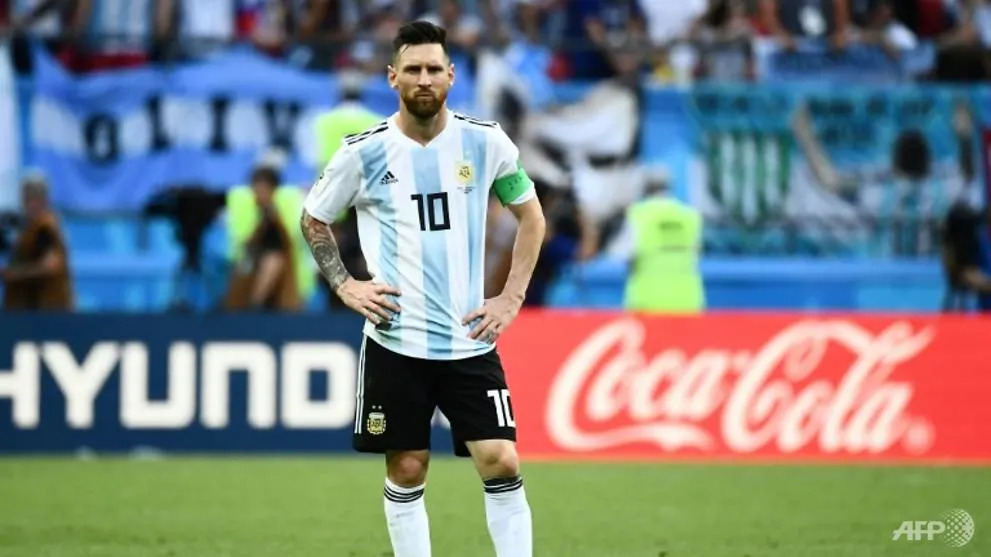
In Argentina’s opening match against Algeria, Messi was visibly emotional after scoring the first of his three goals in the tournament. He later acknowledged that his reaction was linked to difficulties away from football.
“I went through some difficult, complicated days,” he said. “I am grateful to the delegation, to all my teammates, because they were always by my side wishing me strength so that I would be OK.”
Reports about Jorge Messi’s condition subsequently generated intense media attention. The Messi family confirmed that he was experiencing a health problem but declined to disclose details of his condition.
“A person’s health and the peace of mind of their loved ones should not be the subject of speculation or irresponsible media interest,” the family said at the time, expressing “discomfort at the lack of sensitivity, respect and scruples with which some people have treated a strictly private and family matter.”
The emotional burden surrounding Messi’s father’s illness was subsequently cited in discussion of Argentina’s performance in the final against Spain. Former England striker and television analyst Gary Lineker pointed to the circumstances surrounding Messi’s tournament when describing the difficulty of playing a World Cup final while dealing with a seriously ill parent.
“Imagine walking onto a World Cup pitch knowing your father is seriously ill. Imagine carrying that fear in your heart while millions watch you, judge you, abuse you, and even send you death threats,” Lineker said.
“Lionel Messi still played. He still carried Argentina. He still gave everything.
“And now, after all of that, he has lost his father.”
The Father Behind Messi’s Career
Jorge Messi played a fundamental role in turning his son’s extraordinary talent into a professional career. He was a chemical technician and worked as a steelworker. He also played football as a midfielder and reached the youth ranks of Newell’s Old Boys before abandoning the sport to complete mandatory military service in Argentina.
When Lionel Messi was still a teenager, Jorge travelled with him from Rosario to Barcelona for the trial that eventually opened the doors to La Masia, Barcelona’s famed youth academy.
That decision became the starting point for one of football’s greatest careers.
Lionel Messi made his professional debut for Barcelona in 2005 and went on to win eight Ballon d’Or awards. He later played for Paris Saint-Germain and joined Inter Miami, while also becoming Argentina’s most decorated modern-era football figure.
Jorge remained at the center of his son’s professional life, serving as his agent and managing his business affairs.
He negotiated contracts with Barcelona and later handled Lionel’s transfers to Paris Saint-Germain and Inter Miami. He also managed the use of his son’s image rights and investments spanning real estate, hotels and restaurants.
Lionel Messi has previously described the emotional role his father played during the family’s difficult transition from Argentina to Spain.
“My dad was always by my side,” Messi said in a 2007 interview with Radio del Plata. “Sometimes I would lock myself in my room to cry when we arrived in Barcelona, or my dad would do the same without me seeing him, or thinking I didn’t see him. We pretended we were both OK, but we weren’t.”
“My dad even asked me what I wanted to do when we were feeling down, if I wanted to stay or go back, and I wanted to stay, and he stayed with me,” Messi added.
Jorge Messi’s role as his son’s business manager also brought legal scrutiny.
In 2013, Spanish prosecutors accused Lionel and Jorge Messi of attempting to conceal income from the footballer’s image rights. Jorge Messi subsequently paid more than 5 million euros in August to cover alleged back taxes and interest.
The dispute became one of the few major legal controversies to surround the business side of Messi’s career, but Jorge continued to manage his son’s commercial affairs.
In Rosario, the family’s business interests also extend into hospitality. A sign at VIP Rosario, one of the Messi family’s restaurant ventures, indicated that the establishment was closed on Saturday.
The Argentine Football Association president, Claudio Tapia, issued a lengthy tribute to Jorge Messi following his death. Tapia recognized him “for having raised a person of values: humble, respectful, and deeply committed to others.”
The Argentine football authorities ordered a moment of silence at matches across all categories of Argentine football and instructed players, referees and coaching staff to wear black armbands.
The tributes underline Jorge Messi’s importance not only as the father of Argentina’s greatest football star but also as the person who helped guide Messi through the earliest and most uncertain stages of his career.
His influence began long before the trophies, record-breaking contracts and global fame. It was Jorge who helped his son navigate the move from Rosario to Barcelona, supported him through the difficult adjustment to life in Spain and later built a career structure around one of the most valuable athletes in world sport.
A Final World Cup Overshadowed By Family Concerns
For Lionel Messi, the 2026 World Cup carried an unusual personal weight. Argentina entered the tournament as defending champions, while Messi, at 39, became the oldest outfield player to appear in a World Cup final. Spain ultimately won the title after Torres’ extra-time goal.
The tournament had already exposed the personal strain Messi was carrying. His emotional reaction after scoring against Algeria and his comments about difficult days outside football came shortly before his family confirmed that Jorge was dealing with a health problem.
Argentina’s eventual defeat by Spain was subsequently viewed by some commentators through the lens of Messi’s family situation.
Jorge Messi therefore leaves behind a legacy closely intertwined with his son’s extraordinary career. From the youth fields of Rosario to Barcelona’s La Masia and eventually the World Cup stage, he remained one of the most important figures in Lionel Messi’s life and career.