DD
MM
YYYY

PAGES

DD
MM
YYYY

spot_img

PAGES

Home Blog

US House of Representatives Launches an Investigation into World Liberty Financial 

0

US House of Representatives has launched an investigation into a $500 million investment in World Liberty Financial (WLFI), a cryptocurrency venture linked to President Donald Trump’s family.

The probe, led by Rep. Ro Khanna (D-CA), Ranking Member of the House Select Committee on the Strategic Competition Between the United States and the Chinese Communist Party, focuses on a reported secret deal where an entity controlled by Sheikh Tahnoon bin Zayed Al Nahyan (UAE National Security Advisor and a powerful royal family member, often called the “spy sheikh”) acquired a 49% stake in WLFI for $500 million.

The agreement was reportedly signed just days before Trump’s January 2025 inauguration, with significant funds around $187 million directed to Trump family entities and additional amounts to affiliates of Steve Witkoff (Trump’s special envoy to the Middle East and co-founder partner in the venture).

Potential conflicts of interest and violations of the US Constitution’s Foreign Emoluments Clause, as a foreign government-linked investment benefited the president’s family shortly before policy changes. Months after the investment, the Trump administration approved exports of advanced US AI chips previously restricted under Biden-era rules due to risks of diversion to China to the UAE, including entities tied to Sheikh Tahnoon (e.g., his AI firm G42).

Broader entanglements, such as WLFI’s USD1 stablecoin facilitating a $2 billion investment into Binance founded by Changpeng Zhao, recently pardoned by Trump. Khanna sent a formal letter to WLFI co-founder Zach Witkoff demanding records on ownership, payments, governance, and related transactions, with a response deadline of March 1, 2026.

He also notified the US Attorney in Delaware where one involved Emirati entity is domiciled and highlighted risks to US competitiveness with China. The story broke prominently via a Wall Street Journal investigation late January 2026, with confirmations from WLFI spokespeople that Trump himself was not directly involved in the transaction and has no current role in the company.

Democrats, including figures like Sen. Chris Murphy and Sen. Elizabeth Warren, have called it potential “corruption, plain and simple,” while criticizing the lack of broader political fallout. Some reports note impacts on Trump-linked crypto assets.

This is a congressional inquiry not a full DOJ criminal probe at this stage, centered on transparency, ethics, and policy influence rather than a broad “US government” criminal launch. No final conclusions have been reached, and the White House/allies have denied wrongdoing or direct links to policy decisions.

The Foreign Emoluments Clause is a key anti-corruption provision in the United States Constitution, found in Article I, Section 9, Clause 8. No Title of Nobility shall be granted by the United States: And no Person holding any Office of Profit or Trust under them, shall, without the Consent of the Congress, accept of any present, Emolument, Office, or Title, of any kind whatever, from any King, Prince, or foreign State.

This clause has two main parts:The first prohibits the U.S. federal government from granting any titles of nobility. The second (the core “Foreign Emoluments Clause”) prohibits federal officeholders from accepting any present (gift), emolument (profit, gain, advantage, or benefit), office, or title from a foreign government referred to as “any King, Prince, or foreign State” unless Congress explicitly consents.

The framers of the Constitution included this clause to protect the young republic from foreign corruption and undue influence. Drawing from experiences under British rule and concerns during the Articles of Confederation era, they sought to ensure that U.S. officials’ loyalties remained undivided and aligned solely with American interests.

The provision acts as a prophylactic (preventive) rule against bribery, foreign sway over policy decisions, or officials being “bought” by external powers. It was modeled on a similar (but broader) rule in the Articles of Confederation, with the Constitution adding the requirement for congressional consent as a potential exception mechanism.

Who it applies to: It covers any “Person holding any Office of Profit or Trust under [the United States].” Legal scholars and historical consensus broadly interpret this to include the President (as an elected officeholder), as well as appointed federal officials, diplomats, and others in positions of federal authority.

There has been some academic debate about whether it strictly excludes the president, but the prevailing view and practice—including Department of Justice opinions—hold that it applies to the presidency. What counts as an “emolument”: The term is interpreted broadly as any profit, gain, advantage, benefit, or compensation—monetary or non-monetary—from a foreign government or its agents.

This can include direct payments, business profits tied to foreign government patronage gifts, salaries, or favorable deals. Courts and legal analyses from the Office of Legal Counsel have emphasized a wide scope to prevent even indirect influence.

Foreign State: This includes not just monarchies but any sovereign foreign government, including modern states and entities closely tied to them. The only way to avoid a violation is explicit congressional approval. Without it, acceptance is barred.

The clause is rarely litigated directly due to challenges like standing in court, but it has been invoked in ethics opinions, congressional oversight, and lawsuits (notably during the first Trump presidency over business dealings with foreign governments).

Violations are considered constitutional breaches rather than criminal offenses per se, though related conduct could implicate other laws. In recent contexts—like reported foreign investments in ventures linked to U.S. officials or their families—the clause raises questions about potential conflicts, influence on policy, and the need for transparency or divestment.

In essence, the Foreign Emoluments Clause serves as one of the Constitution’s oldest safeguards against foreign corruption, aiming to keep U.S. officials free from external financial pressures that could compromise national interests.

Amazon Shares Plunged 7% on Massive AI CAPEX

0

Amazon (AMZN) shares are down over 7% reports cite around 7-8%, with some as high as 8-9% at points in premarket. This follows the company’s Q4 2025 earnings release, where it reported a slight miss on EPS expectations but a revenue beat.

The main pressure comes from guidance for massive capital expenditures (capex) of about $200 billion in 2026, heavily focused on AI infrastructure, custom chips, robotics, and related projects. Investors are concerned that this aggressive spending—echoing similar big capex announcements from peers like Alphabet—could pressure near-term margins, cash flow, and returns, fueling broader worries about an AI investment bubble or overspending in Big Tech.

This has contributed to a tech sector sell-off, with over $1 trillion wiped from major tech stocks in recent days. If visuals of stock charts or Amazon-related imagery would help, let me know for more. Silver experienced a wick down to around $64 or in the $64 range on certain charts/levels before recovering.

Silver has been extremely volatile lately—surging to highs earlier in 2026 even touching $90+ in some reports amid strong demand and deficits, but facing sharp pullbacks and corrections.

Recent broader precious metals sell-offs including big drops in gold and silver in late January/early February tied into risk-off moves, dollar fluctuations, and profit-taking after massive rallies. The wick to $64 likely represents a temporary dip testing support levels before buyers stepped in, aligning with ongoing structural deficits in the silver market.

China resuming rare metals exports to Japan — Recent headlines have actually focused on the opposite: China imposed restrictions and tightened controls on rare earths and related exports to Japan starting in January 2026, tied to diplomatic tensions over Taiwan remarks by Japan’s leadership and dual-use export bans.

This affected shipments of rare earths, magnets, and other critical minerals to Japanese firms. No clear reports confirm a full resumption as of early February 6; instead, ongoing curbs, screening delays, and diversification efforts by Japan persist amid strained relations.

If there’s a specific new development on resumption today, it could ease some supply concerns in Asia, but current info points more to continued friction than relief. This seems like a snapshot of risk-off sentiment in parts of the market (tech/AI spending fears, commodity volatility), though some areas like broader indices may be stabilizing or rebounding in premarket.

Amazon (AMZN) shares dropped over 7-9% in premarket and extended losses intraday, with reports of 8-10% at points, primarily due to its Q4 2025 earnings release. While revenue beat expectations ~$213B, up 13-14% YoY and AWS/cloud growth remained solid, the standout negative was guidance for ~$200 billion in 2026 capital expenditures—a massive jump from ~$125-132B in 2025.

This spending focuses heavily on AI infrastructure, custom chips, data centers, robotics, and projects like low-Earth orbit satellites like Project Kuiper/Amazon Leo. Near-term pressure on margins and free cash flow — Q1 2026 operating income guidance ($16.5-21.5B) came in below consensus (~$22B), signaling higher costs and delayed profitability from these investments.

This contributes to a broader “show-me” mode for Big Tech, where investors demand proof that massive AI outlays will deliver strong long-term returns rather than fuel an AI bubble. This follows similar huge capex announcements, contributing to a $1T+ wipeout in major tech stocks recently.

Broader indices may see rotation away from high-valuation growth/tech names toward value or defensive sectors, though some stabilization occurred as markets bounced back. Suppliers in the AI ecosystem; Nvidia, AMD for chips; data center equipment providers could see incremental demand, though near-term volatility persists if spending fears escalate.

Management emphasizes “strong long-term ROIC,” but skeptics worry about overinvestment amid elevated valuations. This could cap upside for AMZN and peers until results prove the bets pay off.

When Forced Settlements Occur, Exchanges Rush to Cover Positions

0

Forced settlement is a market dynamic often seen in derivatives, futures, or cryptocurrency trading, particularly during crises involving short squeezes, liquidations, or settlement failures.

In normal trading, participants (buyers and sellers) are price-sensitive—they seek good deals and avoid overpaying. However, when “forced settlements” occur, certain parties become price-insensitive buyers.

They must acquire the asset like Bitcoin, stocks, or commodities immediately, regardless of cost, to meet obligations. This happens in these key scenarios: Cryptocurrency exchanges facing a “settlement squeeze”: If an exchange has issued more “paper” claims than actual coins held in reserves, and users demand withdrawals during a crisis, the exchange faces a shortfall.

To avoid default, insolvency, or legal consequences “to stay out of jail” as some analysts put it, the exchange rushes into the open market to buy the missing coins at any available price.

This turns them into aggressive, price-insensitive buyers, driving sharp upward price spikes—often non-linear or explosive rallies not tied to organic adoption but to forced covering.

Bitcoin rallies stem from these squeezes when spot vs. paper imbalances force exchanges to cover urgently, potentially causing 5–10x jumps in extreme cases.

In cases of short selling without delivery, if settlement fails, exchanges or clearing houses may conduct special auctions. Short sellers or brokers become forced buyers at whatever price is needed to close the position and complete delivery.

The exchange or counterparty acts as a “forced buyer” who is price-insensitive because they must settle—leading to premiums, up to 20% above market and upward pressure, especially in illiquid stocks. In leveraged markets, sharp price moves trigger margin calls and forced liquidations.

For shorts, this means forced buying to close positions, which can cascade upward if many shorts liquidate simultaneously. While exchanges themselves rarely become direct buyers here, brokers or clearing members may step in aggressively if needed to manage risk, amplifying buying pressure.

In all cases, the key shift is from voluntary, price-aware trading to compelled, urgency-driven buying—removing normal downward price pressure and creating rapid, amplified moves higher. This mechanic explains sudden “inexplicable” pumps in volatile markets like crypto, where structural fragilities turn routine events into explosive squeezes.

Fractional reserve risks in crypto refer to practices where centralized entities — primarily exchanges, custodians, or platforms — hold less than 100% of customer-deposited assets in actual reserves like cold storage wallets or liquid backing. Instead, they may lend, rehypothecate (re-use the same assets multiple times as collateral), or use deposits for internal operations, creating multiple claims on the same underlying asset.

This mirrors traditional banking’s fractional reserve system but amplified in crypto due to: High volatility. Lack of deposit insurance. Speed of digital withdrawals. History of opacity and fraud.

If many users demand withdrawals simultaneously a “run”, the platform may lack sufficient real assets, leading to delays, freezes, or insolvency. Past examples like FTX and Celsius showed how hidden fractional practices triggered collapses when trust evaporated.

Rehypothecation creates interconnected exposures. One entity’s failure can cascade, as seen in 2022 contagion. In 2025–2026 analyses, studies suggest exchanges should hold 6–14% extra reserves beyond 1:1 backing to withstand stress, per AR-GARCH modeling on proof-of-assets data.

Derivatives (perpetuals, options, ETFs, wrapped BTC) allow synthetic claims far exceeding on-chain supply. One BTC can back multiple products simultaneously, turning price discovery into a “fractional-reserve” system off-chain. This doesn’t alter Bitcoin’s 21M cap but can suppress rallies or amplify dumps via forced liquidations and shorting.

Many exchanges now publish PoR audits e.g., Merkle-tree verified snapshots showing ?100% backing. However, PoR is point-in-time and doesn’t guarantee ongoing solvency, asset quality, or prevent off-balance-sheet risks. Failures often stem from mismanagement beyond what PoR catches.

$2.24B Drop in Stablecoin Market Cap Highlights Liquidity Withdrawal 

0

The combined market capitalization of the top 12 stablecoins dropped by $2.24 billion over a 10-day period. This occurred amid broader crypto market weakness, with Bitcoin falling to around $69,000 in some reports, though timelines vary across sources tying back to late 2025 corrections extending into early 2026.

This decline was interpreted as a signal of capital exiting the crypto ecosystem entirely—rather than investors simply parking funds in stablecoins to wait for better entry points.

Instead, it pointed to a rotation into traditional safe-haven assets like gold and silver, which were hitting record highs around that time (gold surpassing $5,000 in some narratives, with silver seeing sharp gains). Analysts noted this as a risk-off move, potentially delaying crypto recovery by reducing on-chain liquidity and buying power for digital assets.

Stablecoins serve as a key proxy for crypto-native capital availability—much of the on-chain buying power especially in DeFi, trading, etc. relies on stablecoin liquidity. A contraction like this can limit upward momentum, as there’s less “stable” capital ready to deploy into volatile assets.

The total stablecoin market cap has continued to see some outflows and volatility since that January event. DefiLlama shows the total stablecoin market cap hovering around $305 billion with slight weekly declines of ~$1-2B in recent periods, and larger weekly drops reported in late January/early February, such as $3.9B+ in one week.

This is down from a peak near $311 billion earlier in January 2026. Dominant players remain Tether (USDT, ~60% dominance) and USDC, though the sector overall reflects ongoing cautious sentiment amid macro pressures, regulatory developments, and broader crypto market deleveraging (total crypto market cap has seen significant pullbacks from 2025 highs).

The $2.24B drop was a specific snapshot highlighting liquidity withdrawal and a flight to traditional havens, contributing to the narrative of reduced on-chain buying power at that moment. While stablecoin supply has stabilized somewhat since, it hasn’t fully rebounded, aligning with persistent market uncertainty.

The $2.24 billion drop in stablecoin market cap over ten days (late January 2026) was part of a broader pattern of outflows and contraction in the stablecoin sector, signaling reduced on-chain liquidity and buying power in crypto markets.

The total stablecoin market cap sits around $305 billion, down from a mid-January peak near $311 billion. Recent weekly changes show modest declines, -0.46% to -1.0% WoW in early February, with net outflows accelerating in some periods; -$3.2B+ weekly in late January/early February reports.

Stablecoins act as the primary “dry powder” for crypto trading, DeFi participation, and on-chain activity. A shrinking supply means less immediate capital available to deploy into volatile assets like Bitcoin or altcoins.

This contributed to broader market weakness, with Bitcoin experiencing sharp corrections e.g., drops toward $70k–$80k ranges in reports, heavy liquidations, and total crypto market cap pullbacks of hundreds of billions.

The initial $2.24B drop was flagged as capital exiting crypto entirely and rotating to traditional havens like gold/silver at highs, rather than just parking in stables for dips—amplifying downward momentum.

Outflows reflect cautious or bearish positioning amid macro pressures like volatility in tech/precious metals, potential policy shifts, or deleveraging. Some analyses point to rotation into regulated alternatives like tokenized Treasuries, bank-led stablecoins, or even JPM Coin-style rails.

This isn’t necessarily a loss of faith in stablecoins but a shift toward more compliant or yield-bearing options under evolving rules. Dominant players like Tether (USDT) (60% dominance, ~$185B) and USDC ($70B) saw contractions, while select others gained share.

Lower stablecoin liquidity limits upward momentum, as there’s less “stable” capital to fuel rallies. Persistent outflows, -$7B+ over 30 days in some snapshots correlate with fragile positioning and heightened volatility. Reduced stablecoin supply constrains DEX volumes, lending yields, and on-chain activity, though some reports note surges in trading during dips.

2026 sees stablecoins evolving into contested payments infrastructure. Outflows may accelerate if banks successfully lobby against yield features per GENIUS Act debates, draining crypto’s appeal vs. traditional finance.

Conversely, institutional adoption and tokenized RWAs could stabilize or reverse trends long-term. The sector remains robust at $305B near all-time highs from early 2026, with no widespread depegging or issuer failures.

Contractions are modest relative to peaks (2–7% drops in recent periods) and often broad-based rather than issuer-specific. Stablecoins continue growing structurally suggesting this is more cyclical caution than structural decline.

The drop highlights crypto’s sensitivity to liquidity signals—stablecoin outflows act as an early warning for reduced risk appetite. While the market shows resilience sustained contraction could prolong corrections unless inflows resume via macro tailwinds, regulatory clarity, or renewed adoption.

Tether USDT Surpassed 500M Users Milestone 

0

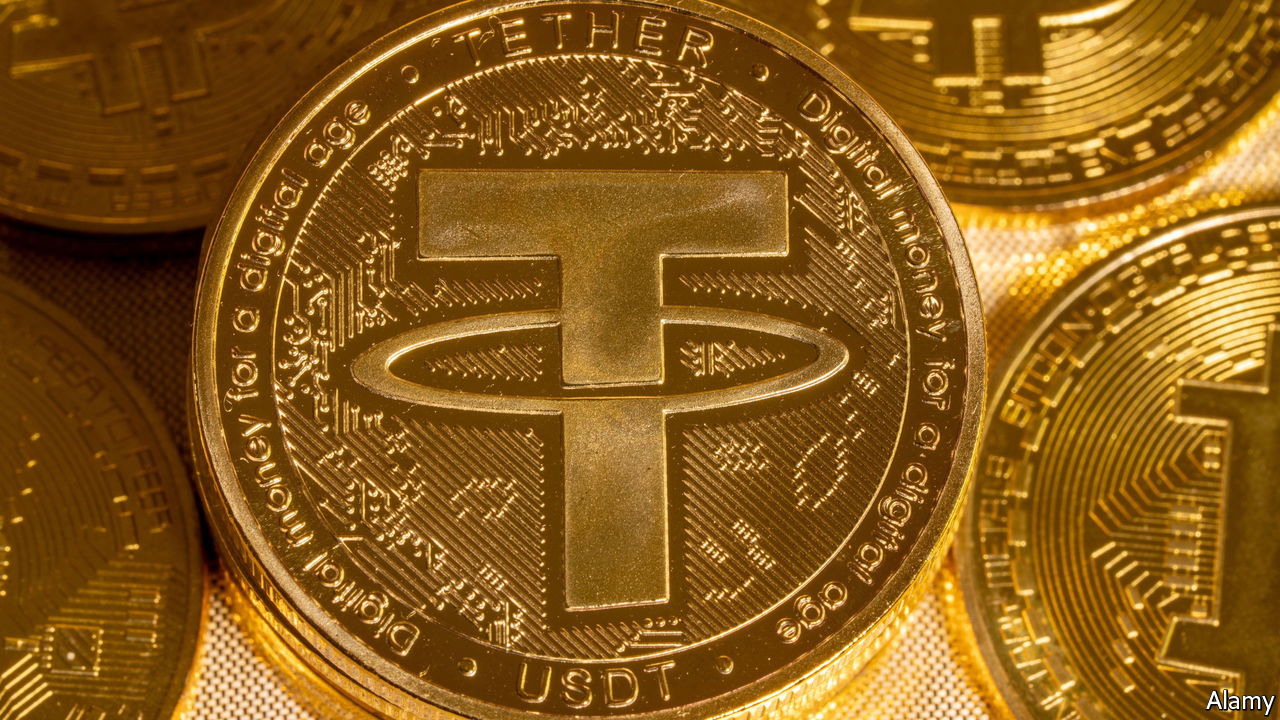
Tether (USDT), the world’s largest stablecoin, has achieved a significant milestone by surpassing 500 million users, with recent reports indicating the figure has climbed even higher to around 534 million as of early 2026.

This growth was detailed in Tether’s Q4 2025 USD Market Report released in early February 2026. The stablecoin added an estimated 35.2 million new users in Q4 2025 alone. This marks the eighth consecutive quarter of adding over 30 million users, showing consistent acceleration.

On-chain holders reached 139.1 million up 14.7 million in the quarter, while monthly active on-chain users hit a record 24.8 million. Tether estimates over 100 million additional users hold USDT on centralized platforms. Total USDT market cap grew to approximately $187.3 billion up $12.4 billion in Q4, with transfer volume hitting a record $4.4 trillion in the quarter.

This expansion occurred despite broader crypto market challenges, including a sharp contraction starting in October 2025 with overall crypto market cap dropping over 30% in some periods. Tether attributes much of the growth to demand in emerging markets for dollar liquidity, remittances, payments, and as a store of value amid macroeconomic uncertainty.

CEO Paolo Ardoino has previously emphasized USDT’s role in financial inclusion, noting heavy adoption in developing regions—effectively extending “dollar hegemony” through digital means. However, risks and concerns persist, as highlighted in recent coverage.

USDT briefly dipped to around $0.9980 in early 2026; its weakest level in over five years, sparking brief rumors and scrutiny. While deviations have been minor and short-lived, any sustained de-pegging could ripple through crypto trading where USDT dominates volumes and raise systemic questions.

As USDT’s role grows (holding ~70% of stablecoin wallets and massive U.S. Treasury exposure of over $141 billion), it faces intensified regulatory attention, transparency debates; historical issues with full 1:1 backing, and potential risks from illicit use or reserve management.

Growth has fueled discussions about stablecoins’ systemic importance, including potential impacts on Treasury markets, liquidity pressures, and the need for stronger oversight to mitigate financial stability threats. Tether’s trajectory underscores stablecoins’ evolution from crypto trading tools into global financial infrastructure, but its outsized influence keeps peg and regulatory risks in sharp focus.

USDT is designed to maintain a strict 1:1 peg to the US dollar. While it has historically recovered from minor deviations and benefits from a heavily Treasury-backed reserve structure, peg stability remains a key concern for users, traders, and regulators.

In recent weeks including around early February 2026, USDT briefly dipped to approximately $0.9980 on some exchanges—its weakest level in over five years. This minor depeg was short-lived, with the token quickly returning near parity. Similar brief wobbles have occurred before, often tied to broader market stress, liquidity crunches on exchanges, or large redemptions during risk-off periods.

These events are typically driven by temporary imbalances like heavy selling pressure or exchange-specific liquidity issues rather than fundamental reserve shortfalls. Tether has consistently honored direct redemptions at $1 through its primary portal, helping restore the peg rapidly.

Historical context includes more severe past incidents, such as drops to ~$0.95 during the 2022 Terra/Luna collapse or even lower in earlier years but recoveries have been the norm in recent cycles. Tether’s reserves are heavily weighted toward US Treasuries over $141 billion, a record high, which are low-risk and liquid.

However, allocations to higher-volatility assets like Bitcoin ~5-6% of reserves, gold, and secured loans introduce potential risks. A sharp, simultaneous drop in BTC/gold prices could erode the excess buffer ~$6.3 billion reported, potentially leaving USDT undercollateralized in extreme scenarios.

USDT’s peg stability assessment to its lowest level “weak” or 5 in late 2025, citing these exposures, disclosure gaps, and limitations in primary redeemability. In a mass redemption event (a “run”), large-scale outflows could strain liquidity if reserves must be liquidated quickly.

While Treasuries are highly liquid, extreme stress could amplify deviations. Historical examples like the USDC’s 2023 depeg tied to SVB exposure highlight that even well-backed stablecoins aren’t immune. Tether faces intense scrutiny, including potential freezes on addresses (Tether has frozen billions in illicit funds at law enforcement’s request), broader stablecoin regulations, and concerns over its dominance.

A major regulatory shock could trigger confidence loss. Institutions like the ECB have warned that stablecoin runs could spill over into Treasury markets or wider financial stability, given Tether’s massive Treasury holdings.

USDT’s outsized role in crypto trading means any perceived weakness amplifies contagion. Brief depegs have correlated with BTC corrections or sideways trading periods. Broader macro events could exacerbate pressures. Tether reported multi-billion-dollar profits in 2025, bolstering its buffer for peg defense.

Growth to over 534 million users with high on-chain activity reflects trust in emerging markets for remittances and dollar access. Minor dips have resolved without systemic fallout, unlike algorithmic stablecoins.

While USDT’s peg has proven resilient amid 2025-2026 market turbulence, risks stem primarily from reserve volatility, redemption mechanics under stress, and its systemic importance. A full collapse remains a low-probability tail risk, but temporary depegs during shocks are plausible and could impact crypto liquidity broadly.