The crypto industry’s political strategy is becoming clearer: when legislation stalls in Washington, the fight does not necessarily end on Capitol Hill. It can move directly into the electoral arena. That is the significance of Fairshake’s decision to commit at least $30 million to oppose former Ohio Senator Sherrod Brown as he seeks to return to the Senate.
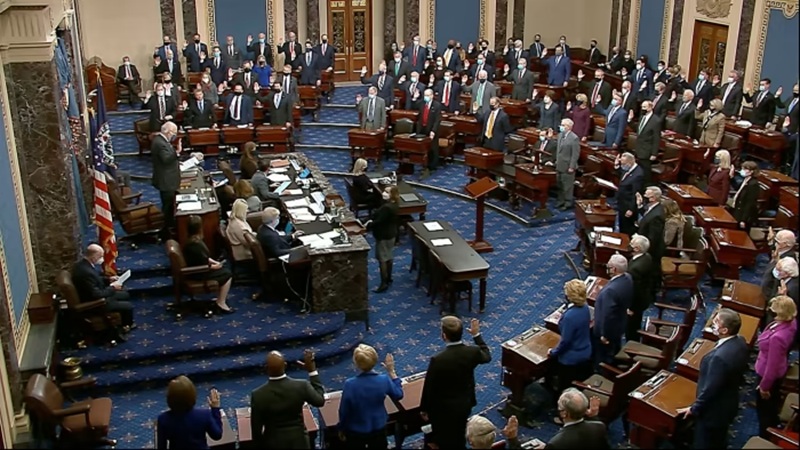
The timing is difficult to separate from the Senate’s recent failure to advance the CLARITY Act. On September 15, the legislation fell short of the 60 votes required to move forward, receiving 50 votes in favor and 49 against.
The bill was designed to establish a federal regulatory framework for digital assets and clarify the respective roles of regulators including the Securities and Exchange Commission and Commodity Futures Trading Commission.
For the crypto industry, the defeat represents more than another failed piece of legislation. Regulatory uncertainty has been one of the sector’s central political complaints for years.
A comprehensive market-structure law could have provided companies with clearer rules governing digital assets, exchanges and the boundary between securities and commodities regulation. Its failure leaves the industry more dependent on agency rulemaking and future congressional negotiations.
Fairshake is now taking part of that policy battle into Ohio. Brown is a particularly significant target because this is not the first time the crypto industry has spent heavily in an election involving him.
During the 2024 cycle, crypto-backed political groups spent roughly $40 million opposing Brown, who lost his Senate seat. Fairshake and affiliated groups are now preparing another major advertising operation as Brown challenges Republican Senator Jon Husted.
The episode illustrates how political capital has become another asset in the crypto industry’s balance sheet. Companies and investors have spent hundreds of millions of dollars building influence in Washington, and Fairshake had more than $100 million available as of August 31, according to Bloomberg Law.
But money does not automatically translate into votes. Political advertising competes with inflation, jobs, taxes, energy costs, immigration, healthcare and other issues that shape voters’ decisions. In Ohio, the crypto industry’s argument must therefore compete with a much broader electoral conversation.
The spending also creates a strategic question for the industry. Crypto advocates have historically sought bipartisan relationships because legislation requires support across party lines.
Fairshake has previously backed Democrats who were considered supportive of digital assets, including Senators Ruben Gallego and Elissa Slotkin, both of whom voted against advancing the CLARITY Act.
A more confrontational electoral strategy could change those incentives. If lawmakers believe opposing crypto legislation will trigger substantial campaign spending against them, the industry may gain additional leverage.
But a heavily partisan approach could also make future bipartisan negotiations more difficult, particularly when comprehensive legislation requires votes from both parties.
The Brown campaign has already framed Fairshake’s intervention as evidence of outside financial influence in the Ohio contest. The competing narratives therefore extend beyond cryptocurrency itself: one side is emphasizing regulatory policy, while the other is emphasizing campaign money and economic interests.
The larger story is that the crypto industry’s Washington strategy is entering a new phase. The CLARITY Act may have stalled, but the political campaign surrounding crypto regulation is accelerating. With the 2026 midterms approaching.
The industry is demonstrating that a legislative defeat can become the starting point for another kind of political investment: changing who sits around the table when the next crypto bill arrives.