

Artificial intelligence is increasingly moving beyond the chatbot window and into the infrastructure of work, education and decision-making.
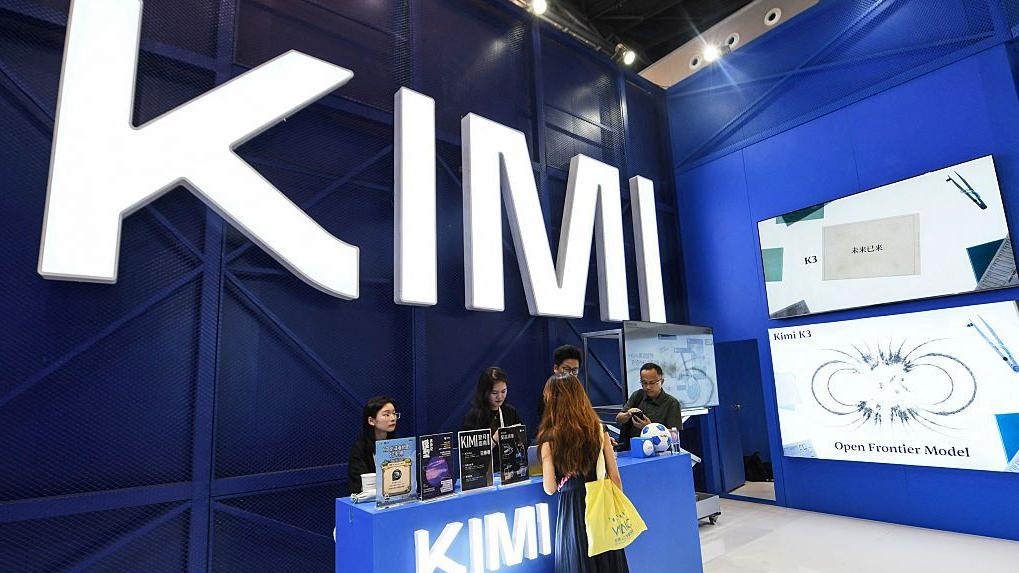
Two developments this week illustrate that shift from different directions: Moonshot AI’s Kimi K3 has become generally available through Amazon Bedrock, while OpenAI is building a “College Plan” section inside ChatGPT designed around student profiles, college tracking and application-task management.
The developments suggest that the next phase of AI competition will be defined not only by model intelligence, but by where that intelligence becomes embedded. Kimi K3’s arrival on Amazon Bedrock is significant because it brings Moonshot AI’s open-weight model into one of the world’s major cloud AI platforms.
Register for the next Tekedia Mini-MBA.
Register for Tekedia AI in Business Masterclass.
Join Tekedia Capital Syndicate and co-invest in great global startups.
AWS says Kimi K3 has 2.8 trillion parameters, native vision capabilities and a one-million-token context window, positioning it for long-running coding sessions, large-document analysis and other knowledge-intensive workflows.
AWS also says the model delivers an approximately 2.5-fold improvement in scaling efficiency compared with Kimi K2. The one-million-token context window is particularly important. Instead of repeatedly forcing an AI system to forget and reload information.
Developers can give the model access to enormous repositories, collections of documents or visual materials within a single workflow. That changes the economics of AI-assisted programming and research.

Kimi K3 also becomes the first open-weight model on Bedrock to support explicit prompt caching, allowing repeated context to be reused with lower latency and input costs.
For businesses, the attraction is not simply raw model size. Amazon Bedrock provides an enterprise environment with access controls, encryption and auditing. AWS says data processed through its open-weight models remains within its AWS data boundary, with zero data retention for inference requests and zero operator access during inference.
The emerging ChatGPT “College Plan” points toward a different but equally important frontier: AI as a persistent personal planning system. Rather than simply answering questions about universities, such a system can organize a student’s profile, track prospective colleges and manage application tasks and deadlines.

That represents a shift from conversational assistance toward workflow management. The implications extend beyond admissions. Applying to college involves fragmented information: academic records, standardized tests, essays, recommendation letters, financial considerations, deadlines and institution-specific requirements.
Bringing those elements into one AI-assisted environment could reduce the administrative burden students face. It could also allow AI to transform scattered information into an ongoing plan rather than a series of disconnected conversations.
Yet this model introduces questions around privacy, accuracy and agency. Student profiles can contain sensitive educational and personal information, while admissions requirements can change. AI-generated recommendations therefore need verification against official university information rather than being treated as authoritative.
The broader competition is becoming clearer. Kimi K3 shows how powerful open-weight models are moving into mainstream cloud infrastructure, while the College Plan concept shows how AI companies are embedding intelligence into highly specific life workflows.
The competitive advantage may increasingly come from context: knowing the documents, deadlines, preferences and tasks surrounding a user’s problem. AI is therefore evolving from a tool people visit into infrastructure that accompanies them.
For developers, that means larger and more capable models. For students, it could mean an AI system that helps organize an otherwise complicated journey. The companies that successfully combine intelligence with persistent context, useful workflows and trustworthy data handling may shape the next chapter of consumer and enterprise AI.