DD
MM
YYYY

PAGES

DD
MM
YYYY

spot_img

PAGES

Home Blog

Last Chance To Join Early! BlockDAG’s Final Presale Hours Offers $0.0005 Entry Into $0.05 Listing

0

As of January 29, 2026, the crypto market reflects a mix of confidence and hesitation. Bitcoin is trading close to $89,000, holding its role as the market anchor, while Solana sits around $125, showing stability within ongoing consolidation. This pattern highlights a phase where large-cap assets maintain strength but offer limited volatility.

Solana remains one of the top cryptos of 2026, known for delivering speed and consistency across decentralized applications. Yet, as its market cap expands, the path to exponential upside narrows. It functions more like a dependable network than a fast-moving wealth generator. In contrast, BlockDAG (BDAG) is approaching its final presale hours at $0.0005 before its $0.05 listing. That built-in 100x difference signals rare potential among the top cryptos of 2026.

The Growth Limit for Major Cryptos

Solana remains among the top cryptos of 2026, yet its size now makes huge returns difficult. To achieve another 10x, its total market value would need to reach levels beyond most forecasts. Solana has matured into a large network that behaves more like a traditional stock, offering stability but less explosive growth. It is safer for long-term holders but does not carry the same wealth-building potential that smaller-cap projects offer.

In contrast, early-stage entrants like BlockDAG deliver far greater upside. Its entry price of $0.0005 and expected listing at $0.05 set a built-in 10,000% gap. This pre-established margin is why BlockDAG is widely named one of the top cryptos of 2026. Instead of waiting years for returns, the opportunity exists from the moment trading begins, appealing to those seeking high growth.

Building Resilient and Scalable Networks

Solana remains recognized for speed, processing thousands of transactions per second, yet it has historically suffered outages that disrupted service. Its chain design relies on a single data pathway that can overload when activity spikes. This technical structure causes occasional slowdowns, fueling a search for networks capable of performing under heavier loads.

BlockDAG introduces a hybrid consensus model combining Proof of Work with a Directed Acyclic Graph to deliver stable scalability. The design allows numerous transactions to run in parallel while maintaining strong security. It also supports Ethereum compatibility, enabling developers to migrate apps easily. With its balance of performance and reliability, BlockDAG positions itself among the top cryptos of 2026 by solving issues that limited earlier-generation networks.

Expanding Reach Through an Engaged Community

Strong community engagement remains one of the most reliable growth indicators among the top cryptos of 2026. While Solana has retained loyal users, BlockDAG has mobilized a far broader base before launch. It has already raised more than $449 million from over 312,000 participants, signaling strong trust and anticipation across retail supporters worldwide.

The project’s mobile mining application has surpassed 3.5 million users, granting simple access to daily earnings without heavy power use. This pre-launch adoption represents powerful momentum that most blockchain networks never achieve before exchange listing. With a vibrant community already driving early participation, BlockDAG heads toward its public release with velocity and depth that support its reputation as one of the top cryptos of 2026.

The Urgency Behind the Final Countdown

Timing remains the critical factor separating opportunities in 2026. Solana trades openly on major exchanges, meaning entry can occur anytime without scarcity. BlockDAG, on the other hand, is closing the final hours of its presale today, January 29. The final 1.25 billion tokens at $0.0005 mark the end of the early phase before its official exchange listing at $0.05.

This schedule introduces immediate urgency across the market. Significant capital has already rotated from older projects into BlockDAG to capture early advantage. Delay means paying one hundred times more once it lists on February 16. That narrow time window cements BlockDAG’s standing among the top cryptos of 2026, as access to its lowest price point is set to close permanently.

Looking Forward

Solana remains a stable option for those who prefer long-term security, but its market maturity limits rapid expansion. Its high valuation and recurring network setbacks slow its potential, leaving little room for the explosive gains new participants often seek. The project has become a strong but predictable presence in the broader crypto landscape.

BlockDAG stands in clear contrast. Its hybrid DAG-PoW design, high throughput, and large active community set it apart. The built-in price gap from $0.0005 to $0.05 creates instant upside that legacy coins cannot replicate. With presale ending today, it is one of the top cryptos of 2026.


Presale: https://purchase.blockdag.network

Website: https://blockdag.network

Telegram: https://t.me/blockDAGnetworkOfficial

Discord: https://discord.gg/Q7BxghMVyu
Tesla to Retire Models S and X as Musk Moves to Convert Fremont Factory for Optimus Humanoid Robots Production

0

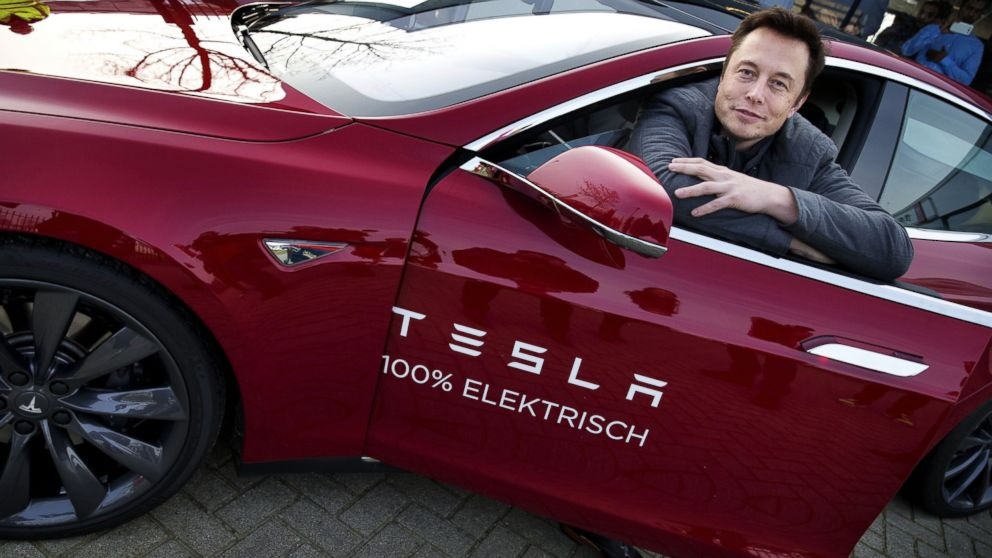
Tesla is preparing to close a defining chapter in its history, ending production of its Model S and Model X vehicles and repurposing the Fremont, California, factory to build Optimus humanoid robots.

The decision, which marks a sharp strategic turn away from Tesla’s oldest passenger cars and deeper into robotics and artificial intelligence, is seen as a declaration that the company’s next act — and Elon Musk’s personal financial upside — will be driven less by cars and more by robots.

On Wednesday’s fourth-quarter earnings call, Musk said Tesla will wind down the Model S and X programs and repurpose the Fremont, California, factory to build Optimus humanoid robots at scale. The move comes as Musk has just secured approval for a reworked compensation package valued at up to $1 trillion, a deal that explicitly hinges on Tesla achieving extraordinary market capitalization and operational milestones far beyond what traditional auto manufacturing can plausibly deliver.

“It’s time to basically bring the Model S and X programs to an end with an honorable discharge,” Musk said. “If you’re interested in buying a Model S and X, now would be the time to order it.”

The two models, first launched in 2012 and 2015 respectively, helped establish Tesla as a credible challenger to luxury automakers. But they have become marginal to Tesla’s business. The Model 3 and Model Y now account for about 97% of deliveries, while the S and X, priced around $95,000 to $100,000, have struggled amid intensifying global EV competition and slowing demand at the high end of the market.

Tesla’s latest earnings underscore the pressure. The company reported its first-ever annual revenue decline, with sales falling in three of the past four quarters. Against that backdrop, Musk has been accelerating a pivot away from being valued as a carmaker and toward a vision of Tesla as an AI, autonomy, and robotics company.

That pivot is inseparable from Musk’s compensation.

Under the newly approved pay package, Musk does not receive a salary or cash bonus. Instead, he is entitled to massive tranches of stock options that vest only if Tesla’s valuation climbs to $8.5 trillion over the next decade. Delivering that outcome through vehicle sales alone would be extraordinarily difficult in a mature, increasingly competitive auto market.

Robotics, Musk argues, changes the math.

Optimus is designed as a general-purpose humanoid robot that could eventually perform factory work, logistics tasks, and household duties. If successful, Musk has claimed the robot could become Tesla’s most valuable product, with a total addressable market far larger than that of automobiles.

On the call, Musk said Tesla will replace the Model S and X production line in Fremont “with a 1 million unit per year line of Optimus.” The scale is striking and signals that Tesla is already thinking in terms of mass deployment rather than niche experimentation.

“This is a completely new supply chain,” Musk said. “There’s really nothing from the existing supply chain that exists in Optimus.”

Tesla said it plans to unveil the third generation of Optimus this quarter, describing it as the company’s first design meant for mass production. Musk added that headcount at the Fremont facility will increase and output will rise, suggesting Tesla sees robotics manufacturing as a growth engine even as legacy vehicle programs are shut down.

Investors have historically valued Tesla less like a car company and more like a technology platform, rewarding it with a valuation that far exceeds traditional automakers. That premium has come under pressure as EV growth slows and margins compress. By doubling down on robots and AI, Musk is attempting to restore — and vastly expand — that technology narrative.

This also explains why Musk has been increasingly vocal about a future dominated by autonomous systems and humanoid labor. A successful Optimus rollout would not just diversify Tesla’s revenue streams; it would fundamentally change how the company is valued, potentially unlocking the market capitalization thresholds embedded in Musk’s pay deal.

Critically, the Fremont shift shows Tesla is willing to sacrifice heritage products to free up capacity for that future. The Model S and X are not being replaced by new vehicles or next-generation EV platforms. They are being displaced by a bet that humanoid robots can be manufactured at automotive scale and sold profitably.

However, that bet carries substantial risk. Tesla currently has no commercial robotics business, and Optimus remains unproven outside controlled demonstrations. Regulatory, safety, and labor concerns could also shape how quickly such robots are adopted. Yet for Musk, the alternative — remaining primarily an automaker — offers limited upside relative to the ambitions encoded in his compensation package.

In that sense, the retirement of the Model S and X marks more than the end of two vehicles. Some analysts say it reflects a company reorganizing itself around a single, high-stakes thesis: that robots, not cars, will define Tesla’s next decade.

Samsung Warns of Prolonged Chip Shortage as AI Boom Supercharges Profits but Squeezes Smartphones and Displays

0

Samsung Electronics has warned that a worsening global chip shortage is likely to persist this year and beyond, as the explosive build-out of artificial intelligence infrastructure continues to absorb vast amounts of memory supply, reinforcing the company’s dominance in semiconductors while creating growing strains across its broader electronics empire.

The South Korean tech giant said on Thursday that operating profit more than tripled in the fourth quarter to a record level, driven overwhelmingly by soaring memory chip prices and demand linked to AI servers and data centers. Yet the same forces lifting profits are also raising costs for Samsung’s smartphone and display units, sharpening internal trade-offs that underline how uneven the AI-driven cycle has become.

Samsung posted an operating profit of 20 trillion won ($13.98 billion) for the October-to-December period, up sharply from 6.49 trillion won a year earlier and in line with its own guidance. Quarterly revenue climbed 24% to 93.8 trillion won, reflecting both higher prices and stronger shipments across parts of the business.

At the core of the performance was the chip division, Samsung’s main profit engine. Operating profit in semiconductors surged 470% year-on-year to a record 16.4 trillion won, accounting for more than 80% of the group’s total earnings. The results underscored Samsung’s pricing power as the world’s largest memory chipmaker at a time when supply is struggling to keep pace with AI-led demand.

Executives made clear that relief is not imminent. “A significant shortage of memory products across the board is expected to continue for the time being,” Kim Jaejune, an executive in Samsung’s memory business, told analysts on the post-earnings call.

He said any meaningful expansion of supply was likely to be constrained through 2026 and 2027, even as AI-related demand continues to surge.

That warning rattled investors. Samsung shares slipped 1.2% on Thursday, giving back some gains after a strong rally earlier this year, as markets digested the implications for the company’s non-chip businesses.

While higher memory prices are a boon for semiconductors, they are becoming a clear headwind for Samsung’s mobile and display units, which rely heavily on in-house chips. Operating profit in the mobile division fell 10% to 1.9 trillion won in the quarter, squeezed by rising component costs in an intensely competitive global smartphone market.

“Memory price increases are expected to accelerate this quarter and are likely to give surprise earnings, while the memory cost burden will intensify on its mobile business,” Reuters quoted Sohn In-joon, an analyst at Heungkuk Securities, as saying.

He expects Samsung’s overall profit to surge roughly fivefold in the current quarter to around 35 trillion won from a year earlier, largely on the back of chips.

Executives at Samsung’s device businesses struck a cautious tone, according to Reuters. The mobile and display divisions both described the outlook for the year as challenging, citing cost pressures and the risk of weakening demand if prices rise too sharply.

Cho Seung, a senior executive in the mobile division, said Samsung would work closely with major partners to ensure a stable supply while pushing internal efficiencies to limit margin erosion. Still, the pressure is evident. Samsung co-CEO TM Roh described the current shortage as “unprecedented” in an interview with Reuters and did not rule out price increases, a move that could test consumer demand further.

“How the division defends margins as the year progresses will be a key issue,” said Ko Yeongmin, an analyst at Daol Investment & Securities, pointing to the delicate balance between maintaining volumes and protecting profitability.

The display business faces similar strains. Although display operating profit more than doubled to 2 trillion won in the fourth quarter on strong sales tied to Apple’s iPhone 17 series, executives warned that smartphone demand could soften in the current quarter as higher memory costs ripple through the supply chain. Customers, they said, are likely to push harder for price cuts.

Much of the tension across Samsung’s businesses stems from the industry-wide shift toward AI-focused hardware. Chipmakers have diverted manufacturing capacity toward high-bandwidth memory, or HBM, which is essential for AI accelerators used by companies like Nvidia. That has tightened the supply of conventional memory products used in smartphones, PCs, and other consumer devices.

Samsung said it has already begun producing its next-generation HBM4 chips and plans to ship them in February at the request of a “major customer,” widely understood to be Nvidia. Customers are currently completing qualification tests, and Samsung expects overall HBM revenue to more than triple this year after securing orders for all of its available HBM capacity.

The company has been racing to close the gap with domestic rival SK Hynix, which has emerged as Nvidia’s primary supplier of advanced HBM and enjoyed a first-mover advantage after Samsung faced supply delays last year. SK Hynix said this week that large-scale production of its next-generation HBM is underway and played down rising competition, pledging to defend its dominant market share.

For now, the imbalance between demand and supply leaves memory makers firmly in control.

“They’re in the enviable position of being able to dictate price, terms, etc more than ever,” said Tobey Gonnerman, president of semiconductor distributor Fusion Worldwide. “There is ample robust demand, and they can’t possibly fill it all.”

Spotify Deepens Social Push With Group Chats as It Edges Toward a Music-Centric Social Platform

0
London, UK - August 01, 2018: The buttons of Spotify, Podcasts, Netflix, WhatsApp and Music on the screen of an iPhone.

Spotify is taking another deliberate step away from being just a passive streaming service, rolling out group chats that allow users to talk to one another while sharing the podcasts, playlists, and audiobooks they are listening to.

The feature, announced this week, expands on the messaging tools Spotify introduced last August and strengthens the company’s broader effort to turn listening into a more social, interactive activity.

The new group chats allow up to 10 people to communicate within the app. Users can only start a chat with people they already have a listening connection with, such as collaborators on a shared playlist, or friends they have previously joined through Spotify’s Jam or Blend features. That limitation appears designed to keep conversations anchored in shared music or audio interests, rather than opening the door to unrestricted messaging.

Spotify’s approach suggests a careful but clear shift toward becoming a music-focused social media platform. Over the years, the company has steadily layered in social features that mirror familiar elements of social networks. Users can follow one another, see what others are listening to in real time, comment on podcasts, and collaborate on playlists. Group chats now add a conversational layer that allows those interactions to happen directly alongside listening, instead of being pushed to external apps.

The company has previously said its messaging tools are meant to complement, not replace, sharing on platforms such as WhatsApp or Instagram. Even so, each added feature increases the amount of social interaction that happens natively within Spotify, reducing the need for users to leave the app to discuss or recommend content. That shift has implications for engagement, as conversations tied to music discovery can keep users active on the platform for longer periods.

Spotify’s decision to cap group chats at 10 participants and restrict who can start them also points to a focus on intimacy and relevance rather than scale. Rather than replicating open social feeds or large group forums, the company is emphasizing smaller circles built around shared listening habits. This aligns with Spotify’s long-standing strategy of personalization, where recommendations and features are shaped by user behavior.

Security and privacy remain part of the conversation. Spotify said messages are encrypted both at rest and in transit, offering protection while data is stored and while it moves across networks. However, the chats are not protected by end-to-end encryption, meaning Spotify can access message content if required, including for moderation or legal purposes.

That distinction may matter to users accustomed to fully encrypted messaging apps.

The group chat rollout comes as competition among streaming platforms increasingly extends beyond music catalogs, which are largely similar across services. Product differentiation is now driven by user experience, discovery tools, and community features. By building social interactions directly into listening, Spotify is positioning itself not just as a distribution platform, but as a space where cultural conversations around music and audio happen in real time.

Taken together, Spotify’s expanding social toolkit signals a strategic pivot. The company is gradually transforming its app into a music-centric social environment. While it is not yet a full-fledged social network, the direction is becoming clearer that the streaming platform wants to own not just what people listen to, but how they talk about it, discover it, and connect through it.

IBM Beats Estimates, Leans on AI, Mainframes, and Quantum Ambitions to Extend Turnaround

0

IBM closed out the year with a stronger-than-expected fourth quarter, reinforcing the company’s narrative that its long-running reinvention around software, artificial intelligence, and hybrid cloud is gaining traction, even as growth moderates from last year’s pace.

The technology giant reported adjusted earnings per share of $4.52 for the quarter, ahead of analysts’ expectations of $4.32, while revenue came in at $19.69 billion, topping the $19.23 billion forecast compiled by LSEG. Revenue rose 12% from $17.6 billion a year earlier, while net income nearly doubled to $5.6 billion, or $5.88 per share, compared with $2.92 billion, or $3.09 per share, in the same period last year.

For the full year ahead, IBM said it expects revenue growth to exceed 5%, a slowdown from the roughly 8% expansion recorded last year but still slightly ahead of Wall Street’s expectations. Analysts are forecasting sales growth of about 4.6% in 2026, according to LSEG. The company also guided for an additional $1 billion increase in free cash flow after generating $14.7 billion in 2025, underlining management’s focus on cash generation alongside growth.

Chief Executive Arvind Krishna framed the results as validation of IBM’s strategic shift. In a statement, he said the company’s generative artificial intelligence book of business has now surpassed $12.5 billion, a figure that reflects both consulting contracts and software tied to AI deployments.

“This capped a strong 2025 for IBM where we exceeded expectations for revenue, profit and free cash flow,” Krishna said.

IBM’s results highlight how the company has carved out a different AI narrative from many of its Big Tech peers. Rather than building massive consumer-facing models, IBM has focused on enterprise use cases, embedding AI into automation tools, data platforms, and hybrid cloud infrastructure. That approach was evident in the quarter’s segment performance.

Software revenue rose 14% to $9 billion, driven by demand for automation products, data and analytics tools, and Red Hat, the open-source software business that has become central to IBM’s hybrid cloud strategy. Red Hat, in particular, remains a key pillar as enterprises look to run workloads across on-premise systems and multiple cloud providers without being locked into a single platform.

Infrastructure revenue jumped 21% to $5.1 billion, helped by a sharp rebound in demand for IBM’s Z Systems mainframe computers. Sales in that line surged 67% year over year, reflecting a new product cycle and continued reliance by large enterprises, banks, and governments on mainframes for mission-critical workloads. The strength of the infrastructure business also underscores how IBM has managed to keep legacy technologies relevant by tying them more closely to modern software and AI capabilities.

Krishna also used the earnings call to reiterate IBM’s ambitions in quantum computing, saying the company is on track to deliver its first large-scale quantum computer by 2029. While still years away from broad commercial use, quantum computing is an area where IBM has long sought to establish technical leadership, and the timeline offers investors a clearer sense of how it fits into the company’s longer-term roadmap.

The results arrive at a time when investors are increasingly selective about AI exposure. After a surge of spending across the tech sector, markets have begun to scrutinize which companies can translate AI enthusiasm into durable revenue and cash flow. IBM’s emphasis on enterprise contracts, recurring software revenue, and free cash flow growth appears to be resonating, even if its growth rates trail those of faster-moving cloud-native rivals.

The company also returned cash to shareholders. IBM’s board approved a quarterly dividend of $1.68 per share, payable on March 10, extending its long-standing record of dividend payments and reinforcing its appeal to income-focused investors.

Overall, the quarter paints a picture of a company that has stabilized after years of restructuring and portfolio shifts. Growth is no longer accelerating, and management has been careful to temper expectations for the year ahead. But with AI bookings climbing, mainframes enjoying a cyclical rebound, and cash flow continuing to improve, IBM appears as a steadier, enterprise-focused beneficiary of the AI wave rather than a speculative one.