

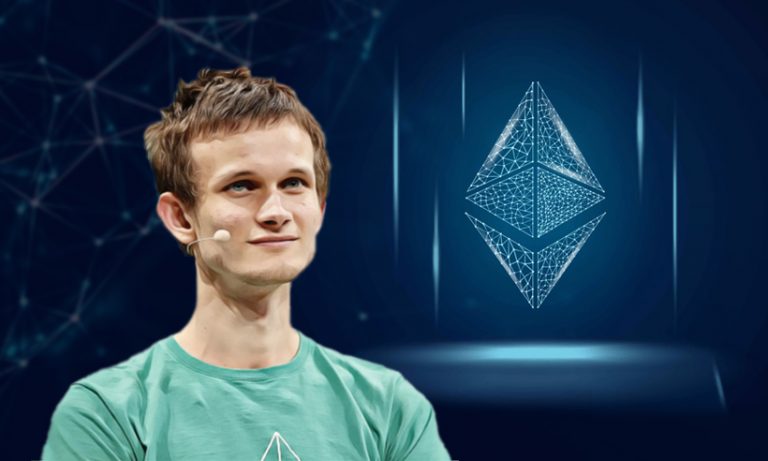
Vitalik Buterin, Ethereum’s co-founder, has compared low-risk decentralized finance (DeFi) to Google Search, suggesting it could be a pivotal moment for crypto adoption.
He means that accessible, secure DeFi platforms could simplify and mainstream crypto usage, much like Google Search made the internet navigable for millions. Low-risk DeFi focuses on reducing vulnerabilities like smart contract bugs, hacks, or volatility, offering stable yields or services akin to traditional finance but decentralized.
Recent posts on his X page echo this optimism, highlighting DeFi’s potential to disrupt finance with lower fees and broader access, though some warn of lingering risks like regulatory hurdles or stablecoin instability. DeFi’s growth—$80B+ in total value locked as of late 2025—driven by safer protocols and better UX.
However, challenges like scams and complex interfaces persist, and Vitalik’s vision hinges on making DeFi as intuitive and trustworthy as Google’s search bar. Just as Google Search made the internet accessible to the masses, low-risk DeFi could democratize finance by offering user-friendly, secure alternatives to traditional banking.
Register for Tekedia Mini-MBA edition 20 (June 8 – Sept 5, 2026).
Register for Tekedia AI in Business Masterclass.
Join Tekedia Capital Syndicate and co-invest in great global startups.
Register for Tekedia AI Lab.
This could bring billions into crypto, especially in underbanked regions, as DeFi eliminates intermediaries and reduces costs. Low-risk DeFi prioritizes safer protocols (e.g., audited smart contracts, over-collateralized lending) and stable yields, addressing concerns like hacks or volatility. This could rebuild trust in crypto, attracting institutional and retail users wary of past DeFi failures.
A “Google Search” moment suggests scale, which could invite stricter regulations. Governments may target DeFi for AML/KYC compliance, potentially stifling innovation or pushing projects to decentralized jurisdictions. Widespread low-risk DeFi could challenge traditional finance, offering cheaper loans, higher savings yields, and borderless transactions.
For example, DeFi lending protocols like Aave or Compound already offer 2-5% APY on stablecoins, often surpassing bank rates. To achieve this, DeFi must improve UX (simpler interfaces), scalability (e.g., Ethereum’s layer-2 solutions like Optimism), and security (e.g., formal verification of contracts). This could spur innovation in blockchain infrastructure.

Despite “low-risk” branding, DeFi isn’t foolproof. Stablecoin depegging (e.g., USDC’s 2023 scare), oracle failures, or unforeseen exploits could undermine confidence. X posts highlight ongoing scams and rug pulls as persistent threats.
With $80B+ in DeFi TVL (as of late 2025), low-risk DeFi could empower the 1.4B unbanked globally, offering access to savings, credit, and insurance without traditional gatekeepers. Buterin stresses community-driven progress, with the Ethereum Foundation (EF) targeting ~15% treasury spend in 2025 to steward these efforts sustainably.
Buterin’s plan accelerates Ethereum’s rollup-centric scaling, ensuring DeFi apps can handle mass adoption without compromising decentralization. Short-term: Fusaka hard fork with PeerDAS for 48/72 blob targets, increasing L2 data availability 10x.

More blobs in 2026, moderate EVM/gas limit boosts for L1-heavy DeFi (e.g., proofs, deposits/withdrawals). For DeFi, this means cheaper, faster cross-L2 transfers—critical for liquidity pools, lending, and yield farming across chains.
Milestones include trustless L2 asset transfers, proof aggregation, and faster settlements via erasure coding and three-stage finalization (3SF). A “simple L2 security and finalization roadmap” targets universal light-client verification, reducing bridging risks that plague DeFi today.
Privacy is a 2025 cornerstone, with Buterin advocating a “maximally simple L1 privacy roadmap.” This includes integrating tools like Railgun into wallets for shielded balances, dApp-specific addresses to obscure activity, and ZK tech for private ETH use.
L1 enhancements cover “privacy reads/writes” for payments, voting, and DeFi ops, protecting against frontrunning, liquidation sniping, and coercion. DeFi gains immensely: Low-risk protocols become default-private, beating European fintech rates while minimizing hacks. Buterin notes regulatory barriers and smart contract risks have “greatly improved,” positioning DeFi as a global alternative to traditional finance for millions.
In a September 2025 blog post, Buterin proposes low-risk DeFi—stable, high-yield assets like Aave vaults or flatcoins—as Ethereum’s foundational driver, mirroring Google’s search revenue. This shifts from speculation to stability: Platforms offering “higher-yielding low-risk assets than TradFi” could fund experimental apps like prediction markets or social networks.
Synergies include privacy for anti-frontrunning and account abstraction (AA) for seedless wallets, enabling normies to farm yields safely. EF’s 45k ETH deployment into DeFi (Spark, Aave, Compound) underscores this: It’s a “DeFi machine” generating sustainable income without excesses.
Buterin’s personal 2025 focuses: L1 roadmap (single-slot finality, statelessness, VM evolution), cryptography/open-source OS, and bio-defense. The “Lean Ethereum” blueprint targets quantum-resistant crypto, formal verification, and bloat reduction—ensuring a “stable, trustworthy foundation” for DeFi.