

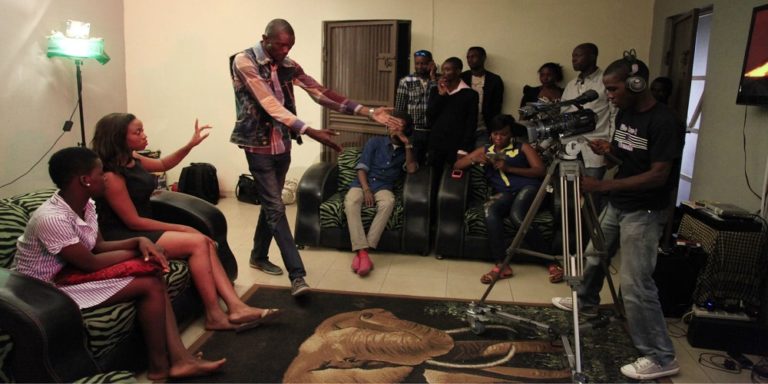
The curtains may be rising on a new era for African cinema. In a bold move to inject life into the continent’s underfunded creative economy, the African Export-Import Bank (Afreximbank), through its development arm, the Fund for Export Development in Africa (FEDA), has unveiled a $1 billion Africa Film Fund.
The announcement, made under the Creative Africa Nexus (CANEX) initiative, is stirring excitement—and hope—across Africa’s film and television sector as it is expected to buoy the quest of breaking the chronic financing barriers and infrastructural stagnation that have long plagued Africa’s storytellers.
From Lagos to Nairobi, and from Johannesburg to Accra, filmmakers often operate on shoestring budgets, lacking access to post-production equipment, distribution channels, and consistent investment.
Register for Tekedia Mini-MBA edition 20 (June 8 – Sept 5, 2026).
Register for Tekedia AI in Business Masterclass.
Join Tekedia Capital Syndicate and co-invest in great global startups.
Register for Tekedia AI Lab.
Afreximbank says this fund isn’t just about financing movies—it’s about reshaping the entire value chain of the African storytelling industry, from script to screen and beyond.
Fixing the Foundation
Speaking on the launch, Afreximbank President Benedict Oramah cast the fund as a long-overdue intervention for an industry bursting with potential but shackled by neglect.
“Through investments in the film sector, alongside initiatives such as the CANEX Shorts Awards, Afreximbank is committed to celebrating and amplifying a diverse range of African voices and experiences, thereby catalysing the creative industry and unleashing its potential to drive economic growth across Africa,” Oramah said.

While Nollywood has carved out a place as the world’s second-largest film industry by volume, its monetization still lags far behind. In 2024, Nollywood films contributed nearly N2.8 billion—about 39% of Nigeria’s N7.4 billion box office revenue- but producers remain locked out of the international streaming and theatrical space, often unable to match global standards due to funding constraints.
The Africa Film Fund, structured as a private equity vehicle, seeks to change that. The goal is not merely to bankroll more productions, but to build a commercial engine behind them—one that supports development, distribution, marketing, and long-term viability.
“We’re Building an Ecosystem”
For Marlene Ngoyi, CEO of FEDA, the mission is as cultural as it is financial.

“The Africa Film Fund is not merely about financing films – it is about building a thriving ecosystem that empowers Global Africa’s creative talent, fosters cultural exchange, and catalyses economic transformation,” she said.
Ngoyi’s use of the term “Global Africa” hints at the wider diaspora the fund is courting—an audience and talent base that extends far beyond the continent’s borders.
Renowned actor Boris Kodjoe, a partner in FC Media Group, welcomed the initiative as a long-overdue lifeline for African creatives trying to break out of local silos and onto the global stage.
“It has been a long-term dream of mine to be able to tell stories on a global scale. I am grateful and excited to partner with our friends at Afreximbank and FEDA to support quality content development and creation in Africa and beyond,” Kodjoe said.
Hollywood actress Viola Davis, co-founder of JVL Media LLC, described the move as a milestone toward inclusion.
“African stories are deeply human and invariably powerful. This fund is an invitation to the world to see Africa through the lens of its own creators, bold, unfiltered, and rich in truth,” she said.
The Bigger Picture
Beyond the star-studded endorsements, the fund represents a deeper pivot by Afreximbank into soft power investments. Over the past decade, the bank has focused heavily on trade finance, export infrastructure, and intra-African commerce. But in recognizing the economic weight of storytelling, what some have called “cultural GDP”—it now seeks to mine the immense value locked in African languages, folklore, and modern narratives.
From South Africa’s urban dramas to Kenya’s rising animation studios, Africa’s creative sector is vast, yet most of its output rarely sees life beyond domestic markets. Infrastructural gaps, from poor editing suites to limited cinema access and weak copyright enforcement, have kept international investors at bay.
Afreximbank’s $1 billion commitment attempts to flip that narrative.
According to industry insiders, the fund could provide the kind of patient capital required to build post-production studios, support script development labs, and fund marketing campaigns for African films looking to crack Cannes or Netflix.
It also carries geopolitical undertones. As China, France, and the U.S. continue to jockey for cultural influence across Africa, homegrown storytelling, properly financed and globally distributed, becomes a tool of continental self-definition.
Room for Caution
Still, the road ahead isn’t paved with red carpets. Several past efforts to revive African cinema through funding initiatives—whether government-backed or multilateral—have collapsed under bureaucratic delays, corruption, or unsustainable funding models.
Industry players are curious about how accessible the fund is, particularly to independent filmmakers and producers who may lack political connections or collateral.
There is also the question of distribution: even with better production financing, where will these films be seen? Africa’s cinema infrastructure is sparse, and many streamers remain hesitant about acquiring African content without Western production credits attached.
Toward a Global-Scale Industry
But the optimism remains. Afreximbank appears intent on pairing this fund with structural initiatives—CANEX being one—that also focus on cross-border rights management, training programs, and global market access.
The broader goal is to make African storytelling commercially viable on its own terms, without diluting its identity to fit global stereotypes.
If the fund delivers on its promise, the next generation of African directors could have the tools to not just tell stories, but to sell them, and sell them on equal terms with their peers in Hollywood, Bollywood, or Seoul.