

Artificial intelligence is rapidly becoming embedded in the core workflows of modern organizations. From marketing departments generating content at scale to internal teams using AI for documentation and reporting, the technology is no longer experimental—it is operational.
However, as AI adoption increases, a quieter and more complex issue is emerging within enterprises: how to maintain trust, governance, and accountability in AI-assisted communication systems.
In many ways, the challenge is no longer whether businesses should use AI, but how they can ensure that AI-generated outputs still reflect organizational intent, accuracy, and credibility.
This shift is redefining what it means to manage information within a company.
The Invisible Expansion of AI in Enterprise Workflows
Unlike earlier waves of digital transformation, AI adoption has not always followed a structured rollout. In many organizations, it has entered through the back door—first as writing assistants, then as productivity tools, and eventually as integrated components of communication systems.
What makes this transition unique is its subtlety. Unlike traditional software systems that require explicit implementation, AI tools often integrate into daily workflows with minimal friction.
As a result, many organizations now find themselves in a position where a significant portion of their written communication is partially or fully AI-generated—without formal governance frameworks in place.
This creates a new category of operational risk: content without clear authorship boundaries.
Why Content Governance Is Becoming a Strategic Issue
Historically, content governance was primarily associated with compliance, branding, and editorial consistency. Today, it has expanded into something broader: organizational trust management.
Stakeholders—whether customers, employees, or investors—are increasingly sensitive to how information is produced and validated.
The concern is not necessarily that AI generates incorrect information. Rather, the issue lies in the opacity of the process. When communication is produced by layered systems of human prompts and machine outputs, accountability becomes less visible.
This raises important questions for leadership teams:
- Who is responsible for AI-generated communication?
- How is accuracy verified before publication?
- What standards define acceptable AI usage in external messaging?
These questions are no longer theoretical—they are operational.
The Role of AI Detection in Content Oversight
As organizations begin to grapple with these challenges, many are exploring tools and frameworks that help assess the nature of AI-generated content.
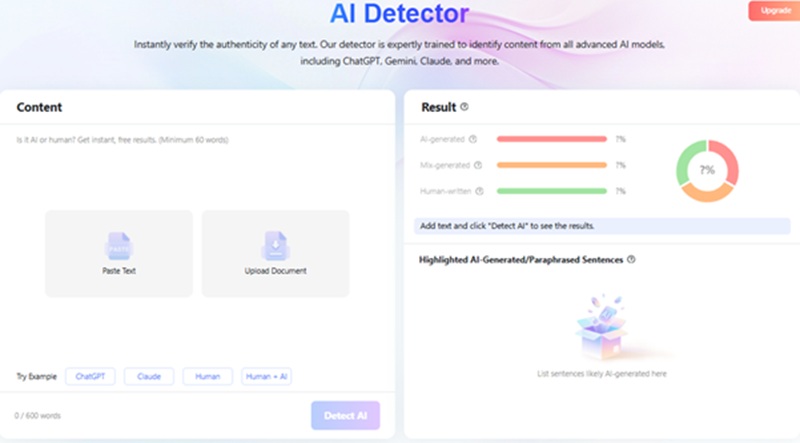
In this context, discussions around how do ai detectors work have become increasingly relevant in enterprise environments, particularly in sectors where communication accuracy and trust are critical.
AI detection systems typically evaluate linguistic patterns, structural predictability, and statistical likelihood to assess whether content resembles human or machine-generated writing.
While these systems are not perfect and should not be treated as absolute arbiters of truth, they serve an important function: they introduce a layer of visibility into content production processes that would otherwise remain opaque.
For enterprises, this visibility is less about detection and more about governance—understanding how content is produced, refined, and approved.
The Risk of Over-Automation in Business Communication
One of the unintended consequences of AI adoption is the gradual homogenization of organizational voice.
When multiple teams rely on similar AI systems for drafting content, communication begins to converge in tone, structure, and phrasing. Over time, this can lead to a subtle but meaningful loss of differentiation.
Common symptoms include:
- Increased similarity across departmental communication
- Reduced emotional nuance in messaging
- Overly standardized phrasing in external content
- Decline in distinct organizational voice
While these issues may not appear critical at first, they can accumulate and affect how stakeholders perceive the organization’s identity.
In competitive markets, voice differentiation is often a subtle but powerful asset.
Human Judgment as a Governance Layer
Despite rapid advancements in AI capabilities, human oversight remains essential in maintaining communication integrity.
AI systems excel at generating structured and grammatically correct content. However, they lack contextual awareness, organizational memory, and ethical judgment.
This is particularly important in high-stakes communication areas such as:
- Regulatory disclosures
- Strategic announcements
- Crisis communication
- Investor relations messaging
In these contexts, AI should function as a drafting or assistance layer, not as the final authority.
The role of human reviewers is not merely editorial—it is interpretive. They ensure that communication aligns with intent, context, and organizational responsibility.
From Content Generation to Content Refinement
As AI becomes more embedded in enterprise workflows, the focus is gradually shifting from generation to refinement.
Raw AI output is rarely publication-ready in high-trust environments. It often requires adjustment in tone, clarity, and structure to align with organizational standards.
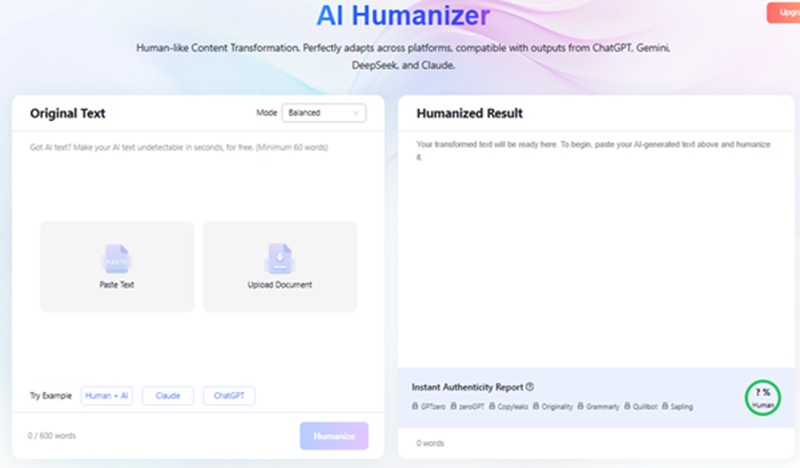
This is where refinement systems and workflows that humanize ai outputs become increasingly relevant. The objective is not to disguise the use of AI, but to ensure that final communication reflects natural language patterns and appropriate contextual tone.
In mature organizations, this refinement step is becoming a standard part of the content lifecycle rather than an optional enhancement.
The Emerging Discipline of AI Content Governance
As enterprises scale their use of AI, a new discipline is beginning to emerge: AI content governance.
This discipline sits at the intersection of:
- Information security
- Brand management
- Compliance
- Editorial oversight
- AI ethics
Its purpose is to ensure that AI-assisted communication remains aligned with organizational standards while maintaining transparency and accountability.
In this evolving landscape, companies are increasingly adopting structured approaches and tools to manage AI-generated content more effectively. Platforms such as Lynote AI reflect this broader movement toward systematic oversight of AI-driven communication workflows.
Rather than focusing solely on generation, these systems emphasize evaluation, refinement, and governance across the content lifecycle.
Strategic Implications for Enterprises
The implications of AI-driven communication extend beyond efficiency gains.
Organizations that fail to establish governance frameworks risk facing:
- Inconsistent messaging across channels
- Reduced stakeholder trust
- Difficulty tracing communication accountability
- Long-term erosion of brand distinctiveness
Conversely, organizations that implement structured AI governance can benefit from both efficiency and enhanced communication consistency.
The key differentiator is not AI adoption itself, but the maturity of its integration.
Conclusion: Trust as the Defining Metric of AI Adoption
As AI continues to evolve, its role in enterprise communication will only expand. However, the defining factor in successful adoption will not be technological capability, but governance maturity.
Trust is becoming the central metric by which AI-enabled organizations will be evaluated. Not trust in AI systems themselves, but trust in how organizations use them.
The future of enterprise communication will not be determined by whether AI is used, but by how transparently, responsibly, and consistently it is governed.
In that sense, AI does not eliminate the need for trust—it amplifies its importance.