

Artificial intelligence is entering a new phase in which its impact may extend far beyond generating text, images, or software.
Recent developments involving OpenAI and Anthropic point toward a future where AI systems could interact directly with computers while also contributing to some of the most difficult problems in science, including drug discovery, protein design, and chemical research.
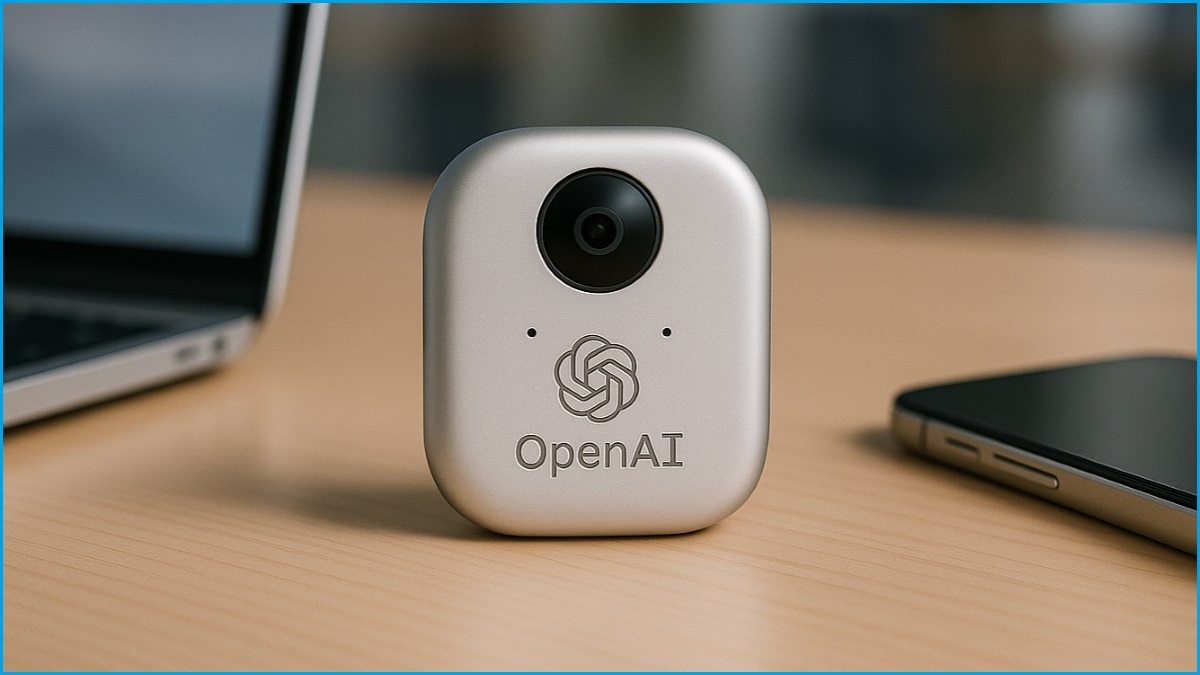
Reports surrounding OpenAI’s consumer AI device have raised questions about how deeply an AI assistant could become integrated into everyday computing.
The emerging concept reportedly involves AI being capable of understanding and interacting with a user’s digital environment, including computer activity such as clicks and keystrokes. Such capabilities could allow an assistant to perform tasks across applications rather than simply responding to commands in a chat window.
Register for the next Tekedia Mini-MBA.
Register for Tekedia AI in Business Masterclass.
Join Tekedia Capital Syndicate and co-invest in great global startups.
The potential benefits are significant. Instead of opening multiple applications, searching through menus, copying information, and completing repetitive workflows manually, users could delegate complex digital tasks to an AI agent.
For consumers, this could make computers feel less like collections of separate applications and more like intelligent environments that understand objectives and execute them.
However, the same capabilities raise serious privacy and security questions. An AI system capable of observing clicks, keystrokes, or other computer interactions could potentially gain access to extremely sensitive information.

Passwords, financial information, private conversations, documents, and other personal data could become exposed if safeguards were inadequate.
The development of consumer AI hardware therefore involves not only technological innovation but also difficult questions about consent, data protection, transparency, and user control.
At the same time, Anthropic is demonstrating another dimension of AI’s potential. The company announced that Claude is being used in protein design and to automate aspects of chemistry research. This represents a major shift from AI as a productivity tool toward AI as a scientific collaborator.
Protein design is particularly important because proteins play fundamental roles in biological processes and medicine. Designing proteins with specific properties can contribute to the development of new therapies, diagnostics, and industrial applications.

Chemistry research also involves enormous quantities of experimental information, making it an area where AI could help researchers identify patterns, propose experiments, analyze results, and accelerate discovery.
Anthropic CEO Dario Amodei has gone even further in describing the potential consequences, expressing the belief that AI could help cure most human diseases within five to ten years. While such a prediction remains highly ambitious and should not be interpreted as a guaranteed outcome, it illustrates the scale of expectations surrounding advanced AI.
The combination of computer-using agents and scientific AI suggests that the technology industry is moving toward systems capable of acting rather than merely answering. One frontier involves AI operating digital environments on behalf of people.
Another involves AI helping scientists explore biological and chemical possibilities that would be difficult to investigate manually. Yet progress must be matched by rigorous oversight. The more capable AI becomes, the greater the consequences of errors, misuse, privacy failures, or excessive dependence on automated systems.
The coming decade could therefore be defined not simply by how intelligent AI becomes, but by how responsibly that intelligence is integrated into society.
From controlling computers to designing proteins, AI is increasingly moving from the screen into the physical and scientific world.
The implications could be profound, potentially transforming productivity, medicine, and scientific discovery while simultaneously creating new challenges that technology companies and governments will have to address.