

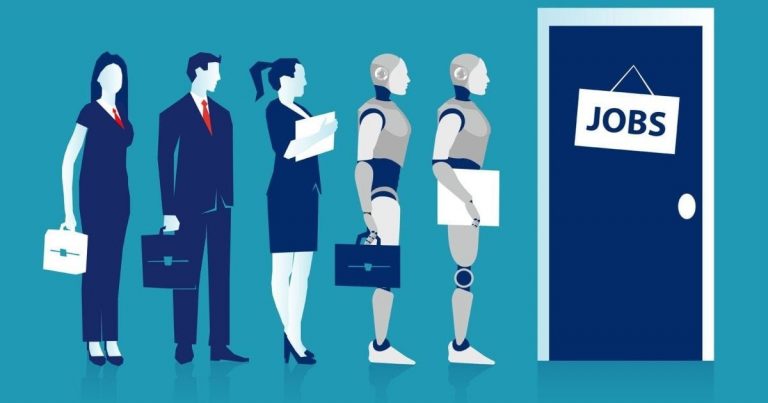
The artificial intelligence revolution is exposing a growing skills crisis inside corporate America, with many companies concluding that traditional workforce development programs are moving too slowly to keep pace with technological change.
That warning comes from Nikesh Arora, the chief executive of Palo Alto Networks, who says most enterprise employees remain ill-prepared for an economy increasingly shaped by AI.
Speaking on the “20VC” podcast, Arora argued that businesses are confronting a stark reality: while AI capabilities are advancing at breakneck speed, employee readiness is lagging far behind.
Register for the next Tekedia Mini-MBA.
Register for Tekedia AI in Business Masterclass.
Join Tekedia Capital Syndicate and co-invest in great global startups.
“The challenge right now is 90% of the enterprise employees are not AI savvy,” Arora said.
His comments highlight one of the biggest challenges facing corporate leaders worldwide. While companies have spent hundreds of billions of dollars investing in AI infrastructure, software, and data centers, many are now discovering that technology adoption is only part of the equation. The larger challenge may be transforming workforces built for a pre-AI era.
Arora said there is no straightforward corporate training program capable of rapidly transforming thousands of workers into AI-native employees.

“The challenge is there’s no training course I can send my 21,000 employees at Palo Alto Networks to,” he said.
Instead, he believes employees must take responsibility for adapting to the new technological environment.
“They have to be able to learn on their own. I think we’re back to a Darwinian moment where everybody has to figure out who’s really good.”

The remarks come as companies across industries increasingly evaluate employees based on their ability to work alongside AI tools. Executives from technology, finance, consulting, and manufacturing firms have repeatedly warned that AI literacy is becoming a core workplace requirement rather than a specialized skill.
Why Some CEOs Are Choosing Layoffs Instead
According to Arora, some corporate leaders have concluded that retraining existing employees is too slow or too difficult.
He pointed to actions taken by executives, including Brian Armstrong and Jack Dorsey, arguing that they have opted for a more radical approach.
“You’ve seen people like Brian Armstrong and Jack Dorsey go out and say, ‘I’m going to decimate my organization and I’m going to start building from scratch,'” Arora said.
“And they’ve gone to some version of 30 to 40% less people because they’ve figured out there’s no redemption. I can’t train these people. I’m going to just find the people who are going to come in and help me do this stuff.”
In February, Dorsey’s financial technology company Block announced plans to eliminate more than 4,000 jobs, nearly half its workforce. Dorsey said the company needed to acknowledge how AI and what he described as “intelligence tools” were reshaping business operations.
Meanwhile, cryptocurrency exchange Coinbase announced in May that it would cut approximately 700 jobs, representing about 14% of its workforce. Armstrong said the reductions were intended to make the company “leaner, faster, and more efficient for our next phase of growth.”
Palo Alto’s Alternative Strategy
Arora insists Palo Alto Networks is taking a different path. Rather than pursuing sweeping layoffs, the cybersecurity giant is relying on attrition and targeted hiring to gradually reshape its workforce.
“We’ve been hiring people only through hackathons,” he said, describing the company’s approach to recruiting technical talent.
The strategy is designed to identify candidates who already possess advanced AI and engineering capabilities rather than retraining existing workers at scale.
“Give me 12 months, I’ll have sort of transformed 20, 25% of my team,” Arora said.
“Give me three years, I’ll have hopefully enough AI savvy people working at Palo Alto.”
Notably, Palo Alto is not shrinking. According to the company’s most recent quarterly filing, it added 5,423 employees between the end of fiscal 2025 and the third quarter of fiscal 2026. That suggests AI is not necessarily reducing overall hiring demand. Instead, it is changing the types of workers companies want.
Arora believes the most significant workforce reductions will occur in administrative functions. He questioned whether companies will continue needing hundreds of employees in departments such as marketing when AI systems can increasingly generate content aligned with corporate branding and messaging.
“My biggest problem in marketing is I have 600 people, but I’m not sure they all fully understand how to consistently deliver my tone of voice, my value proposition, and how not to break my brand by having different collaterals in public domain,” he said.
According to Arora, AI systems will soon become capable of reviewing work, identifying inconsistencies, and recommending improvements with minimal human oversight. His expectation is that general and administrative functions will look dramatically different within a few years.
“My rule of thumb is that in the next three years, companies will probably have half of the people” in areas such as marketing, human resources, and finance, he said.
That prediction aligns with growing concerns among economists and labor market analysts that white-collar occupations may face some of the most immediate disruption from generative AI.
Unlike previous waves of automation that primarily affected manufacturing and routine physical work, AI increasingly targets knowledge-based tasks involving writing, analysis, customer communication, and administrative processes.
AI May Eliminate Jobs — But Create Others
Despite predicting major changes in workforce composition, Arora rejected the idea that AI will ultimately result in widespread permanent unemployment. Instead, he expects demand for technical workers, cybersecurity experts, AI engineers, and sales professionals to increase significantly.
“I think there’s this fallacy people believe we’re going to have less people working because AI is going to take over our jobs,” he said.
“I don’t believe that.”
According to Arora, many teams inside Palo Alto Networks are already requesting additional technical personnel to help implement AI-driven transformation projects.
Across the technology industry, administrative and support roles may face increasing automation as demand continues to grow for workers capable of building, deploying, and managing AI systems.
Overall, Arora’s comments provide a glimpse into how large corporations may evolve during the next phase of AI adoption. The first wave of the AI boom was dominated by investments in chips, cloud infrastructure, and data centers. The next phase appears increasingly focused on organizational restructuring, workforce skills, and productivity gains.
For companies, the challenge is no longer simply acquiring AI tools. It is determining how to redesign their workforces around them. The outcome is expected to reshape hiring, training, and career development across the global economy, creating winners among employees who successfully adapt and increasing pressure on those who fail to develop the skills needed for an AI-driven workplace.