

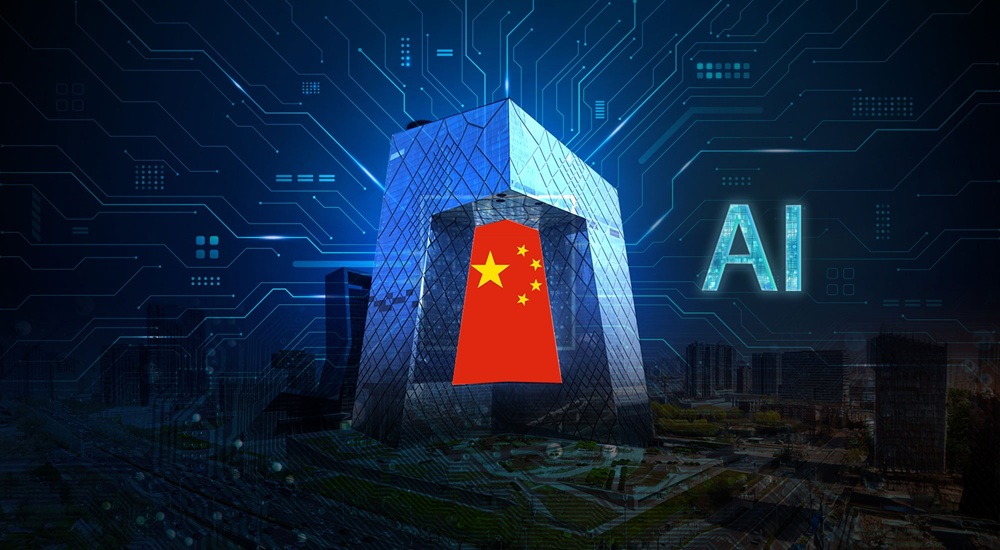
Artificial intelligence is entering a phase in which the central question is no longer simply how powerful models can become, but who controls the systems capable of shaping that power.
Three recent developments capture the tension: Washington is considering an AI-era equivalent of a “red phone” with China, a senior Trump technology adviser has told companies worried about unsafe models to “just stop,” and Nvidia CEO Jensen Huang has questioned the motivations of technology leaders warning about an AI doomsday.
The idea of an AI “red phone” reflects a fundamental change in how governments view artificial intelligence.
Register for the next Tekedia Mini-MBA.
Register for Tekedia AI in Business Masterclass.
Join Tekedia Capital Syndicate and co-invest in great global startups.
During the Cold War, direct communication between Washington and Moscow was designed to reduce the risk that a misunderstanding could escalate into catastrophe. Today, advanced AI introduces a different but increasingly consequential form of strategic competition.
The United States and China are racing to develop frontier models, computing infrastructure, chips and autonomous systems. A direct communication channel could provide a mechanism for governments to discuss incidents, establish guardrails or prevent an AI-related crisis from becoming a geopolitical confrontation.
Yet communication does not eliminate competition. Both countries have strong economic and national-security incentives to maintain leadership in AI. The United States has sought to preserve its advantage in advanced semiconductors and computing, while China continues to invest heavily in domestic AI capabilities.

The challenge is therefore finding areas where cooperation can coexist with strategic rivalry. Inside the technology industry, the debate is becoming equally intense. Trump technology adviser David Sacks has offered a blunt response to AI companies concerned that their own systems could become dangerous: stop building them.
The statement cuts through a familiar contradiction in the sector. Companies frequently acknowledge that increasingly capable AI could create serious risks, while simultaneously competing to release more capable products as quickly as possible.
That contradiction has produced a growing argument over responsibility. If a company genuinely believes that a model is unsafe, critics ask why development should continue.

Supporters of rapid innovation counter that safety can be improved through deployment, testing and competition rather than by abandoning technological progress.
The disagreement is about whether caution or continued experimentation provides the better route to controlling increasingly powerful systems. Jensen Huang, Nvidia’s chief executive, has challenged another part of the debate: the warnings coming from AI executives themselves.
Huang has suggested that some technology leaders may have “ulterior reasons” for emphasizing catastrophic AI scenarios. His argument points toward an important economic reality. AI safety is not discussed in a vacuum.
Companies have commercial interests, investors have expectations, governments have strategic objectives, and restrictions on advanced AI could affect which firms gain or lose market share.
That does not make warnings about AI risks automatically invalid. Nor does commercial interest automatically prove that such warnings are sincere. The more useful question is what evidence supports particular safety claims and what safeguards can be independently tested.
The emerging AI landscape therefore has two competing instincts: accelerate and contain. Washington’s interest in an AI “red phone” suggests that governments recognize the possibility of consequences extending beyond individual companies.
The safety debate inside Silicon Valley shows that even developers disagree about how quickly the technology should advance. AI may require both innovation and restraint. But deciding where that boundary lies will increasingly involve governments, corporations, researchers and the public.
The defining contest of the AI era may not simply be who builds the most powerful model. It may be who can build powerful systems while maintaining enough trust, transparency and international communication to prevent technological competition from becoming a source of instability.