

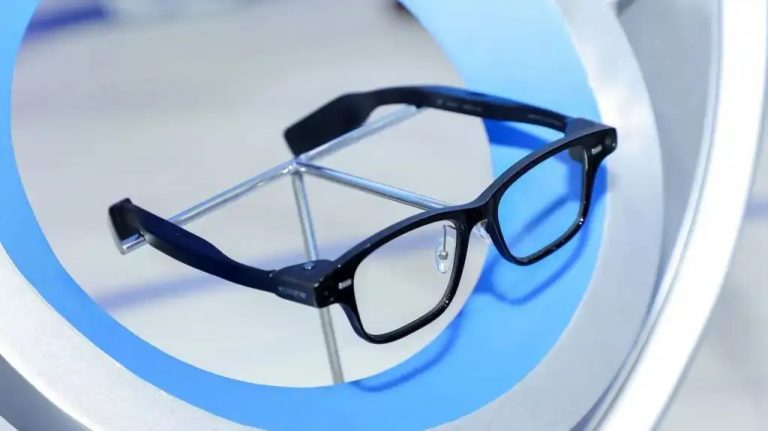
Alibaba on Thursday introduced its new Quark artificial intelligence glasses in China, marking a fresh push by the company to carve out space in a wearables market that global players like Meta currently dominate.
The headset starts at 1,899 yuan ($268.25) and is powered by Alibaba’s in-house Qwen AI model and app. Alibaba has opted for a familiar, everyday look instead of the more conspicuous visor-style designs that have defined Western rivals.
The Quark glasses resemble regular eyewear with a black plastic frame, a design choice that appears aimed at helping the device blend more seamlessly into daily use rather than calling attention to itself.
Register for Tekedia Mini-MBA edition 20 (June 8 – Sept 5, 2026).
Register for Tekedia AI in Business Masterclass.
Join Tekedia Capital Syndicate and co-invest in great global startups.
Register for Tekedia AI Lab.
Alibaba said the glasses will be tightly woven into its ecosystem, including Alipay and its e-commerce platform Taobao. Wearers will be able to use them for functions like on-the-go translation and instant price recognition, positioning the device as an extension of tools consumers already use throughout the Alibaba universe.
Li Chengdong, a Beijing-based electronics industry analyst, said Alibaba’s strength lies in its shopping, payments, and navigation services, and that the Quark headset is designed to work more like a life assistant rather than a purely entertainment or gaming device. He added that the company is moving aggressively into consumer-focused AI after lagging competitors in the space for years.
Earlier this month, Alibaba rolled out a major upgrade to its AI chatbot.

Li said the strategy behind the glasses also reflects the company’s long-term attempt to defend its territory in an increasingly competitive e-commerce sector.
“Alibaba is not a monopoly in e-commerce,” he said. “It hopes AI can help it secure the next-generation traffic gateway.”
The new Quark glasses are available on major Chinese e-commerce platforms, including Tmall, JD.com, and Douyin. Sales numbers have not yet been made public, as the product only officially launched on Thursday.

The release drops Alibaba into a global race that is intensifying as tech companies hunt for the next device category that combines entertainment, communication, and computing underpinned by AI. Meta currently dominates the VR headset market with around 80 percent of global share through its Quest line. Apple’s Vision Pro is also in play, while Samsung, working with Google, introduced its Galaxy XR extended-reality headset in October, incorporating AI features built on Alphabet’s technology.
Alibaba is not alone in China’s AI-wearables experimentation. Xiaomi released its own AI-powered glasses in June, while Baidu has had a comparable product on the market already. The overlapping timelines underline a broader shift within China’s tech sector, where companies are racing to capture new hardware entry points as consumers migrate toward AI-driven interfaces.
Although Alibaba has historically been known for its core e-commerce and cloud operations, the Quark glasses signal the company’s attempt to embed AI more directly into personal devices. It is an area where it has been considered a step behind rivals. The company is now trying to reposition itself as a frontrunner in consumer AI, using its sprawling ecosystem of payment, shopping, and lifestyle services as its leverage.
The headset’s launch comes amid renewed pressure across China’s tech industry to find fresh sources of growth. With the battle for online retail intensifying and user attention fragmenting across platforms, major firms are seeking new hardware that could serve as the next major entry point for digital services. Alibaba is betting that AI glasses—lightweight, functional, and integrated into everyday habits—might become that gateway.
The company’s move signals that the wearables fight in China is only getting started, though it’s not clear yet whether consumers will embrace the device at scale.