

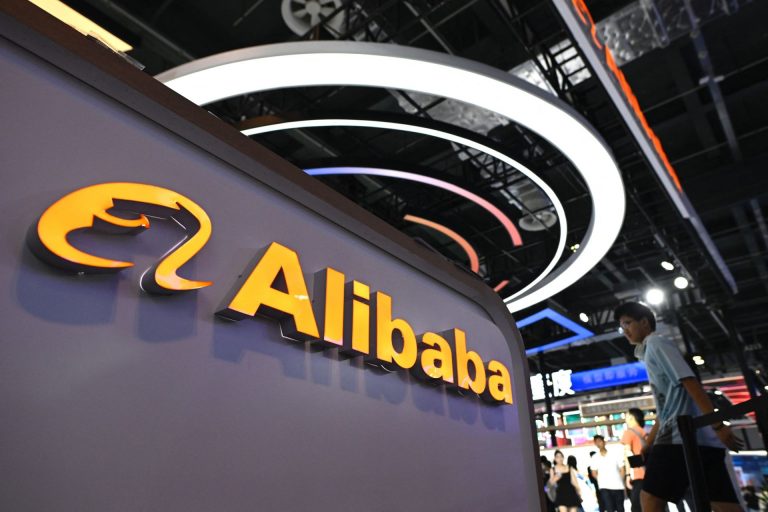
Alibaba Group has announced plans to raise $3.2 billion through a zero-coupon convertible bond, the largest such offering this year, according to Dealogic data.
The move underscores the Chinese e-commerce and technology giant’s drive to fund international expansion and strengthen its cloud computing arm, as artificial intelligence becomes increasingly central to its growth ambitions.
The offering will eclipse DoorDash’s $2.75 billion convertible bond sale in May, taking the top spot for 2025. Alibaba said in its filing that nearly 80% of proceeds will be allocated to cloud infrastructure investments, including new data centers, technology upgrades, and enhanced services to meet growing demand for AI-driven solutions. The remainder will go into expanding its e-commerce ventures, aimed at improving market presence and operational efficiency abroad.
Register for Tekedia Mini-MBA edition 20 (June 8 – Sept 5, 2026).
Register for Tekedia AI in Business Masterclass.
Join Tekedia Capital Syndicate and co-invest in great global startups.
Register for Tekedia AI Lab.
According to a term sheet seen by Reuters, the bond will carry a 27.5% to 32.5% conversion premium above Alibaba’s U.S.-listed share price. It will mature on September 15, 2032, and is structured to convert into Alibaba’s American depositary shares (ADS) traded in New York. Unlike traditional bonds, the instrument carries no coupon, reflecting investor confidence in Alibaba’s equity trajectory as well as its broader role in the AI and cloud boom.
The announcement initially triggered volatility. Alibaba’s Hong Kong-listed shares fell as much as 2.6% in morning trading but quickly reversed course, climbing 2.3% to HK$146.1 as the broader Hang Seng Index rebounded. In the United States, Alibaba’s stock slipped 2.2% on Wednesday, tracking sector-wide tech weakness. Despite the swings, Alibaba’s shares have surged in 2025—71.6% year-to-date in Hong Kong and 71.1% in New York—reflecting investor optimism about its AI strategy.
This is not Alibaba’s first foray into convertible financing. The company raised $1.5 billion in July through an exchangeable bond and $5 billion in May 2023 with another convertible issue. Taken together, these deals suggest Alibaba is leaning heavily on hybrid instruments to finance its multi-year technology overhaul while keeping traditional debt levels under control.

The approach also comes at a time when Hong Kong’s equity capital markets have been surging, with convertibles emerging as a popular tool. Asia-Pacific issuers have floated $27.8 billion worth of convertible bonds so far this year, nearly matching last year’s $28.7 billion total over the same period, which marked the strongest stretch in three years.
Focus on Cloud and AI
Alibaba has committed 380 billion yuan ($53.37 billion) in AI-related investment over three years, one of the largest pledges by any Chinese company. During its latest earnings call, CEO Eddie Wu highlighted how these commitments are already reshaping the company’s cloud division.
“Our investments in AI have begun to yield tangible results,” Wu told analysts. “We are seeing an increasingly clear path for AI to drive Alibaba’s robust growth.”

The company reported strong growth in cloud revenues last quarter, even though group revenues fell short of analyst estimates. Executives made clear that cloud—and the AI services underpinning it—will remain the strategic centerpiece of Alibaba’s transformation.
Industry Backdrop and Comparables
The popularity of convertible bonds has grown in part because they offer dual appeal: potential equity upside if share prices rise and capital protection with principal repayment if they do not. On the same day as Alibaba’s announcement, China Pacific Insurance revealed plans to raise HK$15.55 billion ($2.0 billion) through its own zero-coupon convertible bond, reinforcing the trend.
Globally, technology majors are also leaning into convertible debt to fund AI and data infrastructure. Alibaba’s move places it squarely among global peers racing to secure cloud capacity as generative AI reshapes demand for computing power.
This means the $3.2 billion bond issuance is more than a financial transaction for Alibaba, with some analysts calling it a strategic signal. The company is betting that an aggressive push into cloud computing and AI services can offset slowing growth in its traditional e-commerce business and re-establish its dominance internationally.
The proceeds will enable Alibaba to build out large-scale data centers, a critical requirement as AI workloads become increasingly compute-intensive. At the same time, targeted reinvestment into international e-commerce could help it compete in Southeast Asia and other fast-growing markets where rivals like Sea Ltd. and Amazon are vying for market share.
For investors, the transaction presents a balanced risk-reward scenario. The zero-coupon structure reduces immediate financing costs, while the long maturity gives Alibaba flexibility to deploy capital across multiple strategic cycles. The embedded equity option, meanwhile, offers investors participation in Alibaba’s rally if its cloud transformation succeeds.
As the Hang Seng Index recovers and Hong Kong’s capital markets remain buoyant, Alibaba’s timing appears well-calibrated. Analysts believe that the real test will be whether its AI-driven cloud strategy translates into sustainable earnings growth—a challenge it shares with global peers like Amazon, Microsoft, and Google.