

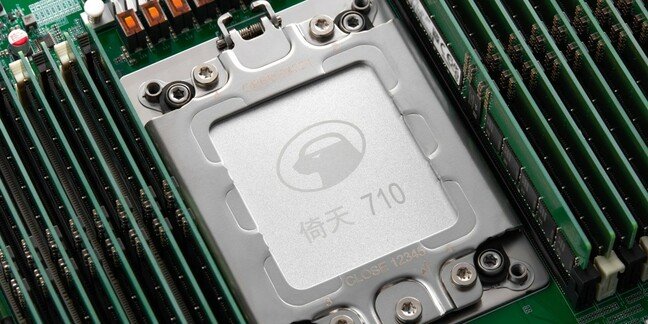
Alibaba has secured approval from the Hong Kong Stock Exchange to proceed with plans to spin off its semiconductor subsidiary, T-Head, in a proposed public listing that could give investors a clearer view of the value of China’s efforts to build domestic artificial intelligence chip capacity.
The planned offering comes as Chinese technology companies seek alternatives to advanced Nvidia processors amid tighter US export restrictions. It also gives Alibaba an opportunity to raise capital and establish a separate market valuation for a business that has become more important to its AI ambitions.
Alibaba said late Tuesday that the exchange had agreed to allow the proposed spin-off. The company plans to offer T-Head shares publicly in Hong Kong, subject to further approval from the exchange and the China Securities Regulatory Commission.
Register for the next Tekedia Mini-MBA.
Register for Tekedia AI in Business Masterclass.
Join Tekedia Capital Syndicate and co-invest in great global startups.
The filing did not disclose the expected listing date, the number of shares to be offered, or the proposed valuation. Alibaba said it had submitted a confidential application to list T-Head on September 11.
The announcement did little to support Alibaba’s shares in early trading. The Hong Kong-listed stock fell about 1% on Wednesday morning and has lost approximately 29% since the beginning of the year.
The proposed listing comes at a difficult time for Chinese technology stocks, which have struggled to match the performance of their US counterparts. Investor enthusiasm following DeepSeek’s AI breakthroughs last year raised expectations that Chinese companies could challenge American technology leaders, but the subsequent performance of the sector has been uneven.

For Alibaba, separating T-Head from the wider group could help investors assess the semiconductor business independently of its e-commerce, cloud computing and other operations. It could also provide a dedicated funding platform for a business requiring sustained investment in chip design, software and engineering.
Alibaba’s semiconductor ambitions have become more prominent as access to advanced foreign processors has become a central constraint for China’s AI industry.
The company unveiled its next-generation Zhenwu V900 chip in late September, claiming that it delivers three times the performance of its predecessor, the Zhenwu M890, which was released in May. The announcement demonstrated Alibaba’s effort to develop a succession of domestic processors for AI workloads rather than depend entirely on imported hardware.

The company’s strategy is part of a broader push involving Chinese technology groups such as Huawei, which are developing homegrown semiconductors to support AI training and inference. US restrictions have limited China’s access to some of the most advanced chips, creating an incentive for domestic companies to develop alternatives and for Beijing to strengthen the country’s semiconductor supply chain.
The challenge, however, extends beyond producing processors. AI chips must compete on computing performance, energy efficiency, manufacturing reliability and compatibility with the software platforms used by developers. Building a competitive domestic ecosystem also requires investment in manufacturing equipment, advanced packaging, memory and supporting infrastructure.
Analysts believe a separate T-Head listing could help Alibaba attract investors specifically interested in China’s semiconductor development. It may also allow the subsidiary to pursue financing and partnerships with greater independence from its parent company.
The move comes as the commercial opportunity for domestic AI chips is expanding, but the sector faces considerable execution risks. Chinese chipmakers bear the burden to prove that their products can support large-scale AI applications at competitive costs. A successful listing would provide capital and visibility, but it would not by itself resolve technological and manufacturing constraints.
T-Head’s proposed offering also arrives amid questions about Alibaba’s access to Nvidia hardware. Short seller Culper Research alleged in May that Alibaba had obtained restricted Nvidia chips through indirect financing arrangements involving entities in Southeast Asia.
Those claims have gained renewed attention following reports involving Nvidia Chief Executive Jensen Huang and an alleged Chinese intelligence asset connected to one of the entities. The allegations have added political and regulatory sensitivity to Nvidia’s business relationships in China, although they do not establish that Alibaba or Nvidia knowingly participated in any wrongdoing.
The controversy reinforces the commercial and political importance of developing domestic alternatives for Chinese chipmakers. Dependence on foreign processors leaves Chinese AI companies exposed to changes in US export policy, while scrutiny of supply chains can create additional uncertainty around access to computing capacity.
Regulatory Caution Complicates China’s Tech IPO Ambitions
Alibaba’s plans are unfolding against a more cautious regulatory environment for Chinese technology listings. Financial regulators have increased scrutiny of technology IPOs and the flow of investment into the sector, as authorities seek to manage fundraising activity and assess the quality of companies entering public markets.
The reported delays affecting other semiconductor listings illustrate the uncertainty. Baidu has reportedly postponed plans to list its AI chip subsidiary, Kunlunxin, while Chinese memory chipmaker YMTC has also been reported to have delayed its listing.
The reported postponements suggest that China’s semiconductor ambitions do not guarantee an easy route to public financing.
This has created a difficult balance. China wants to accelerate domestic semiconductor development, but public listings must still meet regulatory requirements and attract investors on credible financial terms. A wave of expensive IPOs based primarily on expectations of future technological breakthroughs could weaken confidence if companies fail to deliver.
Therefore, Alibaba’s proposed T-Head listing will be watched as an indication of how much room Hong Kong’s capital market can provide for Chinese semiconductor companies. The exchange’s approval to proceed with the spin-off is an important step, but the offering still requires regulatory clearance and must establish terms that investors are willing to accept.
The broader market environment adds another complication. US technology stocks have faced volatility linked to concerns over AI valuations, financing costs, and Nvidia’s central role in the infrastructure buildout. Anthropic’s proposed IPO, which involves an offer of 825 million shares at $70 to $78 each, shows that investor appetite for large AI-related listings remains significant in the United States. Trading on the Nasdaq is expected to begin on November 19, according to people familiar with the plans who spoke to CNBC.
Chinese technology companies have not enjoyed the same momentum. DeepSeek’s emergence initially raised expectations that domestic AI innovation could narrow the gap with American companies, but investor enthusiasm has not translated into uniformly stronger stock performance or a broad wave of successful semiconductor listings.
The proposed separation of T-Head is seen as an attempt to turn Alibaba’s semiconductor investment into a more independently financed business at a time when China needs domestic chip capacity.
The listing could become an important financing milestone for China’s domestic chip industry. But the regulatory delays elsewhere show that Beijing’s ambition to build semiconductor independence must now be matched by companies capable of converting technological progress into viable businesses.