

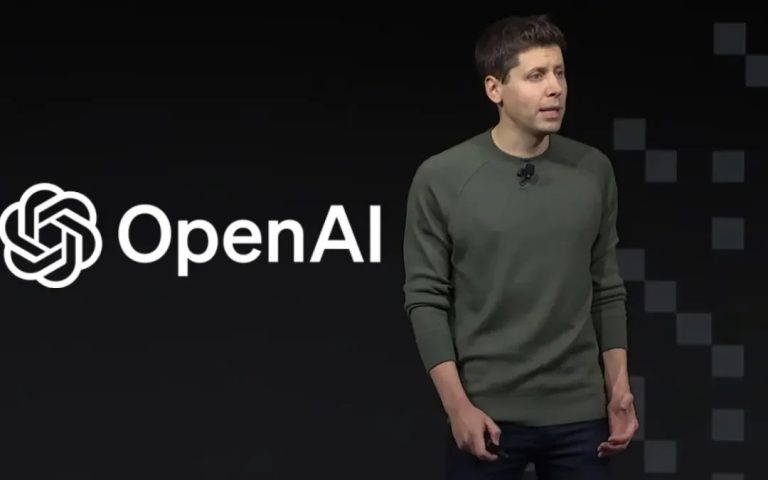
OpenAI CEO Sam Altman says the world is still far away from artificial general intelligence (AGI), despite the release of GPT-5, the company’s most advanced AI model yet.
According to Altman, while GPT-5 marks a significant leap in capability and general intelligence, it still falls short of what could be considered true AGI — a system that can match or exceed human reasoning across the board.
Altman, who has been one of the most vocal proponents of AGI development, stressed that OpenAI’s core mission to build artificial general intelligence that benefits all of humanity remains unchanged. However, he acknowledged that GPT-5, despite its power and versatility, still lacks several key features that he believes are essential to AGI.
Register for Tekedia Mini-MBA edition 20 (June 8 – Sept 5, 2026).
Register for Tekedia AI in Business Masterclass.
Join Tekedia Capital Syndicate and co-invest in great global startups.
Register for Tekedia AI Lab.
Among those missing pieces is the ability to learn continuously from its environment. “This is not a model that learns as it’s deployed,” Altman noted, calling that absence one of the major indicators that OpenAI has not yet reached AGI.
He emphasized that the system does not improve itself dynamically by drawing from real-world interactions after training — something he sees as critical to what would qualify as general intelligence.
To understand the weight of Altman’s comments, it’s worth looking at how far the company has come. The first iteration of GPT, short for generative pre-trained transformer, was released in 2018, offering modest capabilities in text generation. Then came GPT-2 and GPT-3, with exponential improvements, culminating in GPT-4, which stunned the world with its ability to write, reason, code, and hold nuanced conversations. GPT-5 builds on all of this, introducing multimodal abilities, broader context windows, and a significantly more fluid understanding of human language and intention. Yet, even with all of that, Altman says there’s something missing — or many things.

The comments come at a time when debates around AGI are becoming more intense, with some voices warning that the tech industry is rushing blindly into a future it doesn’t fully understand, while others remain skeptical that AGI is anywhere close. Altman’s assessment threads the needle between optimism and caution. He says GPT-5 is a major step forward, “a significant fraction of the way to something very AGI-like,” as he put it, but not the finish line.
He also pointed to what comes next: superintelligence. For Altman, AGI is not the ceiling — it’s a milestone. His broader vision includes the creation of tools that not only think like humans but vastly outthink them, systems that could accelerate scientific breakthroughs and reshape the future of civilization.
What’s Under the Hood of GPT-5
GPT5 is a unified system with multiple internal models — a fast responder, a deeper reasoning variant, and a high-capacity “thinking-pro” edition. A real-time router dynamically selects the best model for each query, effectively replacing the need for users to manually pick the right tool for the task. Variant tiers — regular, mini, and nano — cater to different usage needs and budget levels.

In ChatGPT, GPT-5 is accessible to all users:
- Free tier: Standard GPT-5 with usage caps and automatic fallback to GPT-5 mini when limits are hit.
- Plus users: Higher usage thresholds and selectable access to “GPT-5 thinking.”
- Pro tier ($200/month): Unlimited access, including the more powerful “GPT-5 Pro.”
Developers using OpenAI’s API can choose among models scaled for cost, from full GPT-5 to budget-friendly nano options, with input/output token pricing that varies accordingly.
What’s Improved
OpenAI claims GPT-5 delivers state-of-the-art performance across domains:
- In coding, it excels at building responsive UIs, debugging large codebases, and executing long, agentic tasks.
- In writing, it handles structural ambiguity and literary nuance with greater fidelity.
- In health, it acts more like an active thought partner, probing context, flagging concerns, and scoring well on benchmarks like HealthBench.
- It also achieves top marks in math, science, vision, and multimodal reasoning.
Industry critics believe GPT-5 represents a pivotal shift in usability — a model that now truly feels like interacting with a PhD-level expert across domains. It also sets a new standard for practical, versatile AI assistance. Yet as OpenAI emphasizes, ambition remains on superintelligence — a theoretical level of AI exceeding human capacity and transformative potential in science, innovation, and society.