

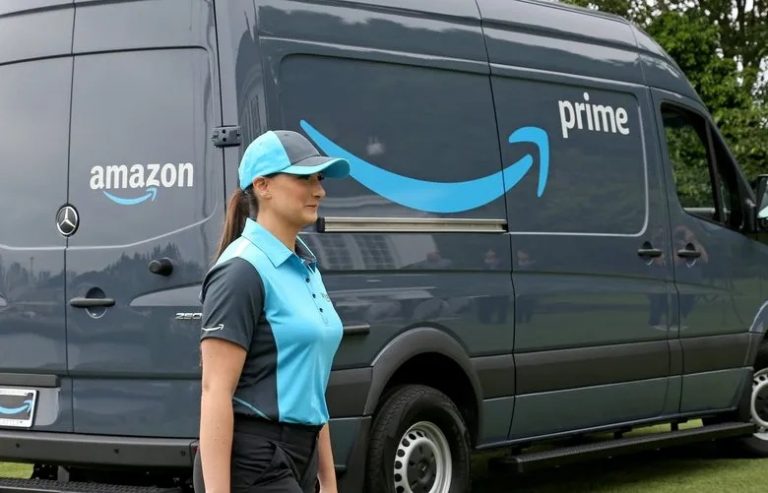
Amazon has expanded its ultrafast delivery push across the United States, introducing one-hour and three-hour delivery services in thousands of locations, marking a decisive escalation in the race to dominate convenience-driven commerce.
The company said three-hour delivery is now available in about 2,000 cities and towns, with one-hour service active in hundreds of those markets. The rollout builds on pilot programmes launched late last year and is expected to widen further in the coming months.
Behind the move is a clear strategic calculation: as e-commerce matures, speed is emerging as the primary differentiator, replacing price and selection as the key lever for growth in developed markets.
Register for Tekedia Mini-MBA edition 20 (June 8 – Sept 5, 2026).
Register for Tekedia AI in Business Masterclass.
Join Tekedia Capital Syndicate and co-invest in great global startups.
Register for Tekedia AI Lab.
Amazon’s evolution—from two-day shipping to near-instant fulfilment—signals a deeper transformation. What began as an online retail platform is increasingly being repositioned as a form of on-demand infrastructure, where logistics capacity functions like a utility. The company is effectively trying to make delivery so fast and predictable that it becomes invisible to the consumer decision-making process.
More than 90,000 products are already eligible for delivery within three hours or less, spanning groceries, household essentials, over-the-counter medicines, and discretionary items like toys and clothing. These are categories traditionally dominated by proximity-based retail, such as supermarkets and pharmacies.
By compressing delivery times, Amazon is targeting high-frequency, low-consideration purchases—the kind that historically drove foot traffic to physical stores.

The pricing model introduces a layered approach to urgency. Prime subscribers pay $9.99 for one-hour delivery and $4.99 for three-hour delivery, while non-members face nearly double those costs. This creates a two-tier system that rewards patience while testing how much consumers are willing to pay for immediacy.
The move is notable because it departs from Amazon’s long-standing strategy of bundling speed into its Prime subscription. Instead, it treats ultrafast delivery as a premium, usage-based service, potentially opening a new revenue stream. At the same time, the fees act as a demand-shaping mechanism, helping Amazon manage capacity constraints by discouraging overuse during peak periods.
The new approach underscores how Amazon’s decade-long investment in logistics has evolved. The company has restructured its fulfilment network into regional hubs supported by local delivery stations, allowing inventory to sit closer to consumers. Combined with its Flex gig workforce, this creates the density required to support sub-three-hour delivery at scale.

This level of infrastructure is believed to be difficult to replicate. While competitors can match speed in select urban areas, achieving consistent nationwide coverage requires both capital intensity and operational coordination.
Amazon’s earlier missteps—such as shutting down Prime Now in 2021 and discontinuing a fast-delivery partnership model in 2024—highlight how challenging it has been to balance speed with profitability. The current rollout suggests the company believes it has found a more sustainable operating model.
However, rivals are not standing still.
Walmart has leveraged its extensive store network to claim coverage of 95% of U.S. households within three hours, effectively turning physical stores into fulfillment nodes.
Meanwhile, platform-based players like Instacart, DoorDash, and Uber Eats have built ecosystems that aggregate inventory from multiple retailers, offering rapid delivery without owning the underlying supply chain. The competitive dynamic is increasingly defined by two models: Amazon’s vertically integrated logistics system versus asset-light, partnership-driven networks.
Each has trade-offs. Amazon controls the full stack but bears higher costs, while its rivals scale faster through partnerships but have less control over inventory and customer experience.
But ultrafast delivery introduces structural cost pressures. Delivering within one to three hours requires higher inventory duplication, tighter routing efficiency, and more labor per order. These factors can erode margins unless offset by higher-order frequency or premium pricing.
Amazon’s introduction of delivery fees suggests a recognition that speed cannot be fully subsidized indefinitely, even within the Prime ecosystem. There is also the question of demand elasticity. While consumers consistently say they want faster delivery, their willingness to pay for incremental speed gains—beyond same-day delivery—remains uneven.
The one-hour rollout is part of a wider set of experiments aimed at collapsing delivery times even further. Amazon is testing 30-minute delivery services through its “Amazon Now” initiative in select cities, while continuing to invest in drone-based delivery systems capable of completing orders in under an hour.
These efforts point toward a long-term vision of “instant commerce,” where fulfilment operates on near real-time cycles, particularly for essential goods.
Observers believe the shift to ultrafast delivery could reshape Amazon’s business model in subtle but important ways. Faster delivery tends to increase order frequency while reducing average basket size, as consumers no longer need to plan purchases in advance. That dynamic can drive higher engagement, but also increases operational complexity.
Higher frequency strengthens customer dependence and creates more opportunities for cross-selling, advertising, and subscription retention.
At its core, Amazon’s expansion is about controlling the last mile, the most complex and expensive segment of the supply chain. By pushing delivery times closer to real-time, the company is attempting to set a new industry standard—one that competitors will be forced to match, even at the cost of profitability.