

Amazon has acquired Fauna Robotics, a young developer of compact humanoid machines, in a deal that signals a widening of the company’s robotics strategy beyond warehouses and into everyday environments.
Financial terms were not disclosed, but the rationale was clear. Amazon is looking to combine its long-standing expertise in automation with emerging advances in artificial intelligence to explore how robots might operate alongside consumers, rather than behind the scenes in fulfillment centers.
“We are excited about Fauna’s vision to build capable, safe, and fun robots for everyone,” an Amazon spokesperson told CNBC in a statement. “Together with Amazon’s robotics expertise and decades of experience earning customer trust in the home through our retail and devices businesses, we’re looking forward to inventing new ways to make our customers’ lives better and easier.”
Register for Tekedia Mini-MBA edition 20 (June 8 – Sept 5, 2026).
Register for Tekedia AI in Business Masterclass.
Join Tekedia Capital Syndicate and co-invest in great global startups.
Register for Tekedia AI Lab.
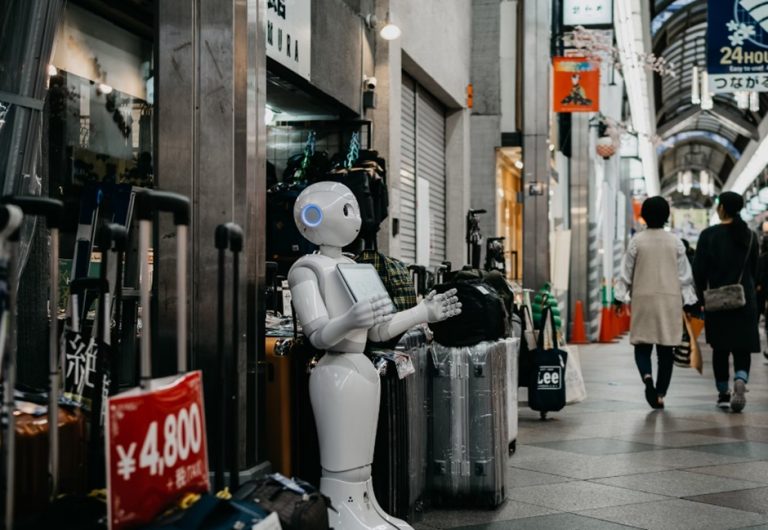
The deal adds a relatively small but technically specialized team to Amazon’s roster. Founded in 2024 by former engineers from Meta Platforms and Google, the New York-based startup has focused on building what it describes as “approachable” humanoid robots—machines designed not just for functionality, but for safe and intuitive interaction with humans.
Its flagship system, Sprout, reflects that philosophy. Standing 3.5 feet tall and weighing about 50 pounds, the robot is deliberately scaled down from industrial counterparts, with an emphasis on accessibility for developers and adaptability across use cases. Priced at around $50,000, it is positioned less as a consumer gadget and more as a platform for experimentation in areas such as service robotics, research, and human-robot interaction.
Fauna had already begun establishing footholds in those areas. The company said it had secured early customers, including Disney and Boston Dynamics, a subsidiary of Hyundai, suggesting interest from both entertainment and advanced robotics ecosystems. Those partnerships point to a market still in its formative stage, where companies are testing practical applications rather than scaling mass deployment.

About 50 Fauna employees will join Amazon, continuing operations in New York. Chief executive Rob Cochran said the deal would accelerate development, with the company operating as a distinct unit within Amazon.
“We are thrilled about what joining the Amazon team means for our future,” Cochran wrote. “Going forward, we will proudly operate as Fauna Robotics, an Amazon company.”
The acquisition fits into a broader pattern of renewed dealmaking by Amazon in robotics. The company’s automation push dates back to its 2012 purchase of Kiva Systems, which laid the foundation for its warehouse robotics division. That business has since become central to Amazon’s logistics efficiency, enabling faster fulfilment and lower operating costs.

More recently, the focus has begun to shift outward. Amazon last week confirmed the acquisition of Rivr, a company that develops robots for doorstep delivery. Together, the Rivr and Fauna deals suggest a coordinated effort to extend automation from controlled industrial settings into less predictable, human-centric environments.
That transition is widely viewed as the next major challenge in robotics. Unlike warehouse machines, which operate in structured spaces, humanoid robots must navigate dynamic surroundings, interpret human behavior, and perform a wider range of tasks. Advances in AI, particularly in perception, planning, and autonomous decision-making, are making such capabilities more feasible, but commercial viability remains uncertain.
The competition is intensifying as Tesla is also developing its Optimus humanoid robot, with chief executive Elon Musk outlining ambitions for large-scale production. A cluster of startups, including 1X, Figure AI, Apptronik, Agility Robotics, and China’s Unitree, is also racing to bring general-purpose robots to market.
What distinguishes Amazon is its integration across multiple domains—retail, logistics, and the connected home. The company has already experimented with consumer robotics through Astro, a home robot launched in 2021 that remains limited in scope and distribution. Fauna’s technology could provide a more flexible foundation, particularly if paired with Amazon’s existing ecosystem of services and devices.
The economics, however, are still evolving. High hardware costs, limited use cases, and the complexity of operating safely around humans have slowed adoption across the industry. For now, humanoid robots are largely confined to pilot programmes and specialized deployments.
Amazon’s bet appears to be that these constraints will ease as AI capabilities improve and production scales. By acquiring Fauna at an early stage, the company is positioning itself to shape that trajectory rather than react to it.
The deal underscores a broader shift in how large technology firms are approaching automation. The focus is no longer solely on efficiency gains within existing operations, but on creating entirely new categories of interaction between humans and machines.