

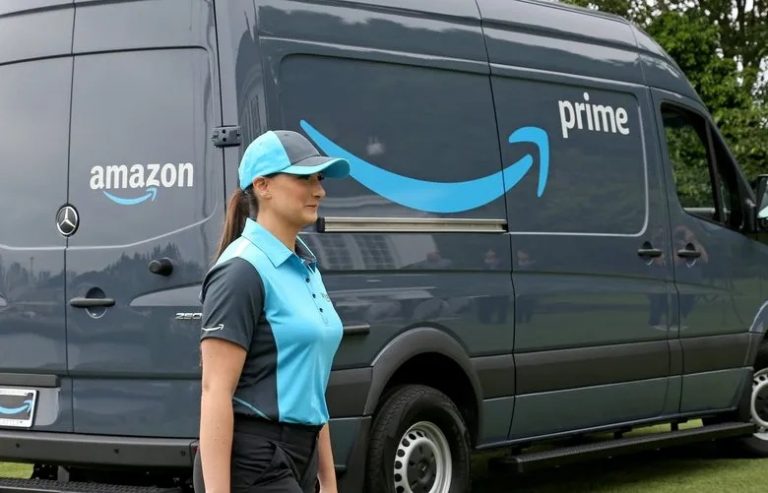
Amazon has reached a new delivery agreement with the U.S. Postal Service, a deal many believe has likely averted an immediate financial shock for an agency that had warned it could exhaust its cash reserves within months.
Under the new deal announced Monday, USPS will continue handling about 80 per cent of Amazon’s existing package volume, amounting to more than one billion parcels annually, according to people familiar with the arrangement.
That represents a 20 per cent reduction, a far less severe outcome than the two-thirds or greater cut Amazon had earlier threatened, according to Reuters’ previous reporting.
Register for Tekedia Mini-MBA edition 20 (June 8 – Sept 5, 2026).
Register for Tekedia AI in Business Masterclass.
Join Tekedia Capital Syndicate and co-invest in great global startups.
Register for Tekedia AI Lab.
The revised terms amount to a major reprieve for the postal agency. USPS had warned last month that it could run out of cash as soon as October, making the prospect of losing its largest package customer an existential threat. Amazon contributes roughly $6 billion in annual revenue to USPS, against an agency budget of about $80 billion, according to sources familiar with the business arrangement.
In a statement, Amazon said: “We’re pleased to have reached a new agreement with USPS that furthers our longstanding partnership and will let us continue supporting our customers and communities together.”
That single sentence carries significant weight because, for more than a year, markets and logistics analysts had been closely watching whether Amazon would accelerate plans to internalize most of its final-mile deliveries, particularly in light of its growing in-house logistics capabilities.

Amazon had earlier criticized USPS’s plan to auction access to its last-mile network, a dispute that escalated fears the retailer might sharply reduce its reliance on the postal system.
Instead, the new agreement suggests a more pragmatic middle ground. Amazon will continue expanding its own delivery footprint, especially in rural America, but not at a scale that would fully rival USPS’s address-by-address national reach, sources said.
This is the key strategic insight behind the deal. Despite Amazon’s rapid logistics expansion, including a previously announced more than $4 billion investment in its U.S. rural delivery network through 2026, the company still appears to recognize the economic difficulty of replicating USPS’s universal service model.

The postal service remains uniquely positioned in last-mile delivery, particularly in low-density and remote areas where private carriers face weaker margins. Postmaster General David Steiner said in December that USPS delivers about 1.7 billion packages annually for Amazon, highlighting the depth of the relationship.
Thus, the deal comes at a moment of acute financial vulnerability for USPS. The agency has reported net losses of $118 billion since 2007, largely driven by the collapse in first-class mail volumes, once its most profitable line of business. Letter volumes have now fallen to their lowest levels since the late 1960s.
To offset those losses, USPS has moved toward price increases. Last month, it sought approval for a temporary 8 per cent increase in priority mail and package delivery rates, effective April 26, citing rising transportation and fuel costs. Steiner also said in March that raising the price of a first-class stamp to 95 cents from 78 cents would help narrow losses.
The Amazon agreement, therefore, does more than preserve parcel volumes. It stabilizes one of the few major revenue streams that can support the postal service’s restructuring efforts.
There is also a broader competitive dimension. UPS has already been reducing its exposure to Amazon volumes, while FedEx has maintained a more selective relationship. Against that backdrop, USPS’s continued role reinforces its importance in the U.S. logistics ecosystem, especially for e-commerce fulfillment beyond major urban corridors.
Industry sentiment also suggests skepticism that Amazon could ever fully replace the postal service in rural America. Discussions among postal workers and logistics observers point repeatedly to the economics of servicing distant addresses, where USPS retains a structural advantage.
The deeper story here is mutual dependence. USPS remains the most cost-effective way to reach every address in the country, and Amazon remains the anchor customer that helps keep its parcel business viable.
This deal does not eliminate the agency’s long-term financial crisis, nor does it halt Amazon’s delivery ambitions. But it prevents an immediate rupture that could have accelerated the postal service’s cash crunch and destabilized rural delivery nationwide.
In that sense, the agreement is less a routine contract renewal than a temporary truce between two institutions that, despite periodic tensions, still need each other.