

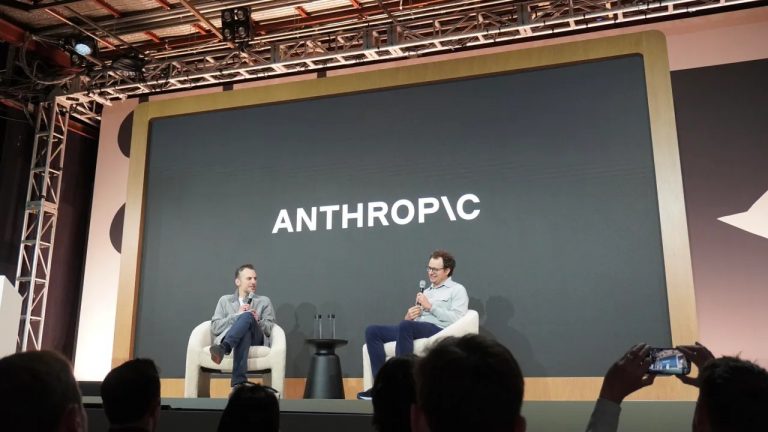
California’s push to regulate frontier artificial intelligence gained momentum Monday after Anthropic publicly endorsed SB 53, a bill authored by state senator Scott Wiener that would impose transparency and safety requirements on the largest AI model developers.
The endorsement, a rare win for Wiener, comes as some of the tech industry’s most powerful lobbying groups — including the Consumer Technology Association (CTA) and Chamber for Progress — intensify efforts to sink the bill.
“While we believe that frontier AI safety is best addressed at the federal level instead of a patchwork of state regulations, powerful AI advancements won’t wait for consensus in Washington,” Anthropic said in a blog post. “The question isn’t whether we need AI governance — it’s whether we’ll develop it thoughtfully today or reactively tomorrow. SB 53 offers a solid path toward the former.”
Register for Tekedia Mini-MBA edition 20 (June 8 – Sept 5, 2026).
Register for Tekedia AI in Business Masterclass.
Join Tekedia Capital Syndicate and co-invest in great global startups.
Register for Tekedia AI Lab.
If passed, SB 53 would require companies like OpenAI, Anthropic, Google, and xAI to adopt formal safety frameworks and publish safety and security reports before releasing powerful AI systems. The legislation also introduces whistleblower protections for employees raising alarms over unsafe deployments.
A Bill Focused on Extreme Risks
Unlike bills targeting everyday AI harms such as deepfakes or algorithmic bias, SB 53 is narrowly designed to address what it calls “catastrophic risks.” That includes preventing AI models from being misused to design biological weapons or orchestrate sophisticated cyberattacks — scenarios defined as ones that could cause at least 50 deaths or more than $1 billion in damages.
California’s Senate has already approved an earlier version of SB 53, but the bill must clear a final vote before reaching Governor Gavin Newsom’s desk. Newsom has so far remained silent on SB 53, though he vetoed Wiener’s earlier AI bill, SB 1047, last year.

Pushback from Silicon Valley and Washington
The road to this moment has been marked by fierce resistance from both industry and government. Venture capital giants such as Andreessen Horowitz and Y Combinator spearheaded opposition to SB 1047, arguing that sweeping state-level AI rules would cripple innovation.
The Trump administration had also moved to block state-level AI regulations, insisting they undermine America’s race against China in developing advanced AI. Several Republican lawmakers have echoed that position, pushing legislation in Congress that would explicitly preempt states from passing their own AI rules — a move aimed at preventing what they call a “patchwork of conflicting regulations.” SB 53, therefore, is not only a challenge to Silicon Valley lobbying power but also a direct defiance of Republican-led efforts in Washington to keep AI governance centralized at the federal level.
Anthropic’s co-founder, Jack Clark, has pushed back on the idea of waiting for Washington to act, writing on X that the industry is on track to release increasingly powerful systems and needs clear governance now.

“We have long said we would prefer a federal standard,” Clark wrote. “But in the absence of that this creates a solid blueprint for AI governance that cannot be ignored.”
That view contrasts with OpenAI’s position. In August, its chief global affairs officer, Chris Lehane, wrote to Governor Newsom, urging him not to pass AI regulation that could push startups out of California — without naming SB 53 directly. The letter drew public criticism from OpenAI’s former head of policy research, Miles Brundage, who called Lehane’s note “filled with misleading garbage about SB 53 and AI policy generally.”
SB 53 applies only to the very largest players, specifically targeting AI companies generating more than $500 million in annual revenue.
Building on Illinois’ Example
California is not the first state to test the waters of AI regulation. Earlier this year, Illinois advanced its own AI legislation, building on its long-standing biometric privacy law, the Biometric Information Privacy Act (BIPA), which has become one of the country’s most consequential tech laws. That statute has already forced companies like Facebook to pay hundreds of millions in settlements over the misuse of facial recognition technology. Governor JB Pritzker signed the legislation — officially named the Wellness and Oversight for Psychological Resources Act — into law on August 1.
California’s SB 53, while focused on catastrophic AI risks rather than biometric data, follows Illinois’ example by showing that states are willing to act even when Washington stalls.
Policy experts suggest that SB 53 may fare better than SB 1047 precisely because it is narrower in scope. Dean Ball, a senior fellow at the Foundation for American Innovation and former White House AI policy adviser, wrote in August that SB 53 shows “respect for technical reality” and “a measure of legislative restraint,” making it more likely to become law.
Part of that restraint comes from amendments made earlier this month. Lawmakers dropped provisions requiring AI developers to undergo third-party audits, after tech firms argued such measures would be too burdensome.
Most leading AI companies already issue voluntary safety reports — including OpenAI, Google DeepMind, and Anthropic itself — but compliance depends on internal priorities and resources. SB 53 would convert those voluntary commitments into enforceable obligations, with penalties for failure to comply.
Senator Wiener has emphasized that the bill was shaped by an expert panel convened by Governor Newsom, co-chaired by Stanford researcher and World Labs co-founder Fei-Fei Li.