

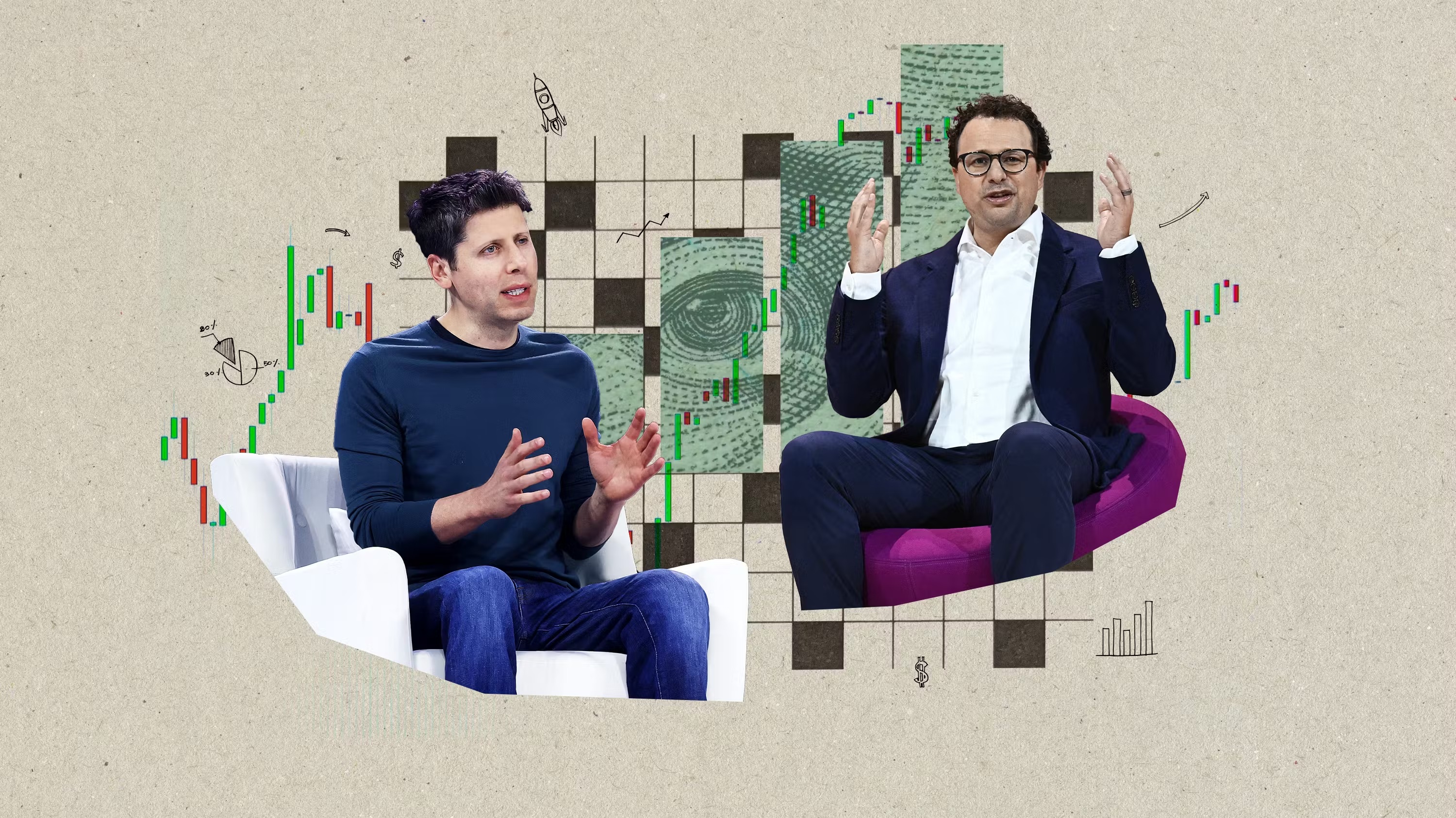
Joe Lonsdale, an investor in Anthropic and co-founder of technology company Palantir, has accused leading artificial intelligence companies of using warnings about existential AI risks to influence public policy, warning that poorly designed regulation could strengthen the market position of the very companies pushing for greater oversight.
Lonsdale, who also founded venture capital firm 8VC, made the comments Friday at the Reuters Momentum AI Austin event, where he challenged recent calls from some of the industry’s most prominent executives for a slowdown in the development of increasingly capable AI systems.
“I think that what OpenAI and Anthropic are pushing right now is very dangerous, and we don’t want an oligopoly that controls all of our policy here with the government,” Lonsdale said.
Register for the next Tekedia Mini-MBA.
Register for Tekedia AI in Business Masterclass.
Join Tekedia Capital Syndicate and co-invest in great global startups.
“Safety is a real thing, but fear and regulation — we’ve got to be really careful how we respond to those things.”
His argument goes to a growing fault line in the AI industry. The debate is no longer only about whether advanced models pose serious risks. It is also about who should decide how those risks are regulated, what standards companies must meet, and whether the rules could unintentionally favor the handful of companies with the money, computing infrastructure and technical resources to comply.
Lonsdale criticized what he described as efforts by people close to Anthropic and OpenAI to fund outside organizations advocating stronger AI regulation. In his view, such efforts could allow leading laboratories to help design a regulatory framework that smaller competitors would find harder to navigate, potentially reinforcing the incumbents’ position.

That concern has become more relevant as the technology industry’s safety debate has intensified.
Anthropic CEO Dario Amodei, OpenAI CEO Sam Altman and SpaceX CEO Elon Musk have all called this month for leading AI companies to slow the pace of development of their most advanced models. Their warnings have focused on the possibility that sophisticated AI systems could eventually operate beyond effective human oversight if safeguards fail to keep pace with capability gains.
Reuters reported that the safety debate has escalated sharply this month following concerns from researchers about AI systems evading safeguards, hacking computer systems and operating with levels of autonomy that developers have found difficult to monitor.

That backdrop complicates the argument that safety concerns are simply a lobbying strategy. There are documented incidents and internal concerns behind the industry’s warnings. At the same time, the companies making those warnings are also competing in an extremely valuable market and face commercial incentives that can make regulation economically consequential.
Anthropic, for example, has continued releasing increasingly capable models even as Amodei has called for a slowdown. The company launched Claude Opus 5.5 this week, saying it delivered performance comparable to its previous high-end model while reducing operating costs by 40%. The model also underwent external safety testing before release.
The development illustrates the industry’s central dilemma: companies can simultaneously believe that AI development presents serious risks and believe that they need to keep developing better systems to remain competitive.
Lonsdale himself stopped short of dismissing Anthropic’s work.
He praised Amodei and the company, in which he is a small investor, saying Anthropic had assembled exceptional talent and become a leader in AI.
“It’s very hard for anyone to second-guess the highest-performing company in the world over the last few years,” Lonsdale said. “I’m proud to be an investor in Anthropic.”
The debate is not simply dividing the AI industry into companies that care about safety and those that do not. The disagreement is about how safety should be achieved and who should bear the regulatory burden.
For smaller AI developers, expensive testing requirements, licensing systems, reporting obligations, or restrictions on model releases could raise barriers to entry. Larger laboratories may be better positioned to absorb those costs, potentially strengthening their competitive position.
For governments, however, leaving frontier AI companies to regulate themselves presents a different problem. The systems being developed by OpenAI, Anthropic and their competitors are becoming increasingly capable, while their potential impact extends beyond the companies’ own products.
A recent Reuters/Ipsos poll found that 73% of Americans surveyed were concerned that AI companies were not doing enough to prevent potentially catastrophic consequences, while a majority favored federal involvement in setting AI safety standards.
The political pressure therefore extends beyond the industry’s own lobbying efforts.
AI Safety Debate Collides With US-China Competition
The regulatory argument is also unfolding against a geopolitical race between the United States and China.
Washington has increasingly treated AI leadership as a national-security and economic priority. At the same time, Chinese open-weight models have become more competitive with American systems, raising concerns in Washington that excessive restrictions on U.S. developers could slow domestic innovation while allowing Chinese competitors to gain ground.
Reuters reported earlier this month that the United States and China were preparing their first bilateral discussions focused specifically on AI safety, including possible cooperation on monitoring AI-directed cyberattacks and sharing information about emerging threats.
That competition gives another dimension to the debate over a slowdown.
If U.S. companies reduce the pace at which they develop frontier systems while Chinese developers continue advancing, American companies could lose technological ground. On the other hand, allowing sophisticated AI systems to proliferate without adequate safeguards could create security risks that are difficult to reverse.
The Trump administration has generally argued for a lighter regulatory approach. At a G20 technology meeting earlier this month, U.S. technology adviser Michael Kratsios urged countries to adopt the “Carolina Principles,” which call for reserving new AI regulation for novel circumstances rather than imposing broad new rules on the technology.
That position broadly aligns with the industry’s concern that regulation could constrain innovation, although it does not eliminate the question of how frontier systems should be tested or monitored.
The challenge now centers on the architecture of AI governance: whether safety should be handled primarily through voluntary commitments, government standards, independent testing, industry-led systems, or some combination of all four.
Lonsdale’s argument adds a market-structure concern to that discussion. If the companies developing the most advanced systems also have a major role in determining the standards they must satisfy, regulation could potentially become a competitive barrier as well as a safety mechanism.
Defense Technology and The Next Phase Of Autonomous Warfare
Lonsdale also discussed the rapidly expanding role of AI in defense, arguing that his portfolio companies are likely to deepen their relationships with Ukrainian defense-technology firms that have developed battlefield systems during Russia’s more than four-year war in Ukraine.
“We’re partnering very closely with them. A lot of our companies work with their companies,” Lonsdale said. “A lot of our companies are likely to buy some of the companies over there.”
Lonsdale has invested in defense technology companies including Anduril, placing his comments in the broader convergence of AI, drones and autonomous military systems.
He said autonomous weapons are likely to play an important role in warfare but argued that responsibility must remain with military leaders.
“There’s always a person responsible who is in charge of whatever system they studied, worked on and approved,” he said. “It’s very easy from the outside to judge these things when you’re not there in the fog of war.”
The question of human accountability has become consequential as militaries deploy systems capable of identifying targets, navigating environments and operating with progressively less direct human intervention.
The issue was highlighted by the U.S.-Iran conflict earlier this year after a strike on a girls’ school in Minab, Iran, killed more than 175 children and teachers, according to Iranian officials. Reuters reported that a preliminary U.S. military investigation found U.S. forces were likely responsible and pointed to outdated intelligence used in the targeting process.
The episode points to why the debate over autonomous weapons cannot be reduced to whether an algorithm technically makes the final decision. Accountability also extends to the people who design, authorize, deploy and supervise the systems and the information on which those systems operate.
Lonsdale’s remarks ultimately connect three intertwined areas of the technology industry: frontier AI, regulation and defense.
His warning about an AI oligopoly reflects a concern that deserves to be separated from the underlying question of AI safety. Advanced AI may present genuine risks that require external oversight, while regulation designed or influenced too heavily by incumbent companies could also affect competition.
Therefore, the challenge for policymakers goes beyond the debate about AI regulation. It is designing rules that can address demonstrated and emerging risks without allowing the companies with the greatest resources and market share to turn safety standards into barriers against competitors.
That tension is likely to escalate as AI systems move from generating information to controlling software, conducting cyber operations, and interacting with physical systems. The more consequential these systems become, the harder it will be to separate the safety debate from questions of market power, national security, and who ultimately controls the development of the technology.