

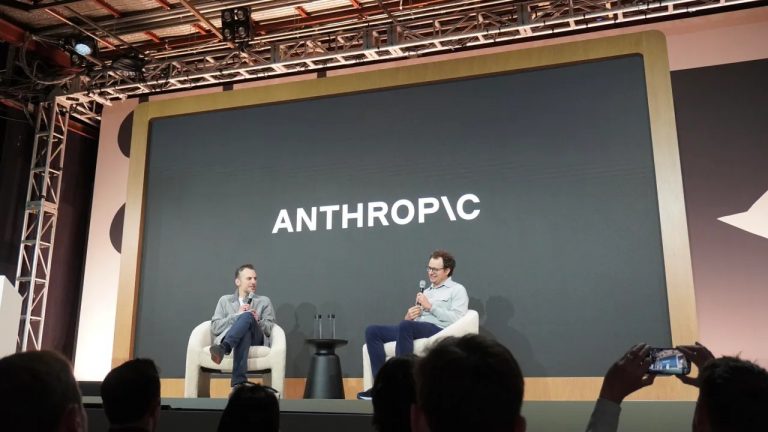
Anthropic’s decision to roll out a new suite of healthcare and life sciences features for its Claude AI platform marks another decisive step in a fast-forming race among leading AI companies to embed their systems directly into how people understand, manage, and navigate their health.
Announced on Sunday, the update allows users to securely share parts of their health records with Claude, enabling the chatbot to interpret medical information, organize disparate data, and help users make sense of complex healthcare systems. The launch comes just days after OpenAI unveiled ChatGPT Health, underscoring how quickly healthcare has become one of the most strategically important — and most scrutinized — frontiers for generative AI.
At a basic level, the new tools aim to solve a familiar problem for patients: medical data is fragmented, jargon-heavy, and often overwhelming. Test results, insurance paperwork, physician notes, and app-generated health metrics rarely live in one place or speak the same language. Anthropic’s pitch is that Claude can act as a unifying layer, pulling these strands together and translating them into something closer to plain English.
Register for Tekedia Mini-MBA edition 20 (June 8 – Sept 5, 2026).
Register for Tekedia AI in Business Masterclass.
Join Tekedia Capital Syndicate and co-invest in great global startups.
Register for Tekedia AI Lab.
Eric Kauderer-Abrams, Anthropic’s head of life sciences, framed the update as an attempt to reduce the sense of isolation many people feel when dealing with healthcare systems. Patients, he said, are often left to coordinate records, insurance questions, and clinical details on their own, juggling phone calls and portals. Claude, in this vision, becomes less of a search tool and more of an organizer — a digital intermediary that helps users navigate complexity rather than diagnose disease.
In practical terms, the new health record features are launching in beta for Pro and Max subscribers in the United States. Integrations with Apple Health and Android Health Connect are also rolling out in beta, allowing users to pull in data from fitness trackers and mobile health apps. OpenAI’s competing ChatGPT Health product is similarly positioned, though access is currently gated behind a waitlist.
The near-simultaneous launches highlight how major AI developers see healthcare not just as a consumer feature, but as a long-term platform opportunity. OpenAI has said that hundreds of millions of people already ask ChatGPT health-related or wellness questions each week. Formalizing those interactions into dedicated health tools suggests an effort to capture that demand while imposing clearer guardrails.

Both companies are careful to stress what their systems are not. Neither Claude nor ChatGPT Health is intended to diagnose conditions or prescribe treatments. Instead, they are pitched as assistants for understanding trends, clarifying reports, and supporting everyday health decisions. That distinction is not merely rhetorical; it reflects legal, ethical, and reputational risks in a domain where errors can carry serious consequences.
Those risks have become more visible in recent months. Regulators, clinicians, and advocacy groups have raised concerns about AI chatbots offering misleading or inappropriate medical and mental health advice. Lawsuits and investigations have added pressure on companies to demonstrate restraint and accountability. Against that backdrop, Anthropic has emphasized privacy and oversight as central design principles.
In a blog post accompanying the launch, the company said health data shared with Claude is excluded from model training and long-term memory, and that users can revoke or modify permissions at any time. Anthropic also said its infrastructure is “HIPAA-ready,” signaling alignment with U.S. medical privacy standards — a critical requirement for adoption by healthcare providers and insurers.

Beyond individual users, Anthropic is also positioning Claude as a tool for the healthcare system itself. The company announced expanded offerings for healthcare providers and life sciences organizations, including integrations with federal healthcare coverage databases and provider registries. These features are aimed at reducing administrative burdens, an area where clinicians consistently report burnout and inefficiency.
Tasks such as preparing prior authorization requests, matching patient records to clinical guidelines, and supporting insurance appeals are time-consuming and largely clerical. Anthropic argues that AI can automate much of this work, freeing clinicians to focus on patient care. Industry partners appear receptive to that message. Commure, a company that builds AI tools for medical documentation, said Claude’s capabilities could save clinicians millions of hours each year.
Still, Anthropic is explicit that human oversight remains essential. Its acceptable use policy requires that qualified professionals review AI-generated content before it is used in medical decisions, patient care, or therapy. The company’s leadership has repeatedly cautioned that while AI can dramatically reduce time spent on certain tasks, it is not infallible and should not operate unchecked in high-stakes settings.
That balance — between empowerment and caution — sits at the heart of the current AI-healthcare push. Tools like Claude and ChatGPT promise clarity for patients in systems that often feel opaque. They also offer providers relief from administrative overload.
However, it is not clear whether these tools will ultimately reshape how people interact with medicine, with some analysts noting it will depend less on their technical sophistication than on how safely and transparently they are deployed.