

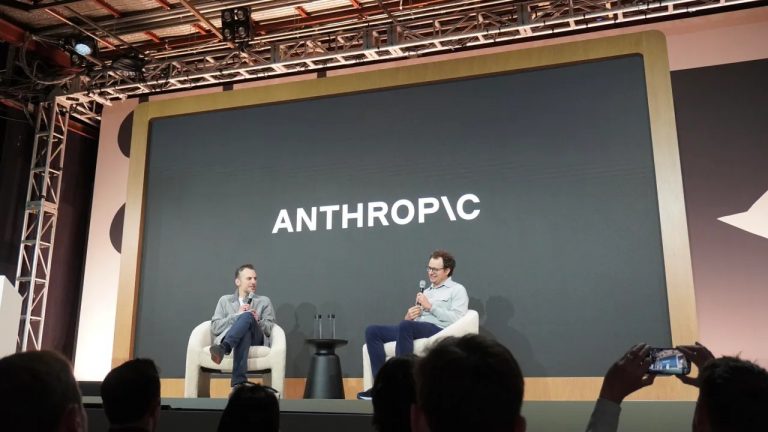
Anthropic has rejected the US government’s specifically the Pentagon’s demand for unfettered access to its Claude AI model. Anthropic CEO Dario Amodei publicly stated in a company blog post that the company “cannot in good conscience accede” to the Pentagon’s request.
This came after the Department of Defense (DoD), under Defense Secretary Pete Hegseth, issued an ultimatum giving Anthropic until 5:01 p.m. ET on Friday, February 27, 2026, to agree to remove certain safeguards and allow “all lawful uses” of Claude without restrictions.
The company has maintained red lines prohibiting Claude’s use for: Mass domestic surveillance of American citizens. Fully autonomous weapons; systems that can select and engage targets without human oversight.
Amodei emphasized that frontier AI systems are “simply not reliable enough” for such high-stakes applications and that these uses could undermine democratic values. Anthropic argued that recent contract language from the Pentagon offered little meaningful protection against these scenarios and could be overridden.
Register for Tekedia Mini-MBA edition 20 (June 8 – Sept 5, 2026).
Register for Tekedia AI in Business Masterclass.
Join Tekedia Capital Syndicate and co-invest in great global startups.
Register for Tekedia AI Lab.
The DoD sought unrestricted access as part of a $200 million contract signed in 2025, under which Claude was the first frontier AI model deployed on classified US government networks for tasks like intelligence analysis and operational planning. The Pentagon rejected explicit carve-outs for Anthropic’s concerns, insisting on “all lawful purposes.”
Threats included: Canceling the contract.
Designating Anthropic a “supply chain risk”; a label typically reserved for foreign adversaries like Huawei, potentially barring US companies from partnering with Anthropic if they work with the military. Invoking the Defense Production Act to compel compliance.
Critics noted the threats were contradictory—one labels Anthropic a risk, while the other treats Claude as essential to national security.
Anthropic has been proactive in supporting US national security; deploying models to classified networks and national labs while restricting sales to entities linked to the Chinese Communist Party.

Other AI providers like Google, OpenAI, and xAI reportedly have similar DoD contracts with fewer restrictions. Replacing Anthropic’s tools on classified systems could take the Pentagon months, per sources. This standoff highlights tensions between AI companies’ ethical safeguards and government and military demands for unrestricted access to powerful models.
Anthropic appears to be standing firm, potentially risking significant penalties but prioritizing its principles on AI safety. Anthropic’s “red lines” refer to the strict, non-negotiable restrictions the company places on how its AI model, Claude, can be used—particularly in high-stakes or sensitive applications like those involving the U.S. military or government.
These red lines stem from Anthropic’s core commitment to responsible AI development, as outlined in its Acceptable Use Policy (embedded in contracts), its Constitutional AI framework for Claude, and public statements by CEO Dario Amodei.
They represent explicit prohibitions designed to prevent misuse that could cause catastrophic harm, undermine democratic values, or violate ethical principles. In the context of the ongoing 2026 dispute with the Pentagon, Anthropic has consistently highlighted two bright red lines that it will not cross.

No use for mass domestic surveillance of American citizens. This prohibits Claude from being deployed in systems that conduct large-scale monitoring or surveillance of U.S. persons (citizens or residents on American soil). Anthropic views this as a threat to privacy, civil liberties, and democratic norms.
The restriction is specifically focused on domestic (U.S.-based) mass surveillance; it does not categorically ban foreign surveillance or other national security intelligence activities. The company has sought explicit contractual assurances that Claude won’t enable such uses, arguing that frontier AI models are not reliable enough for these applications without risking abuse.
No use in fully autonomous weapons or lethal autonomous weapon systems without meaningful human oversight. This bans deployment of Claude in weapons systems that can autonomously select, target, and engage without human intervention or “in the loop” decision-making.
Examples include AI-driven drones, missiles, or other systems making final lethal decisions independently. Anthropic emphasizes that current AI is “simply not reliable enough” for life-or-death choices at this level of autonomy, and such uses could lead to unintended escalation, errors, or ethical violations.
The company has indicated some flexibility for defensive scenarios, but draws a hard line against fully autonomous offensive or lethal applications. These red lines are contractual guardrails in Anthropic’s agreements including its $200 million DoD contract from 2025, part of its Acceptable Use Policy.
They align with Anthropic’s broader AI safety philosophy: prioritizing long-term risk mitigation, constitutional principles, and avoiding contributions to existential or catastrophic risks. Amodei stated that Anthropic “cannot in good conscience accede” to demands for unrestricted “all lawful uses,” as recent Pentagon contract language offered insufficient protections against these scenarios and could be overridden.
The Pentagon has pushed for removal of these restrictions to enable “all lawful purposes,” rejecting explicit carve-outs. This has led to threats of contract cancellation, “supply chain risk” designation, or invoking the Defense Production Act.
Notably, other AI companies; OpenAI via Sam Altman’s statements have expressed alignment with similar red lines on mass surveillance and autonomous lethal weapons, potentially complicating the DoD’s alternatives. These positions reflect Anthropic’s founding ethos as a safety-focused AI lab, even as it engages with national security partners.
The company supports many military uses—like intelligence analysis or operational planning—but insists on these boundaries to avoid enabling dystopian or uncontrollable outcomes. Anthropic remains firm on these red lines despite mounting pressure.
Trump Responds
Trump instructed all U.S. federal agencies to stop using Anthropic’s Claude AI immediately, following the company’s refusal to ease safeguards against fully autonomous weapons and mass surveillance. He allowed a six-month phase-out for the Department of War and dependent agencies, while warning of severe consequences if Anthropic resists. The dispute arose when Defense Secretary Pete Hegseth demanded full access by Friday’s deadline; Anthropic CEO Dario Amodei rejected it, offering R&D collaboration instead. Supporters hailed it as protecting national security, while critics like Sam Altman and Sen. Mark Kelly warned it weakens U.S. AI edge against rivals like China.