

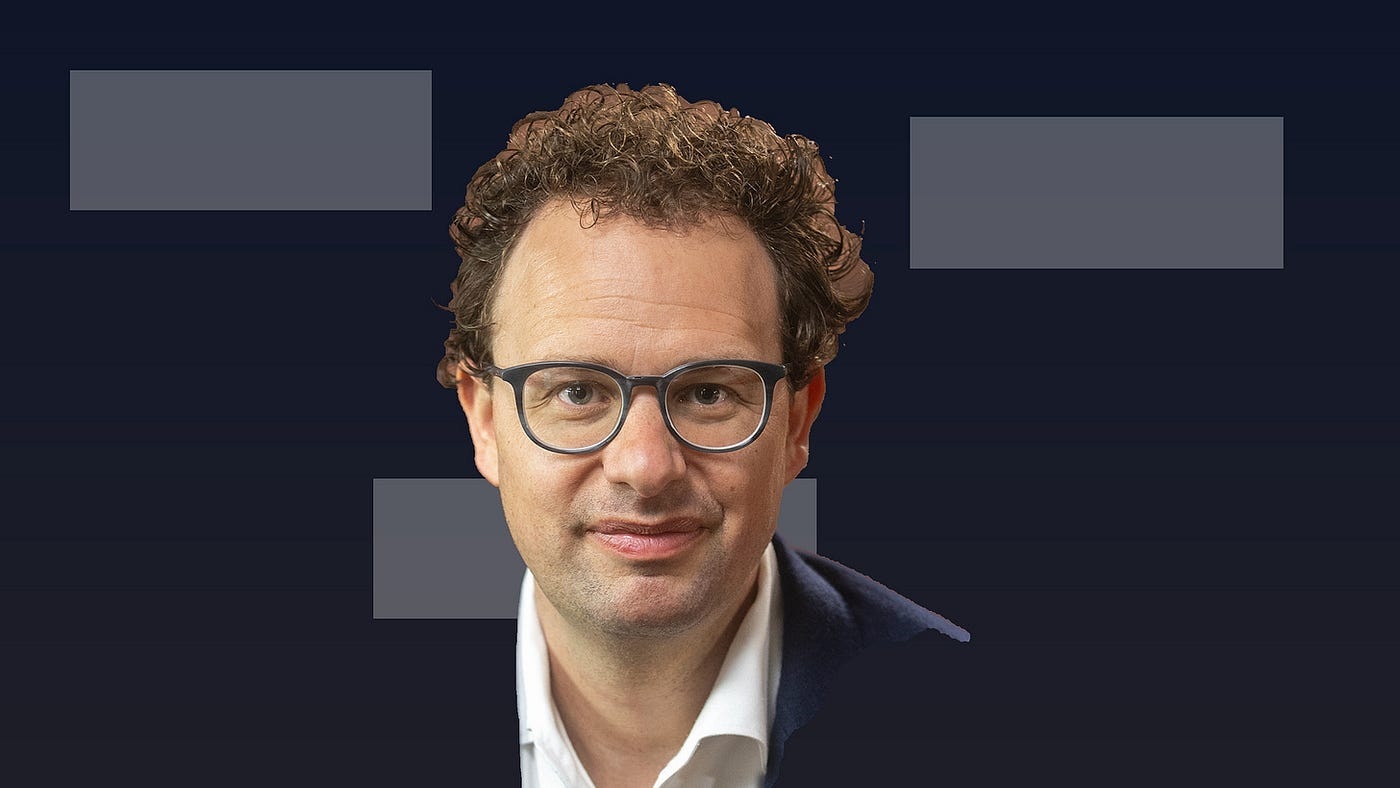
Anthropic’s rapid rise in the artificial intelligence industry may owe as much to CEO Dario Amodei’s ability to attract top researchers as it does to the company’s technology, according to one of its earliest investors.
Matt Murphy, a partner at Menlo Ventures, said Amodei has a particular appeal among AI researchers because of his technical intelligence, curiosity, and mission-driven approach to building advanced AI systems.
Speaking at Tech Insider: Growth Mode in San Francisco on Wednesday, Murphy said Amodei’s leadership style has helped Anthropic recruit researchers who might otherwise have been drawn to rival AI companies, including OpenAI.
Register for the next Tekedia Mini-MBA.
Register for Tekedia AI in Business Masterclass.
Join Tekedia Capital Syndicate and co-invest in great global startups.
Amodei does not necessarily project the same high-energy, sales-oriented persona associated with OpenAI CEO Sam Altman, Murphy said. But that difference may actually work in Anthropic’s favour when dealing with the researchers who form the core of the AI industry’s talent pool.
“He’s like them, and he’s one of the best,” Murphy told Business Insider’s Ben Bergman.
Murphy said Anthropic’s ability to outperform its competitors has been closely tied to Amodei’s “commitment to culture” and his ability to persuade leading researchers to join the company.

Amodei co-founded Anthropic after leaving OpenAI in 2020, following concerns over the direction of AI safety. His departure helped set the foundation for a company that has made AI safety and the development of more controllable AI systems central to its identity.
That background has given Amodei credibility with a segment of the research community that places considerable importance on the long-term consequences of increasingly capable AI systems.
Murphy suggested that this credibility is not simply a matter of corporate messaging. He described Amodei as someone who can establish a personal connection with researchers because he shares many of their characteristics.

“There’s just a charm about him, maybe like a boyish charm, especially back then. He’s just a very curious person, incredibly smart,” Murphy said.
The investor recalled an example of Amodei’s informal approach to leadership during an investor call involving Anthropic cofounder Tom Brown. Amodei unexpectedly joined the Zoom meeting, Murphy said, immediately changing the atmosphere of the call.
“Then all of a sudden, Dario pops in. It was just like, ‘Oh’ and the energy went way up,” Murphy said.
For a company operating in a sector where access to specialized researchers can be as important as access to capital and computing infrastructure, that kind of personal appeal can have significant value.
The AI industry has developed an unusually concentrated competition for researchers capable of advancing frontier models. Companies are spending billions of dollars on computing infrastructure and model development, but those investments still depend heavily on people capable of turning hardware and data into better systems.
Anthropic’s ability to recruit and retain those researchers therefore represents a potentially important competitive advantage.
Investor Confidence Survives Valuation and AI Risks
Murphy’s confidence in Anthropic is notable because the company now operates at a dramatically different scale from when Menlo Ventures first invested.
Menlo Ventures made its initial investment in Anthropic in 2023, when the startup was valued at $4.1 billion, and has participated in every subsequent funding round. Anthropic has since become the largest AI startup by valuation and could potentially pursue a public listing at a valuation of as much as $2 trillion, according to the report.
That escalation created a very different investment proposition from the one Menlo initially backed. A $4.1 billion valuation allows considerable room for growth before expectations become difficult to meet. A valuation approaching $2 trillion requires investors to believe that Anthropic can become one of the dominant technology companies of its generation and generate enormous amounts of revenue and cash flow over time.
Murphy nevertheless remains bullish.
“If I could buy more, I would,” he said of Anthropic’s stock.
His optimism comes even as Anthropic faces several challenges that could complicate its path to such a valuation.
The company continues to operate amid substantial financial losses, while competition is intensifying from both established technology companies and rapidly developing Chinese AI models. Open-source models also pose a particular threat because they can reduce the cost of deploying capable AI systems and potentially weaken the pricing power of companies selling access to proprietary models.
AI safety presents another challenge. Anthropic has built much of its identity around responsible development and safety research, but increasingly capable AI systems also create difficult questions about how much development can be pursued while maintaining adequate safeguards.
Those issues could pose increasing challenges as the company grows. A mission built around AI safety can help attract researchers and differentiate Anthropic from competitors, but it can also create tensions when commercial pressure demands faster product development and wider deployment.
The company’s valuation adds another layer of pressure. As investors assign ambitious expectations to Anthropic, it will need to demonstrate that its research leadership can translate into sustainable commercial growth.
Murphy’s argument is that Amodei and the culture he has built give Anthropic an advantage in that competition.
The significance of that advantage goes beyond Amodei’s personality. Anthropic is competing in a market where the scarcity of elite AI talent can determine how quickly a company can improve its models, develop products, and respond to technological breakthroughs by rivals.
A charismatic CEO can attract attention, but a technically credible CEO who speaks the language of researchers may have a different and potentially more durable appeal to the people building the technology. That may help explain why Anthropic has been able to continue attracting capital and talent despite its high valuation and the risks surrounding the AI industry.
For Menlo Ventures, the bet that began at a $4.1 billion valuation has already produced a dramatic increase in the company’s implied value. Yet Murphy’s comments suggest the investor believes Anthropic’s most important asset may not be its valuation, funding, or even individual AI models.
It may be the culture that Amodei has created around them, and the ability to convince some of the industry’s most sought-after researchers that Anthropic is where they want to build the next generation of AI.