

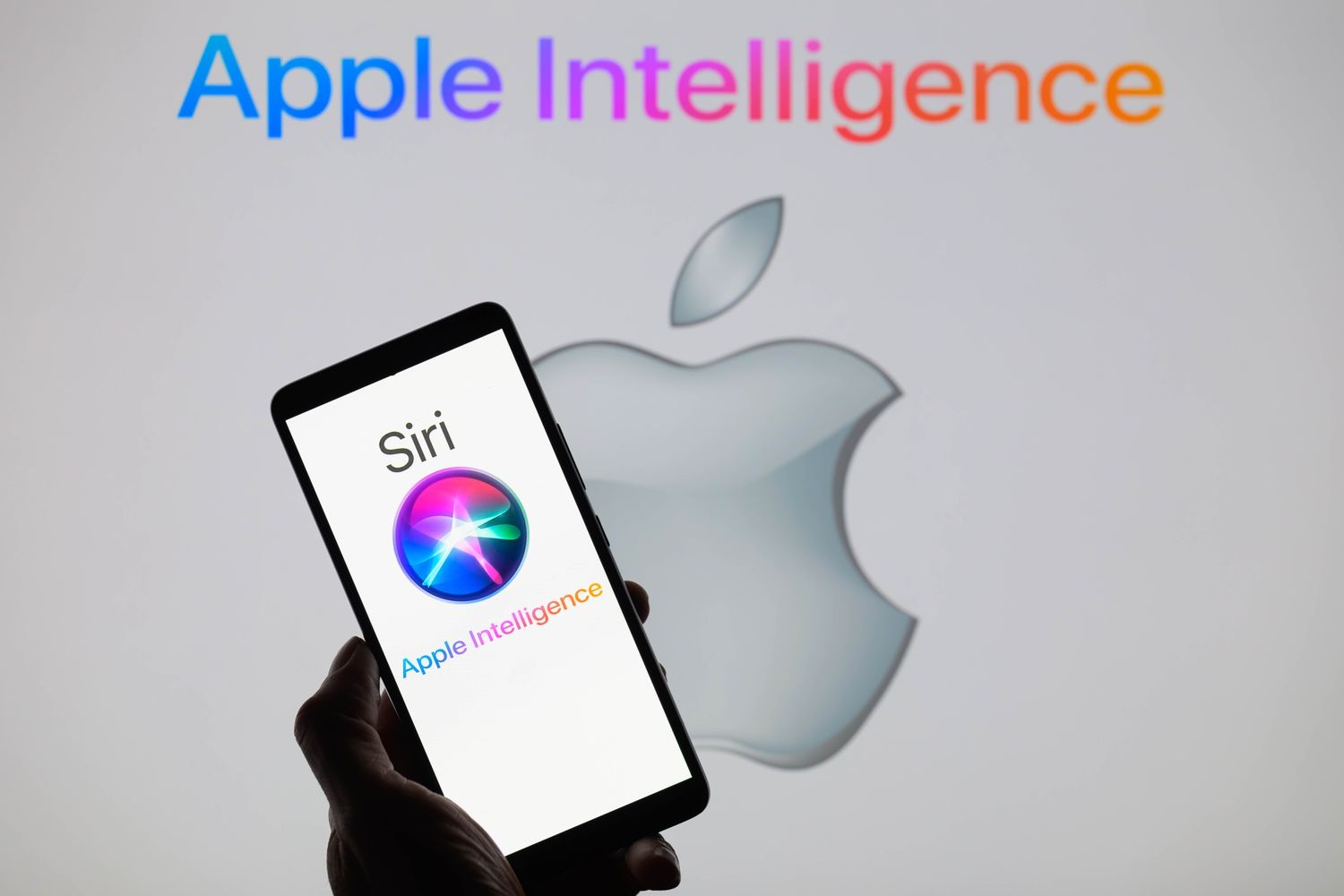
Apple is preparing its most far-reaching redesign of Siri since the voice assistant debuted more than a decade ago, signaling a strategic shift as the company races to catch up with rivals that have moved faster and louder in generative artificial intelligence.
According to Bloomberg News, Apple plans to revamp Siri later this year by turning it into the company’s first true AI chatbot. The new system, internally code-named Campos, will be embedded deeply across iPhone, iPad, and Mac operating systems, effectively replacing the current Siri interface. People familiar with the matter said the redesigned assistant will support both voice and text-based interactions and serve as a central feature of Apple’s next major software releases.
The move reflects growing urgency inside Apple following the muted reception of its “Apple Intelligence” rollout in 2024. While the company framed that launch around privacy, on-device processing, and selective AI features, it struggled to generate the momentum enjoyed by competitors such as OpenAI, Google, and Microsoft, whose chatbots quickly became everyday tools for consumers and businesses.
Register for Tekedia Mini-MBA edition 20 (June 8 – Sept 5, 2026).
Register for Tekedia AI in Business Masterclass.
Join Tekedia Capital Syndicate and co-invest in great global startups.
Register for Tekedia AI Lab.
Campos is designed to address that gap. Rather than responding to short commands or queries, the new Siri is expected to handle more conversational exchanges, reason across tasks, and operate more seamlessly across apps and system functions. Bloomberg described it as a shift from an assistant that reacts to instructions to one that can act as a continuous interface between users and their devices.
Central to that ambition is Apple’s decision to rely more heavily on external AI technology. Earlier this month, the company struck a deal with Google to use its Gemini models to power Siri, a notable departure for Apple, which has traditionally emphasized in-house development of core technologies. Under the plan outlined in the report, Campos will run on a higher-end version of Google’s model, comparable to Gemini 3, known internally as Apple Foundation Models version 11.
The partnership gives Alphabet a significant win, embedding its AI models inside Apple’s ecosystem of more than a billion active devices worldwide. For Apple, it underscores a pragmatic recalibration. Rather than waiting to fully close the gap with its own large language models, the company appears willing to integrate best-in-class technology to accelerate its AI roadmap and remain competitive.

People familiar with the project told Bloomberg that the chatbot capabilities will roll out later this year and that Campos will be the most prominent addition to Apple’s upcoming operating systems. The expectation inside the company is that Siri will evolve from a standalone feature into a system-level layer that can interact more fluidly with apps, files, settings, and services, potentially changing how users navigate Apple devices.
Siri has long been seen as lagging behind competitors in accuracy, flexibility, and usefulness, becoming a symbol of Apple’s slower pace in conversational AI. Investors and developers have increasingly questioned whether Apple’s cautious approach has cost it valuable ground in a market now defined by rapid iteration and scale.
At the same time, Apple is exploring how AI could extend beyond traditional devices. Separately, The Information reported that the company is developing an AI-powered wearable pin equipped with multiple cameras, microphones, a speaker, and wireless charging. The device, which could be released as early as 2027, would place Apple in a growing field of AI-first hardware experiments aimed at creating always-on, context-aware computing experiences.

Taken together, the Siri overhaul and the reported wearable project suggest Apple is entering a more aggressive phase in its AI strategy. The company appears increasingly open to partnerships and bolder product shifts as it seeks to reposition itself alongside, rather than behind, its Big Tech peers.
This also means that Campos is not just a software update for Apple. It is a test of whether the company can adapt its tightly controlled ecosystem to a world where AI-driven interfaces are becoming the primary way users interact with technology, while still preserving the reliability, integration, and user trust that have long underpinned its business.