

President Donald Trump’s renewed push to acquire Greenland has opened a fresh fault line between Washington and its European allies, exposing strains within NATO and reviving long-standing questions about sovereignty, security, and the use of economic leverage in alliance politics.
While Trump has now ruled out military force, a move that has eased immediate fears of escalation, his remarks underline how far the proposal has already unsettled Europe.
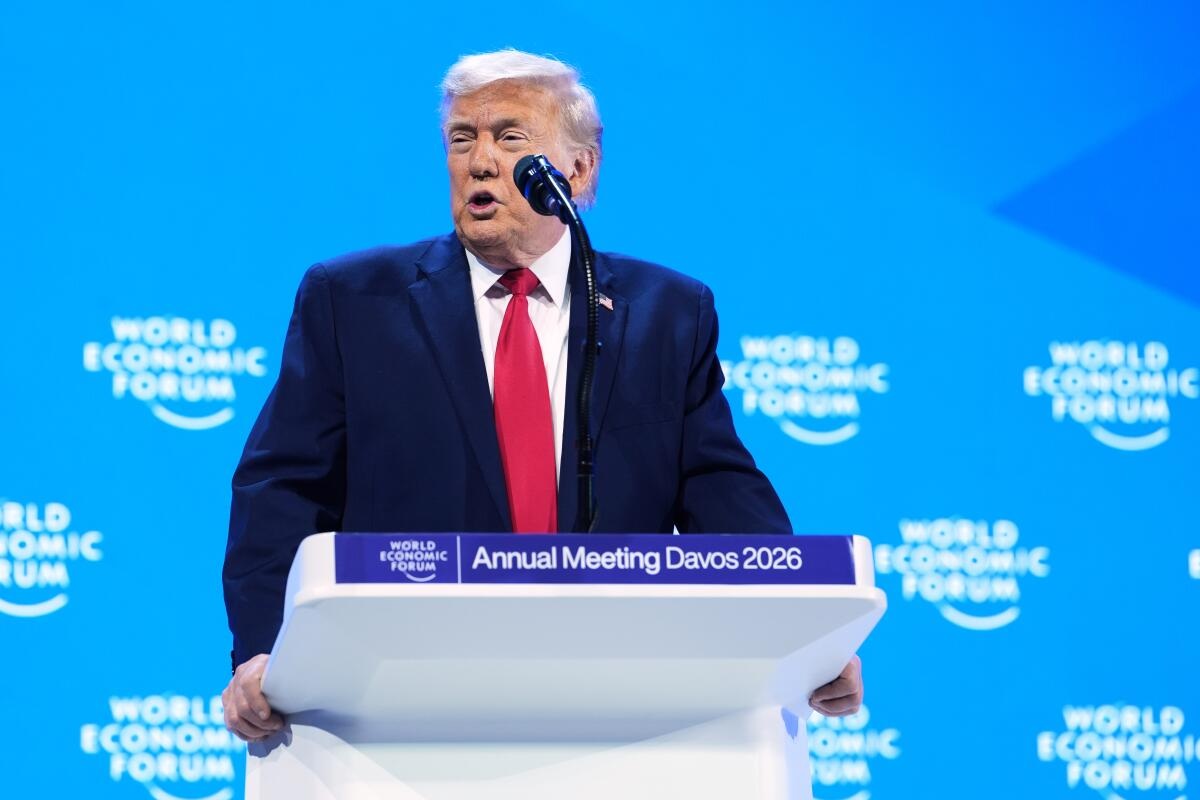
Speaking at the World Economic Forum in Davos, Trump called for “immediate negotiations” with Denmark to discuss the acquisition of Greenland, an autonomous territory within the Kingdom of Denmark. In the same breath, he sought to tamp down alarm by explicitly rejecting the use of military power to pursue the territory.
Register for Tekedia Mini-MBA edition 20 (June 8 – Sept 5, 2026).
Register for Tekedia AI in Business Masterclass.
Join Tekedia Capital Syndicate and co-invest in great global startups.
Register for Tekedia AI Lab.
“I don’t want to use force. I won’t use force,” Trump said, responding to growing concern in Europe that the United States might escalate the dispute beyond diplomacy.
That assurance marked a noticeable shift in tone after days of mounting tension. European officials had reacted sharply to Trump’s earlier rhetoric, particularly his repeated insistence that Greenland is indispensable to U.S. national security and his suggestion that Denmark and NATO are incapable of defending it. Those remarks, coupled with threats of new tariffs against several NATO countries, had raised fears that Washington was prepared to coerce allies over an issue touching directly on territorial integrity.
Markets reflected that anxiety. Stocks fell earlier in the week as investors digested the prospect of a widening transatlantic dispute, only to rebound after Trump ruled out military action. The market response highlighted how seriously the episode is being taken, not just as political theatre but as a potential source of real geopolitical and economic disruption.

Despite the softer language on force, Trump did little to reassure European capitals that the pressure itself had eased. He maintained that Greenland is a strategic necessity for the United States, pointing to the Arctic’s growing importance as melting ice opens new shipping routes and sharpens competition among major powers.
The island’s location gives it strategic value for missile defense, space surveillance, and Arctic operations, areas where the U.S. already maintains a presence through Pituffik Space Base.
Trump framed the issue in stark terms, arguing that only the United States has the capacity to secure Greenland against emerging threats.

“No nation or group of nations is in any position to be able to secure Greenland other than the United States,” he said, a statement that implicitly questioned NATO’s collective defense commitments and struck a nerve among European allies who see Arctic security as a shared responsibility.
The proposal goes beyond defense policy into the core issue of sovereignty for Denmark. Greenland has its own government and a long-running debate over independence, making the idea of a transfer of ownership politically radioactive. Danish officials have repeatedly said the island is not for sale, a position that reflects both constitutional realities and public opinion at home and in Greenland itself.
The broader European reaction has been shaped by concern over precedent. While Trump’s rejection of military force removed the most extreme scenario from the table, his continued use of economic pressure has left allies uneasy. By warning that countries that refuse the proposal will face consequences, Trump reinforced a transactional approach that contrasts sharply with Europe’s emphasis on consensus and rules-based diplomacy.
“So they have a choice,” Trump said in Davos. “You can say yes, and we will be very appreciative. Or you can say no, and we will remember.”
That framing has fed the perception in Europe that the Greenland push is less about partnership than leverage. Several European officials privately describe the move as a stress test for NATO unity, particularly at a time when the alliance is already grappling with the war in Ukraine, defense spending debates, and questions about long-term U.S. commitment.
Historically, U.S. interest in Greenland is not new. Washington explored purchasing the territory after World War II and has maintained a strategic footprint there for decades. What is different now is the public, high-level push for acquisition and the willingness to link it to trade measures and alliance obligations. This has turned what might have remained a quiet strategic discussion into a public diplomatic dispute.
Trump’s decision to rule out military force appears to reflect the resistance he has encountered from Europe. The backlash from allies, combined with market volatility, has shown the costs of allowing the issue to escalate unchecked. By dialing back the most confrontational aspect of his earlier posture, Trump has sought to regain some control over the narrative without abandoning the core objective.
Still, the episode has already left its mark. It has strained trust between Washington and European capitals, raised doubts about how far the United States is willing to go in pursuing strategic assets, and underscored the fragility of alliance politics in an era of renewed great-power competition.
Denmark has given no indication it is willing to entertain the idea, and Greenland’s own leaders are likely to resist any discussion that sidelines their authority. So, it is not clear if Trump is making headway with his pressure. What is clear is that Trump has once again pushed an unconventional idea into the center of global diplomacy, forcing allies to respond.