

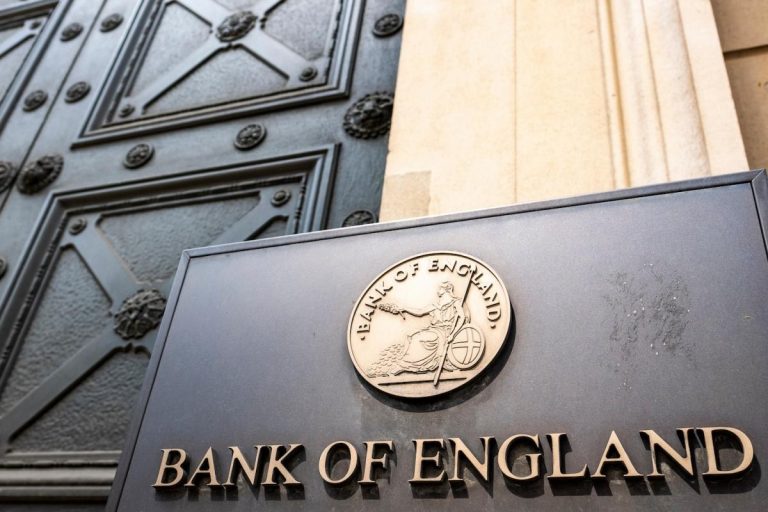
The Bank of England has warned that elevated valuations across artificial intelligence companies could be vulnerable to a deeper market selloff, highlighting growing concerns that investor enthusiasm for AI may have moved ahead of the sector’s underlying financial performance.
The warning comes as investors continue to pour capital into companies involved in artificial intelligence, data centers, semiconductors and cloud computing, making AI one of the most important themes in global financial markets.
The central concern is not that artificial intelligence lacks economic potential. AI is increasingly being adopted across industries, from financial services and healthcare to manufacturing, advertising and software development.
Register for the next Tekedia Mini-MBA.
Register for Tekedia AI in Business Masterclass.
Join Tekedia Capital Syndicate and co-invest in great global startups.
The rapid rise in the value of companies associated with the technology has created questions about whether current prices adequately reflect future earnings. When expectations become exceptionally high, even a relatively small disappointment in revenue, profits or growth can trigger sharp declines in share prices.
The Bank of England’s warning places recent market volatility in a broader context. AI-related stocks have already experienced periods of intense selling as investors reassessed valuations and questioned how quickly companies can convert enormous investments in computing infrastructure into sustainable profits.
A deeper correction could therefore affect not only technology companies but also major stock-market indexes that have become increasingly dependent on a relatively small group of large technology firms. The scale of investment in AI is central to the debate.

Technology companies are spending billions of dollars on advanced chips, data centers and computing capacity to develop increasingly powerful models and AI services. Investors are effectively betting that these expenditures will generate substantial future cash flows.
If monetization takes longer than expected, companies could face pressure to justify their spending while shareholders reconsider the premiums attached to their valuations. The risks could extend beyond equities.
AI has become closely connected to credit markets, corporate investment and infrastructure financing. Data-center construction requires enormous amounts of capital, while semiconductor manufacturers and equipment suppliers depend on continued demand from technology companies.

A sharp reversal in AI expectations could therefore spread through multiple parts of the financial system. The warning illustrates the difference between a promising technology and an attractive investment price.
A company can benefit enormously from AI while its shares still fall if investors had already priced in even stronger growth. Valuation matters because expectations are embedded in market prices before future profits actually arrive.
The situation demonstrates how financial markets can amplify technological enthusiasm. During periods of optimism, investors may focus heavily on the transformative potential of new technology.
That optimism can encourage additional investment, pushing valuations higher and creating a feedback loop. But when sentiment changes, the same mechanism can work in reverse, producing rapid declines as investors rush to reduce exposure.
A deeper AI selloff would not necessarily mean the technology itself has failed. Previous technological investment cycles have shown that major innovations can survive substantial market corrections. Companies with strong products, sustainable revenues and disciplined spending may ultimately remain important even if their valuations decline significantly.
The Bank of England’s warning therefore serves as a reminder that the AI boom carries both technological opportunity and financial risk. As investors assess the next phase of the AI revolution.
The crucial question may be less about whether artificial intelligence will transform the economy and more about how much of that transformation is already reflected in today’s asset prices.