

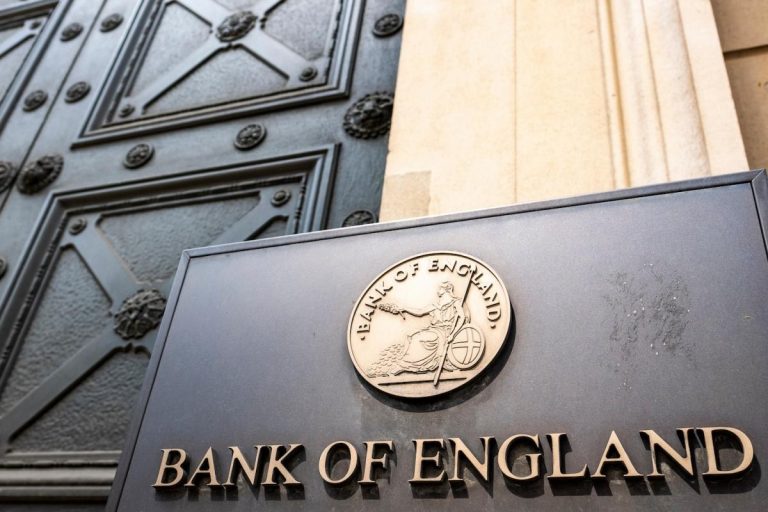
The Bank of England (BoE) has released detailed proposals for regulating sterling-denominated stablecoins, marking a significant step toward integrating digital money into the UK’s broader financial system.
The proposals were published on November 10, 2025, in a consultation paper titled “Proposed regulatory regime for sterling-denominated systemic stablecoins.” The paper outlines how stablecoins will operate as part of a future “multi-money” landscape alongside commercial bank deposits, tokenized bank money, and central bank money, which remains at the core of financial stability.
Governor of Bank of England, Andrew Bailey stated that the proposals are the result of extensive industry engagement since the Bank’s earlier discussion paper in 2023. He noted that the goal is to enable innovation while maintaining confidence in the financial system. According to Bailey, the framework is designed to allow systemic stablecoin issuers to build viable business models, including holding part of their reserve backing in short-term UK government debt and accessing a deposit account at the Bank.
Register for Tekedia Mini-MBA edition 20 (June 8 – Sept 5, 2026).
Register for Tekedia AI in Business Masterclass.
Join Tekedia Capital Syndicate and co-invest in great global startups.
Register for Tekedia AI Lab.
Part of his statement reads,
“Our focus is on possible future use in real world payments and settlements, not their current use to buy and sell cryptoassets. Use of regulated stablecoins could lead to faster, cheaper retail and wholesale payments, with greater functionality, both at home and across borders. We want to support such a role for stablecoins as part of a ‘multi-money’ system alongside commercial bank money (including tokenised bank deposits), all underpinned by the continued role of central bank money at the heart of the financial system.”
Under the proposed framework, the Bank would regulate sterling-denominated systemic stablecoins, those widely used for retail or corporate payments or with significant cross-border usage. HM Treasury (HMT) will determine which stablecoin arrangements are classified as systemic and therefore come under the Bank’s oversight. Once designated, these issuers will be subject to the Bank’s powers under the Banking Act 2009, which include rule-setting, supervision, and enforcement.

Different stablecoin use cases will fall under varying regulatory oversight. Systemic stablecoins used for everyday consumer and business payments will be jointly supervised by the BoE and the Financial Conduct Authority (FCA). Stablecoins used in non-systemic contexts, including those mainly serving crypto trading markets, will remain under the FCA’s remit alone. Stablecoins are not yet permitted for core wholesale settlement but may be tested in the Bank’s Digital Securities Sandbox.
The Bank’s consultation proposes that systemic stablecoin issuers must back their coins with highly liquid and low-risk assets, at least 40% of reserves held as unremunerated central bank deposits, and up to 60% in short-term UK government debt. Temporary deviations would be allowed to manage unexpected redemption surges. Issuers may lend securities via repurchase agreements to generate liquidity but would not be allowed to borrow assets using repo agreements.
A “step-up” regime is also proposed for stablecoin issuers that are systemic at launch, initially allowing up to 95% of backing assets to be held in government securities before transitioning to the standard 60% threshold once the stablecoin reaches scale. The Bank argues that this structure ensures issuers can meet large redemption requests even in periods of market stress. This is intended to prevent loss of confidence and preserve the stablecoin’s value at par.

Finally, the Bank and the FCA are exploring how regulated stablecoins could support on-chain settlement for tokenised assets within the Digital Securities Sandbox, potentially expanding their role in wholesale financial markets without displacing central bank money as the primary settlement asset. Feedback from this consultation will inform the final rules, expected to be completed in 2026.