

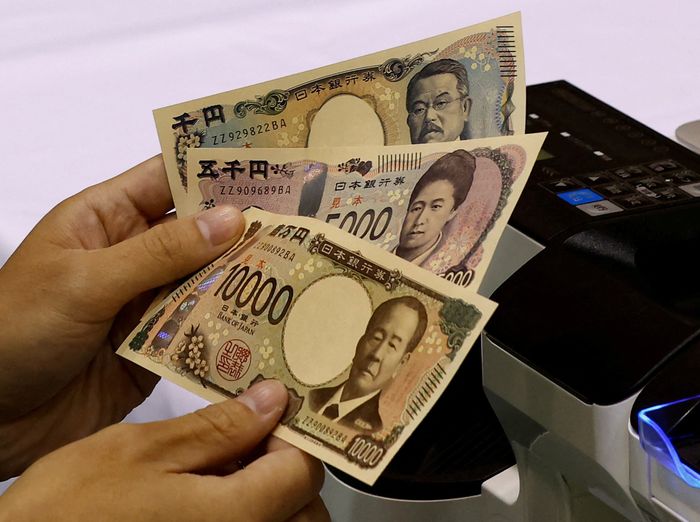
Former Bank of Japan Governor Haruhiko Kuroda — the architect of a decade of radical monetary stimulus under “Abenomics” — called on Tuesday for Japan to continue raising interest rates and tighten fiscal policy, arguing the economy is already in “great shape” and no longer requires ultra-loose support.
Speaking in an interview, Kuroda — now a senior fellow at the National Graduate Institute for Policy Studies — said the BOJ should raise rates about twice a year in 2026 and 2027, gradually moving toward a neutral level that neither stimulates nor restrains the economy. He also urged fiscal consolidation, warning that Prime Minister Sanae Takaichi’s big-spending plans could fuel an inflationary upswing, according to Reuters.
“When Abenomics was deployed, Japan was suffering from deflation and a strong yen. Now, Japan is experiencing inflation and a weak yen,” Kuroda said. “Japan needs to move toward tighter fiscal and monetary policy. The BOJ must gradually raise interest rates towards levels deemed neutral to the economy. Fiscal policy must be tightened, too.”
Register for Tekedia Mini-MBA edition 20 (June 8 – Sept 5, 2026).
Register for Tekedia AI in Business Masterclass.
Join Tekedia Capital Syndicate and co-invest in great global startups.
Register for Tekedia AI Lab.
Kuroda expressed particular concern over Takaichi’s pledge to suspend an 8% sales tax on food for two years to cushion households from rising living costs.
“Increasing spending and cutting taxes would not be appropriate,” he said. “It makes sense for the government to support innovation to boost long-term potential growth. But spending money to cushion the blow from rising living costs would be counterproductive as doing so would fuel inflation.”
Divergence from Takaichi’s Expansionary Stance
Kuroda’s remarks highlight a striking policy divergence from Takaichi, a staunch defender of Abenomics who has ramped up spending since her decisive February 8, 2026, election victory. Takaichi has been forced to moderate her rhetoric after a late-2025 selloff in the yen and Japanese government bonds, driven by market concerns over worsening public finances. Yet she continues to favor fiscal support for households and businesses amid persistent inflation and a weak yen.

The yen slipped Tuesday after a report that Takaichi conveyed reservations about further rate hikes to BOJ Governor Kazuo Ueda — a signal of potential friction over monetary policy. The currency stood at 155.80 per dollar on Wednesday, still far from the psychologically important 160 line but reflecting persistent weakness that keeps import costs elevated and contributes to inflation.
Kuroda judged the yen’s recent levels as “somewhat too weak” relative to Japan’s near-term growth, price trends, and economic competitiveness. He cautioned that verbal intervention — which has helped cap depreciation — offers only temporary effects, with no guarantee of sustained impact.
Kuroda suggested the BOJ could raise its key policy rate — currently 0.75% — to around 1.5–1.75% in the coming years if economic momentum holds. He endorsed Governor Ueda’s current communication style: nuanced, low-profile, and avoiding the bold, shock-therapy messaging Kuroda himself used to convince markets and the public that deflation would end.

“When it’s gradually pushing up rates toward neutral, the BOJ doesn’t need to talk that much,” Kuroda said. “Governor Ueda’s communication sounds appropriate to me.”
Economic Backdrop and Policy Legacy
Kuroda’s tenure (2013–2023) saw massive quantitative easing, negative interest rates, and yield-curve control — tools that helped reverse relentless yen appreciation and end chronic deflation, though the 2% inflation target proved elusive. Inflation has now exceeded 2% for years, wages are rising steadily, and the job market remains tight, allowing the BOJ to exit ultra-loose policy in 2024 and raise rates several times, including in December 2025.
Fiscal policy, however, remains expansionary under Takaichi, who has prioritized household support and innovation spending. Kuroda warned that continued loose fiscal policy risks overheating the economy and pushing bond yields higher.
The yen’s persistent weakness despite verbal intervention continues to lift import costs and feed inflation, complicating the BOJ’s normalization path. Takaichi’s landslide victory has heightened market focus on whether she will push for looser policy, though she has toned down such rhetoric after last year’s bond/yen selloff.
Kuroda’s comments carry weight as the intellectual father of Abenomics. His call for tighter policy contrasts with Takaichi’s fiscal activism and underscores the challenge of balancing inflation control, growth support, and fiscal sustainability in a post-deflation Japan.
With the BOJ now normalizing after a decade of extraordinary measures, the near term will test whether Japan can sustain inflation and wage growth without reigniting deflation fears or triggering financial instability.
However, Kuroda is saying that the emergency phase is over — Japan must now manage a “great shape” economy with discipline rather than stimulus.