

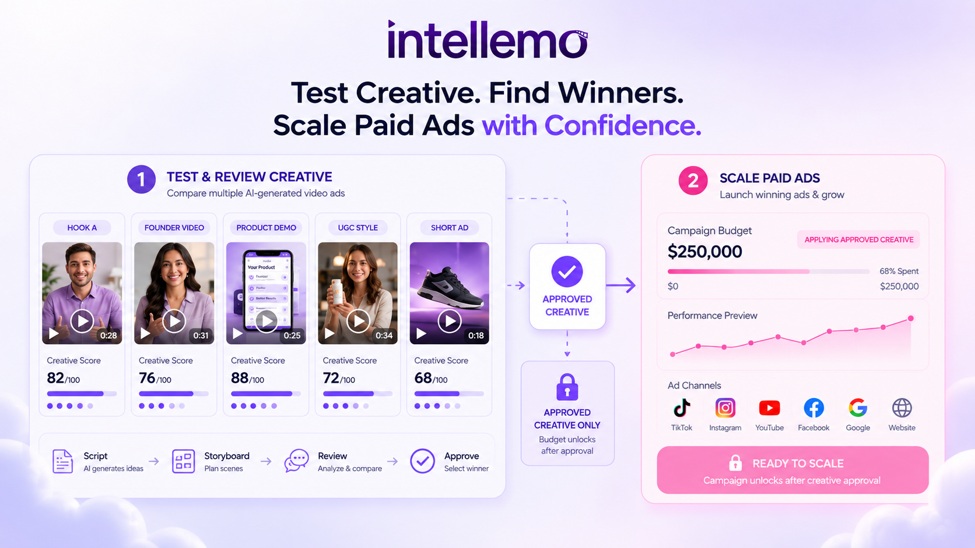
Before a startup puts real money behind paid ads, it needs to know which video creative actually works. That testing phase is where a lot of early budget gets wasted, mostly because teams either produce too little content to compare or they spend too much on production before they know if the concept is worth scaling. The tools on this list are built for that in-between stage. They let founders and small marketing teams produce, review, and compare video content without needing a full production crew behind every idea.
Why Testing Video Matters Before You Scale Ad Spend
Paid platforms tend to reward creative that performs, not creative that simply exists. A startup that jumps straight into scaled ad spend with unproven video often pays more to get the same result a tested asset would have delivered for less. Running a few concepts through review before committing budget gives founders a clearer picture of what’s working and what isn’t. That’s the real value these tools bring. They shorten the distance between an idea and a testable video, so decisions about paid spend are based on something real instead of a guess.
1. Intellemo AI
Intellemo AI is built around a guided production and review workflow, which makes it useful for startups testing video creative before putting serious money behind paid ads. Teams can start with a campaign idea, product message, story prompt, or website URL and develop it into a complete video rather than building each production stage separately. When a website URL is used, Intellemo can pull available brand context and assets, such as the logo, to help shape the script and video around the actual business.
- Key production stages are reviewed before moving forward, giving teams more control over creative quality before the final render.
- The Audioboard lets users check narration for pronunciation, pacing, tone, emotion, timing, and naturalness before approving it for the next stage.
- Individual storyboard scenes can be revised without regenerating the whole video. Teams can adjust elements such as characters, backgrounds, camera angles, product placement, lighting, or composition while leaving approved scenes unchanged.
- Lip sync supports spokesperson-led and talking-head formats, which can be useful when testing different ad styles.
- The workflow brings script, scenes, visuals, voice, music, lip-sync, and sound into one production process, reducing the need to move between separate tools while preparing ad variations.
Ideal for: Intellemo is ideal for anyone looking to create high-quality AI videos without the need for a traditional production team. From individuals and creators to marketing teams, D2C brands, businesses, and agencies, anyone who needs AI videos can use Intellemo to create brand-consistent, multi-scene videos for a wide range of use cases.
2. Synthesia
Synthesia generates avatar-led video straight from a script, and it’s one of the more established names in that category. Startups often turn to it for founder-style explainer videos or short product walkthroughs where a steady, professional presenter matters more than visual flair. It won’t give a team the flexibility of a fully generative tool, but for a certain kind of ad, that’s not really the point.
- Wide range of avatars and voice options, with support for many languages, useful if a startup is testing messaging across different markets.
- Works from templates rather than open prompts, which keeps output consistent even across a small team producing several videos a week.
- Custom backgrounds, logos, and brand colors can be added, so the video stays recognizably tied to the company.
- Reasonable option for checking whether a presenter-led format resonates before a bigger production budget gets involved.
- Scripts can be updated and re-rendered quickly, so small copy changes don’t mean starting the whole video over.
Best for: startups that want quick, consistent presenter videos for early testing.
3. HeyGen
HeyGen focuses on personalized avatar video, and that makes it more useful for outreach-style testing than for broad-audience ads. A founder can record one video, then generate variants that swap in different names, company details, or languages. For early sales teams, that kind of one-to-many production is genuinely hard to replicate manually at any real speed.
- Personalization at scale from a single source video, without reshooting for every prospect or market.
- Natural lip sync across variants, which matters when outreach needs to feel tailored rather than templated.
- Fast avatar creation, so a founder can get a digital presenter running in a short amount of time.
- Works well for testing sales or founder-led messaging before deciding whether to push it into paid channels.
- Can also handle broader localization, which helps if a startup is testing the same offer across more than one market at once.
Best for: early sales and outreach teams testing personalized video before scaling it.
4. Creatify
Creatify turns a product page into a short-form video ad, which shortens the gap between having a product and having something to test. For startups running early paid social experiments, that speed is the main draw, since a founder can go from product URL to a testable ad in minutes rather than days.
- Generates ad variations directly from a product URL, with little manual input needed to get started.
- Built specifically for platforms like TikTok, Instagram Reels, and YouTube Shorts, so the output already fits the format.
- Useful for testing several hooks or angles quickly, without committing to a full creative brief for each one.
- Narrower in scope than a full production tool, so it works best for short ad testing rather than longer brand content.
- Works well alongside a paid ad account, since new variations can be pushed out as soon as an old one starts to underperform.
Best for: e-commerce and D2C startups testing several short ad angles before committing spend.
5. Runway
Runway leans toward higher production value, giving users more control over camera movement and visual style than most avatar-based tools. Startups with a stronger creative identity sometimes use it to test whether a more cinematic ad direction performs better than a template-based one, especially once they have enough data to justify the extra effort.
- More granular creative control than most generation tools on this list, including camera direction and scene composition.
- Suited to hero ads or launch campaigns where visual distinctiveness matters more than speed.
- Has a steeper learning curve, so it works best when someone on the team is comfortable directing the output instead of just prompting it.
- Better suited to later-stage testing, once a startup already has some signal on what visual direction is worth pursuing.
- Output quality is high enough to hold up in placements where cheaper generation tools start to look obviously synthetic.
Best for: startups testing a distinctive, brand-forward visual style before a bigger campaign push.
6. Kling AI
Kling AI is known for fast generation and a strong free tier, which makes it a reasonable starting point for startups that want to test video content without committing to a paid plan right away. It won’t offer the same production structure as some other tools here, but for early validation, that’s often not what’s needed yet.
- Free tier is generous enough for genuine early experimentation, not just a limited trial.
- Handles realistic human motion well, which helps for social-style test content that needs to look natural.
- Generation speed is fast enough to run several quick tests in a single sitting.
- Good for validating whether video works as a format for a specific audience before spending on a heavier tool.
- Low commitment makes it easier to justify testing several unrelated ideas in the same week without worrying about wasted spend.
Best for: bootstrapped startups validating video as a channel before investing further.
7. InVideo
InVideo is a template-driven editor built for social output, and it’s less about generating new video from scratch and more about repurposing what a startup already has. It leans on trend-aware templates and editing styles suited to short-form platforms, which makes it a fast way to get existing footage into a testable shape.
- Fast turnaround for social-native content without needing deep editing skills on the team.
- Useful for repurposing existing footage or assets into multiple formats for different platforms.
- Suggests music and editing styles based on current trends, which can save time on smaller decisions.
- Not a generative tool in the same sense as the others, but still practical for organic testing alongside paid creative.
- Reasonable option for startups that already have raw footage sitting around and just need it cut into something usable.
Best for: startups that need quick, platform-ready video without a steep learning curve.
FAQs
Is AI-generated video good enough for paid ad campaigns?
Yes, as long as there’s a review step before the final version goes live. Startups should compare a few concepts internally before putting spend behind any single video.
Do these tools replace a video production team entirely?
For most early-stage needs, yes. Startups with bigger brand ambitions may still need human direction for certain campaigns, particularly with tools like Runway.
How should a startup budget for AI video tools before scaling ads?
Look for platforms that charge based on final output rather than every intermediate step. Intellemo AI, for example, only bills when the final video is generated and doesn’t charge separately for image elements or other production-stage outputs, which keeps testing costs more predictable.
How to Choose the Right Tool for Your Stage
Finding the right AI video tool isn’t really about picking one winner. It’s about matching the tool to the stage of testing a startup is in. Some teams need speed and a free tier to validate whether video works at all. Others need a structured review process that catches weak creativity before it reaches a paid test. As these tools keep developing through 2026, startups that treat testing as a deliberate step, rather than something to rush past, will likely get more out of every dollar they eventually put behind paid ads.