

Artificial intelligence could eventually allow workers to complete five days of work in three, giving people more time for family, travel and leisure without sacrificing their incomes. That is the optimistic vision being promoted by some of the world’s most influential business leaders as AI systems become capable of handling more tasks previously performed by humans.
Amazon founder and chairman Jeff Bezos joined the growing chorus last week, telling Fox News that AI-driven productivity gains could allow employees to accomplish in three days what previously required five.
“Some people will decide: ‘I can support my family working three days a week,’” Bezos said, adding that households with two earners might eventually find that having two people work is a choice rather than a financial necessity.
Register for the next Tekedia Mini-MBA.
Register for Tekedia AI in Business Masterclass.
Join Tekedia Capital Syndicate and co-invest in great global startups.
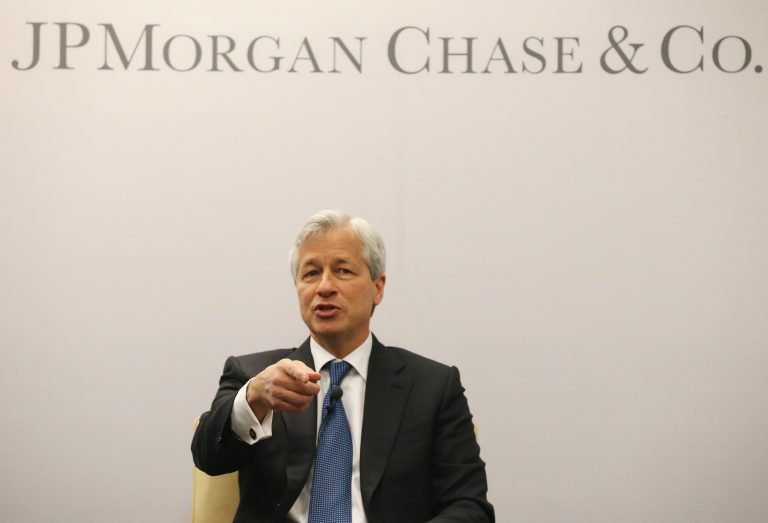
Bezos is not alone in predicting that technological advances will fundamentally change the relationship between work and leisure. JPMorgan Chase Chief Executive Jamie Dimon has repeatedly forecast that the next generation could work three and a half days a week. Zoom CEO Eric Yuan has suggested that companies will eventually support three- or four-day schedules, while Microsoft co-founder Bill Gates has argued that widespread access to intelligence could allow some people to work only two or three days.
Their predictions share a common premise: if AI dramatically increases the amount of work that can be completed in a given period, employees may eventually need to spend less time working to maintain the same level of output.
But the prospect of a shorter working week remains a prediction, not an established outcome of AI adoption. Some analysts have warned that productivity gains translating into additional leisure will depend on how employers distribute the benefits, how labor markets adjust, and whether workers retain enough bargaining power to secure shorter hours without losing income.

The debate is growing as businesses invest heavily in AI systems that promise to automate routine tasks, accelerate complex work and reduce the time required to complete projects.
The idea that AI could reduce working hours has attracted support from executives across technology, finance and other industries.
Dimon said this spring that future workers would have more time to “hike more” and “do all the things” previous generations struggled to fit into their schedules. Yuan told The New York Times last year that AI would take on more work and ultimately free up employees’ time.

“Every company will support three days, four days a week,” Yuan said.
Gates has similarly argued that broad access to intelligence could change how people allocate their time, suggesting that some may choose to work only two or three days a week. Mark Cuban, the technology investor and “Shark Tank” personality, offered a more incremental forecast earlier this year, predicting that AI agents would initially cut working days by an hour.
Elon Musk has advanced an even more expansive vision, saying last year that progress in AI, robotics and other technologies could make work optional, with people pursuing employment primarily for enjoyment, much as they might play sports or video games.
Musk has also acknowledged the potential disruption involved in reaching that future. This year, he described the transition as potentially “bumpy” and promoted government payments as the “best way” to replace income lost through AI-driven unemployment.
These forecasts differ in scale, but they share an expectation that AI will substantially increase economic productivity. The unresolved question is whether businesses will use those gains to reduce working hours, expand output, increase profits, or some combination of the three.
A company that uses AI to complete a five-day workload in three days could allow employees to work less while maintaining production. It could also retain the same working schedule and require employees to complete more tasks, potentially increasing output without increasing headcount.
The technology itself does not determine which outcome prevails. Management decisions, competitive pressures, labor agreements, and the availability of alternative employment will help shape how productivity gains are distributed.
Why Some Economists See Shorter Hours As More Likely Than Mass Unemployment
Alex Tabarrok, an economics professor at George Mason University and co-writer of the Marginal Revolution blog, believes a shorter working week is more likely than mass unemployment as AI advances. In comments to Business Insider, Tabarrok argued that historical experience supports the possibility of workers benefiting from productivity gains through reduced hours rather than a permanent collapse in employment.
“Surely, the smart AIs can think of something!” Tabarrok said, expressing skepticism that technological progress would leave humans with nothing useful to do. “People are quite flexible, and they invent new jobs all the time. Remember, under all the scenarios in which AIs do a lot of jobs, we are very, very rich.”
His argument rests partly on the ability of labor markets to adapt. As technology changes the tasks businesses need people to perform, workers can move into new occupations, while higher productivity can create demand for goods and services that were previously too expensive or impractical.
History offers some support for the possibility of greater leisure alongside economic growth. Tabarrok noted that typical annual working hours in the United States fell by around 40% between 1870 and the present, without producing a corresponding rise in unemployment. Over the same period, childhoods and retirements became longer, while life expectancy increased.
He also said that the share of a person’s life spent working has fallen from around 30% to roughly 10%.
“We have already sustained a massive increase in leisure,” Tabarrok wrote. “There’s no reason we cannot do it again.”
The historical comparison, however, does not guarantee that AI will produce the same result. Earlier technological transitions unfolded across different industries and over extended periods. AI could affect a wider range of cognitive tasks, potentially changing the pace and distribution of labor-market disruption.
New occupations may emerge, but that does not ensure that displaced workers can move into them quickly or that new jobs will offer comparable wages and conditions. The benefits of higher productivity could also be concentrated among companies and individuals who own the technology, rather than distributed broadly among workers.
Tabarrok’s argument also highlights a central economic question in the debate: whether AI produces widespread prosperity or concentrates gains while leaving large numbers of people without work.
In an April blog post, he contrasted a scenario in which AI pushes unemployment to 40% with one in which everyone remains employed but works 60% of their usual hours.
The first scenario would be widely viewed as a social and economic catastrophe. The second could represent a substantial expansion of leisure and living standards.
Yet, as Tabarrok observed, the total number of hours worked across the economy would be the same in both cases. The difference lies in how those hours, and the income generated by them, are distributed.
His argument is that society could choose to spread available work across more people, allowing workers to retain employment while reducing individual working hours. That outcome would require institutions and employers to share productivity gains rather than allowing the benefits to accrue primarily through higher profits or a smaller workforce.
But this possibility complicates the more optimistic predictions from technology executives. Even if AI enables a company to operate with fewer labor hours, it does not follow that employees will automatically receive additional paid time off. Businesses may instead reduce staffing, increase workloads, or expect remaining employees to deliver more output during the same schedule.
The prospect of a shorter workweek therefore depends not only on how capable AI becomes but also on decisions about wages, working conditions, ownership and social protection.
Altman Questions Whether AI Will Deliver Mass Leisure
Not all technology leaders expect AI to break the historical pattern of people continuing to work despite productivity improvements.
OpenAI CEO Sam Altman has argued that technological innovations have repeatedly promised to free people from work, yet those promises have rarely produced a four-hour workday across society.
“But we never get the promise of the four-hour workweek at mass scale in society,” Altman said this summer. “And I don’t expect AI to change that.”
Altman’s position challenges the assumption that greater efficiency necessarily leads to fewer working hours. People may use the additional capacity created by technology to pursue more ambitious goals, compete for higher incomes, or produce more goods and services rather than take more leisure.
Competitive pressures could reinforce that tendency. If one business uses AI to increase output while maintaining existing hours, rivals may feel compelled to do the same to protect their market positions. Productivity gains could then fuel greater production and competition instead of shorter schedules.
The tension between these views is likely to become more pronounced as AI adoption spreads. Bezos, Dimon, Yuan and Gates are describing a future in which technological abundance gives people greater freedom over their time. Altman is warning that human ambition and economic competition may prevent those gains from translating into substantially less work.
Both outcomes remain possible, and neither can be established solely by the technology’s ability to perform tasks faster.