

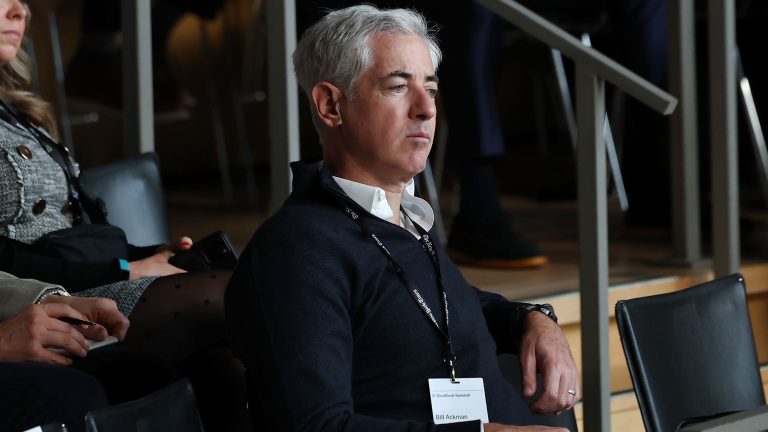
Bill Ackman is plotting a major two-pronged move: raise $5 billion for a new U.S.-listed closed-end fund while taking his hedge-fund firm, Pershing Square Capital Management, public.
People familiar with the plan told Reuters the two listings are intended to launch together, a synchronization meant to give investors simultaneous exposure to the new vehicle and to the firm itself.
The closed-end fund is being structured to mirror Ackman’s hedge-fund strategy but with two important differences designed to broaden its appeal: lower fees and faster access to capital than traditional hedge funds typically allow. That combination is intended to attract a wider array of investors — from large pensions and endowments to retail buyers who normally cannot get into hedge funds. Pershing’s people have discussed offering existing investors a sweetener: recipients of shares in the closed-end vehicle would also receive free shares of Pershing Square itself as part of the launch package.
Register for Tekedia Mini-MBA edition 20 (June 8 – Sept 5, 2026).
Register for Tekedia AI in Business Masterclass.
Join Tekedia Capital Syndicate and co-invest in great global startups.
Register for Tekedia AI Lab.
Pershing Square’s management first contemplated a U.S. closed-end listing in 2024 and even moved to list Pershing Square USA, only to pull the IPO days before it was due to begin trading in July of that year. Ackman pared back earlier, much larger ambitions, plans that once targeted as much as $25 billion in capital, and the relaunch appears to be more modest and surgical by comparison. The earlier withdrawal remains a cautionary backdrop: the new effort is smaller, more targeted, and tied to an IPO of the management firm itself.
Pershing Square manages roughly $21 billion in assets today, largely through Pershing Square Holdings, the London-listed closed-end fund that has been the public bellwether for Ackman’s strategy. That vehicle has delivered double-digit returns in recent years, performance that underpins the pitch to U.S. investors who might otherwise be wary of a hedge-fund-style product.
Pershing’s recent balance-sheet moves, including a series of high-profile equity stakes and an expanded footprint in publicly traded and private assets, feed into the narrative that the firm has scale and an investable track record.

People briefed on the plan say the new closed-end fund will aim to bring in cornerstone institutional investors to anchor the deal; Bloomberg reported that about $2 billion could come from well-known institutional backers. That anchor demand would be intended to provide confidence to broader retail and wealth-management distribution at launch, and to help the new vehicle hit scale quickly — a critical factor for a fund that seeks to replicate the concentrated, activist style of a flagship hedge fund while still offering daily navigability.
Ackman has repeatedly said he wants to convert parts of his business to more permanent, institutionally accessible formats. The rationale is straightforward: converting a large, closed investor base into publicly tradable instruments can lower funding friction, reduce redemptions, and monetize the firm’s brand and investment track record. For investors, the pitch is also mechanical and attractive — easier liquidity than private hedge funds, lower headline fees than bespoke hedge funds, and a direct line to Ackman’s concentrated investing playbook.
The plan still faces material hurdles. Market windows matter for IPOs, and people familiar with the offering warned that the structure and timing could change with market conditions. The dual-listing strategy raises complex regulatory and governance questions: how to price the incentive shares, how to align the interests of public shareholders with those who will remain in the firm’s private partnerships, and how to manage conflicts that can arise when an activist manager runs both a public vehicle and a firm with separate private clients.

Pershing has been testing many of these ideas in the London market through Pershing Square Holdings, but the U.S. listing will invite a different set of investor expectations and regulatory scrutiny.
Corporate moves earlier this year show the firm’s appetite for large, concentrated wagers. Pershing Square has pushed heavily into Howard Hughes — increasing its stake substantially via cash investments and proposals to reshape the company — a reminder that Ackman still prefers to run big, concentrated positions and, when necessary, to assume active roles in management. Those deals demonstrate the kind of assets the closed-end fund might hold, and they also explain why some investors see Pershing as a hybrid between a public investment trust and an activist merchant bank.
The public reaction to the revived IPO idea will likely hinge on three things. First, the credibility of Pershing’s track record: the London vehicle has produced strong returns in recent years, and Pershing’s managers will lean on that performance to win investor commitment. Second, fee structure and governance: investors will scrutinize whether the “lower fees” pitch is genuinely meaningful after carried interest and performance fees are baked in. And third, the optics of selling free shares of the management company: regulators and long-term investors will want to see clear disclosure on dilution, voting rights, and how management incentives align with outside shareholders.
Ackman’s public personality is also part of the calculus. He is as well known for his activist campaigns as for his social media presence, a platform he uses regularly to shape market narratives and to spotlight investments. That visibility can help distribution — he has a large following on X and other platforms — but it also brings scrutiny and magnifies reputational risk if an investment goes wrong.
If the plan proceeds, it would represent one of the higher-profile attempts in recent years to bring hedge-fund alpha to a broader investor base without the classic liquidity and fee constraints. It would also mark a rare simultaneous public offering of both a fund vehicle and the management company — an arrangement that, if successful, could reset how prominent activist managers package and monetize their businesses.
For now, Pershing Square’s spokesperson declined to comment publicly, and those familiar with the plans cautioned that the numbers and timing could shift. Sources told reporters that early-2026 remains the target window for both the closed-end fund IPO and a listing of Pershing Square Capital — provided market conditions remain favorable.